Quick answer… Not in the way you think it will. Floor sanding does create dust, but with modern professional extraction and sensible containment, it should stay largely within the work area. You may notice a light residue locally (edges and corners always collect a bit), but it should not drift through the whole house.
Key takeaways…
- Sanding creates dust, but it should be contained, not allowed to spread all over the place!
- That fine dust should be captured at source with professional extraction system.
- Doorways and edges are where dust spreads if the setup is rushed.
- Many households can stay at home with a simple room plan.
- If you have pets, allergies, or work-from-home days, say so early so the plan fits your real life.
Dust worry is completely normal, and it’s why people put it off…
You can picture the end result instantly, brighter boards, cleaner grain, that “why did we not do this sooner?” feeling. What stops most people is the messy middle bit… that’s actually not that messy! If you have ever lived through building work, your brain remembers the fine film on surfaces and the way dust appears in places you did not invite it to.
Modern sanding should feel really controlled. The difference is not luck… it’s the setup you have in the first place. When the extraction is doing its job and the work zone is properly contained, dust doesn’t have a chance to travel around the house like it’s on a sightseeing tour. If you’re still weighing it up, this overview of our floor sanding in Cambridge service explains how we approach the job from prep through to finishing.
What actually creates the dust during sanding?
Dust is not one single thing, and knowing that makes the whole topic less stressful. The main sanding creates fine particles as the old finish and the top layer of wood are removed, and that fine dust is the part most likely to drift. Heavier dust particles drop quickly, making it easier to contain. Then there is edge and detail sanding, which is where mess can sometimes sneak out if the work is rushed too much… why?… because edges are full of tiny gaps and airflow changes.
In simple terms, edges and doorways are the risk zones. A careful job treats them with the same attention as the main area, rather than doing them quickly at the end when everyone is tired.
Table: where dust spreads, and what controls it
| Main sanding area | Fine dust lifts and hangs in the air when extraction is weak | Captures dust at source while sanding, not after |
| Edges and corners | Dust escapes because the work is fiddly and gets rushed | Treats edging as part of the main job, with controlled extraction |
| Doorways and thresholds | Dust drifts room to room through gaps and traffic | Contains the work zone and manages access sensibly |
| Built-in cupboards and shelves nearby | Fine residue settles on exposed items | Agrees what needs protecting so sensitive areas stay calm |
| Ventilation and airflow | Air movement carries fine dust further than expected | Plans airflow rather than letting it surprise everyone |
Why modern extraction makes such a difference…
Older sanding machines were simply not built for clean extraction, so even a careful professional team could feel like they were fighting physics. Dust lifted into the air and settled into skirting lines, radiators, and soft furnishings, and it had an annoying habit of reappearing the moment sunlight hit the room.
Modern professional sanding systems are designed to capture dust at source. The aim is to pull fine dust into extraction as sanding happens, rather than letting it float first and hoping a tidy-up will solve it later.
It’s worth saying this plainly. You should still expect some dust. The realistic promise is not perfection, it’s that the dust stays where the work is happening, and the rest of the home does not feel invaded.
If it sounds too good to be true, here’s the calm version
Scepticism is healthy. Anyone promising a perfect, dustless world is setting expectations WAY too high, because real homes have corners, old skirting, and tiny gaps that collect residue.
A clean, low-disruption job usually comes down to a few quiet basics done properly. The work area is contained. Extraction runs throughout. Edges are treated carefully. The work zone is cleaned well at the end. Nothing dramatic, just a professional process that keeps control from start to finish.
What we do in family homes to keep it clean
Many Cambridge households share the same concerns. Children and pets mean constant movement. Asthma or allergies make fine particles feel like a bigger deal. Working from home means you cannot lose the house for days. Some people have also had a dusty trade experience before and simply do not want to repeat it.
This is where planning makes the biggest difference. Most homes do not need a dramatic “move out” scenario. What helps is agreeing a simple plan so you know what rooms are in play, what’s protected, how access will work, and what the day will feel like. When everyone knows what’s happening, the whole job feels calmer, and you are not tiptoeing around the house like you’re trying not to wake a sleeping tiger.
Can you stay in the house during the work?
Often, yes. It depends on which rooms are being done and how you use the space day to day. Many people stay at home with clear boundaries around the work area. If anyone in the household is sensitive to fine dust, it can help to be out during the heaviest sanding period and return once things have settled. That is not panic, it’s comfort, and it’s completely reasonable.
What you should expect is clarity. You should know which areas are off limits, when they will be usable again, and how you will move around the home without stress. If timelines are your next question (they usually are), this guide on how long floor sanding takes in a real home is the best follow-on read.
Does the finish affect dust or smell?
Most dust is created during sanding, not finishing. What finishing changes is the “when can we live normally again?” question. Drying time, when you can walk on it, when furniture can go back, and how the room feels afterwards are usually the next worries once dust is no longer the headline issue.
If you want to explore finish options without getting lost in jargon, these two pages make it simple. Wood sanding and oiling is often chosen for its natural look and repairability, while wood sanding and lacquer is often chosen for a tougher sealed finish and a different sheen.
What should you do before we arrive?
This part is simple, and it saves stress. If you can, clear small items and breakables so the room is easy to work in. If there are items you feel protective about, tell us. Peace of mind matters, even when the practical risk is low.
Large furniture depends on the room layout and scope, so it’s better to agree a plan than to guess. The biggest help is telling us what matters most, for example, pet bedding, baby items, open shelving, or a home office setup. That way, protection is tailored to your home, not a generic checklist.
What should it look and feel like when it’s done?
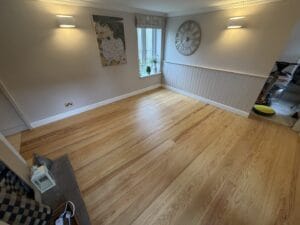
A well-managed sanding job should not leave you feeling like you need to deep-clean the entire house. You might notice a light residue within the work zone because edges and skirting details exist in the real world, but it should not be drifting from room to room.
The biggest change most people notice is emotional. The room feels lighter. The floor stops catching your eye. The whole space feels finished. It’s the kind of “ahh” feeling that makes you stand there for a second longer than you meant to, just looking at the boards.
If dust is the only thing holding you back
You do not have to be ready to book. If dust is what you’re worrying about, share your home setup (pets, allergies, working from home, children), and we’ll explain what’s realistic and what the day will feel like… It’s really not as bad as you think, and the professionals will be able to explain it properly.
FAQs
Is floor sanding safe if someone has asthma or allergies?
It can be, depending on sensitivity and how the work is contained. Tell us in advance and we can plan the day to reduce exposure, including a simple “out of the room” window during the heaviest sanding period.
Will dust get into other rooms?
With proper extraction and containment, it should not travel far. Dust problems usually come from poor doorway control and rushed edge work, not from sanding itself.
Do we need to move out completely?
Usually not. It’s more about which rooms are out of use and for how long, rather than leaving for days.
How long before we can walk on the floor again?
It depends on the finish and room layout. The timeline guide linked above is a helpful next step if you want the realistic version.
Will it smell like a building site?
Most of what people fear is dust and disturbed old coatings. A well-controlled process reduces that, and good ventilation and finishing choices help the home feel normal sooner.