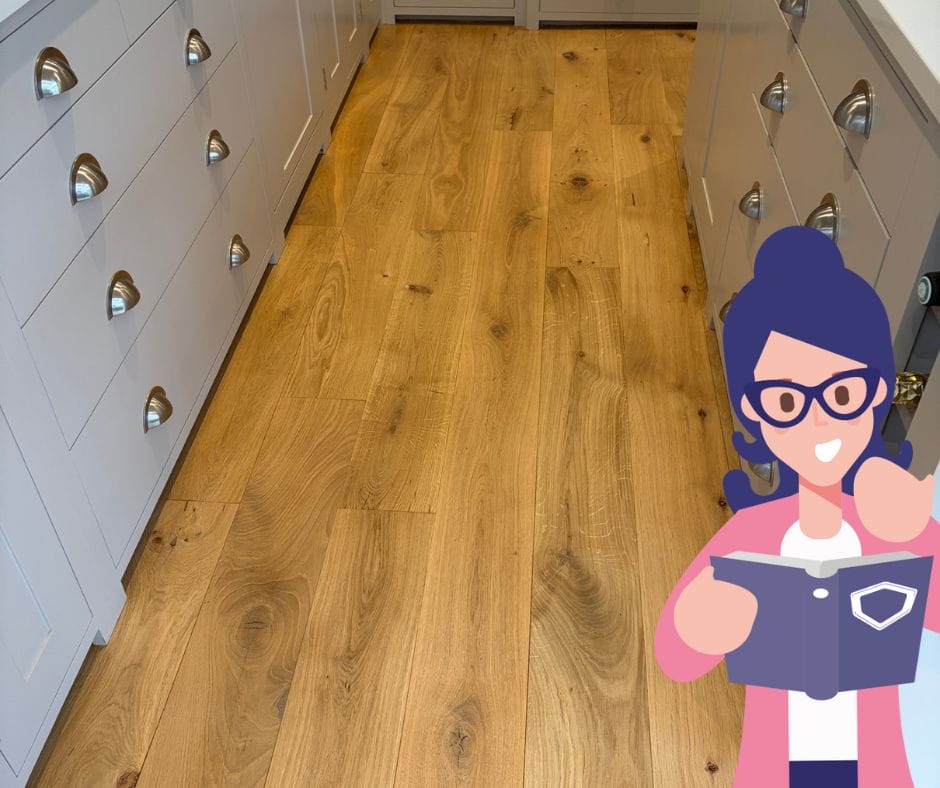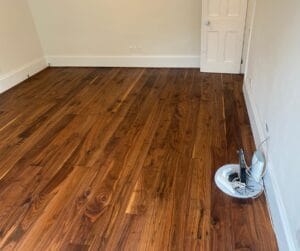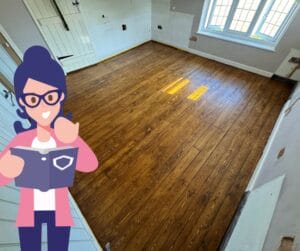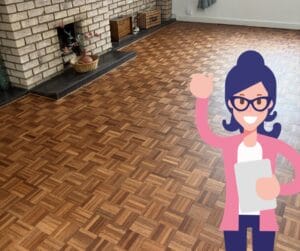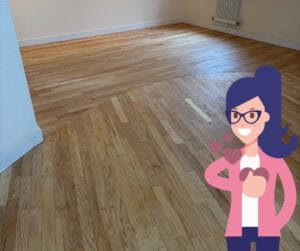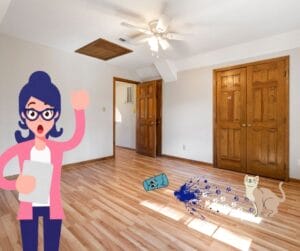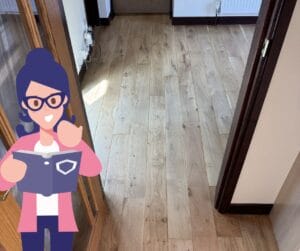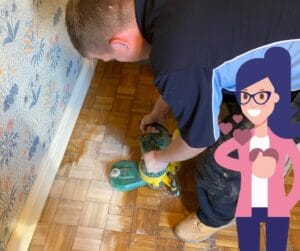
You can usually tell when a wood floor is asking for help… a board that rocks when you step on it, a dark patch near the sink, scratches that suddenly catch the light, or a doorway that now looks tired. The tricky part is cost, because “repair” can mean anything from a quick, local fix to work that only makes sense if you refinish the whole room.
This guide will help you price it calmly, understand what changes the quote, and choose the option that gives you the best finish for the money in a busy home.
What do we mean by “repair” (and why that matters for price)
People often say “repair” when they really mean “make it look new again”. But the price changes a lot depending on the goal.
A repair is usually one of these:
- replacing a small number of damaged boards
- filling splits, dents, gaps, or deep scratches
- stabilising movement, loose boards, squeaks, bouncy spots
- treating localised water or pet damage
- blending a patch so it is less noticeable
Refinishing is different. Refinishing means sanding and re-sealing the floor (often the whole room) so the surface looks consistent again. If you only fix one patch but the rest of the floor is worn, the repair can stand out, the “cheapest” option can end up feeling like a false economy.
Typical wood floor repair costs (what most quotes are built from)
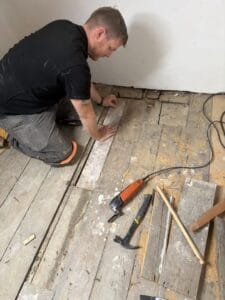
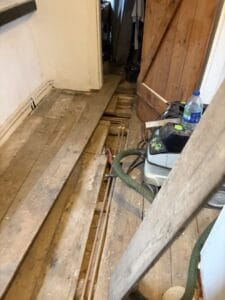
Most repair quotes in Cambridgeshire are built from three parts: a minimum labour setup , time on the tools, and materials and finishing (adhesives, fillers, matching boards, stain, lacquer or oil).
Because of that, small repairs can look expensive on paper. But try to remember that you are paying for skilled time and a tidy finish, not just the wood or finishes.
As a guide, many straightforward repairs start from a few hundred pounds and usually rise when it comes to matching the wood, moisture issues, or when it involves larger areas. If the room then needs full sanding and sealing to blend everything in, it can make more sense to price the repair and refinish as one plan.
What changes the price the most
- How many boards are affected (and where they are)
One damaged board in the middle of a room is often more noticeable than three at the edge. Central boards might need cleaner cut lines and much better blending; therefore, labour will go up even if the area is small.
- Can we match the timber and the finish?
The biggest cost surprise is usually matching. If your floor has aged, ambered, or has an older lacquer, a new board can look pale at first. A good repair plan often includes tinting, staining, or a light refinish around the area to reduce the “patch” look.
- Water damage and the reason it happened
A small dark patch might be surface staining, or it might be moisture that has got under the boards. If moisture is present, repairing the surface alone will not work. If the moisture in your wood floor needs fixing first (leaks, damp, failed seal around a door), the quote will reflect that extra step.
- Movement, squeaks, or even a little bounce
If the boards are moving, the repair is not just cosmetic. Stabilising might mean you have to fix boards, address the subfloor, or improve fixings. That takes longer, but it will stop that problem from coming back again.
- Access, furniture, and how quickly you need the room back
Busy homes tend to need “work with minimal disruption” planning. Moving furniture, working in phases, and faster drying finishes can change the overall cost. The cheapest finish is not always the best choice if you need the room back quickly and want it to cope with real life.
Typical wood floor repair scenarios (what affects cost)
| Deep scratches, dents, worn patches in traffic lanes | Local sanding, filling, re-coating, sometimes blending into a wider area | Visibility of the area, how well the finish can be matched | If the whole room finish is tired or patchy, repairs can stand out |
| One or two broken, split, or badly stained boards | Cutting out boards, fitting replacements, levelling, then blending the finish | Finding matching boards, board width and thickness, tongue and groove, stain match | If there are several repairs across the room, refinishing is often better value |
| Squeaks, movement, bounce underfoot | Re-fixing boards, stabilising sections, sometimes addressing subfloor or joists | Access, lifting and refitting, how widespread the movement is | If movement is caused by a deeper issue, surface repairs will not hold |
| Dark water marks near sinks, doors, plant pots | Check moisture source, treat stain where possible, replace boards if needed, refinish to blend | Whether moisture is ongoing, how deep the staining is | If damp or leaks are still present, fixing the cause comes first |
| Gaps between boards, draughts, crumb traps | Gap filling suited to movement, then re-coating | Amount of movement, best method for your floor type | If the floor moves a lot, the wrong filler will crack out, and you will be back to square one |
Repair or refinish, how to choose without overpaying
A good ruleof thumb is to think about outcomes, not tasks.
Choose repair only when the rest of the floor still looks good, the damage is localised, colour and finish matching is realistic, and you will not be left staring at the repaired area every day.
I would choose sanding and refinishing when there are multiple repairs across the room, the finish is worn or patchy in traffic lanes, you want a consistent look (especially in open plan spaces), or you have stains and deep scratches in more than one area.
In many homes, the best value sits in the middle. You repair what is structurally needed, then refinish the room once so everything blends properly. It costs more upfront, but it often avoids paying twice.
If you would like to see our wood floor restoration process, you can see it here:
Common repair scenarios and what they usually involve
- Deep scratches and dents in high-traffic areas
If the scratch has cut through the finish but the timber is sound, you may be able to spot sand and re-coat. If it has crushed fibres or looks grey, you may need filling and local sanding. The more visible the area (hallways, in front of sofas), the more important blending becomes.
- Loose boards and squeaks
Squeaks are rarely just “a squeaky board”. They are friction, movement, or fixings failing. The repair might be a simple re-fixing, or it might involve checking the subfloor. If you are getting squeaks plus gaps that change with the season, it usually needs a more careful assessment.
- Water marks near sinks, doors, or plant pots
Surface marks can sometimes be lifted or sanded back locally, but black staining often means a deeper reaction in the wood. It can be improved, but “perfect invisible repair” is not always realistic without refinishing a wider area.
- Gaps between boards
Some seasonal gapping is normal. But wide gaps, draughty gaps, or gaps that trap crumbs and moisture can often be improved with the right filling approach. The wrong filler can crack out quickly, the method matters as much as the material.
How to get a quote that is actually comparable
When you collect quotes, ask each company to describe exactly what is being repaired, what finish will be used (and how many coats), how they will blend the repaired area, drying times and when the room can be used again, and what is excluded (moving furniture, thresholds, moisture fixes).
It keeps you in control, because two quotes can look similar but deliver completely different outcomes.
Want to learn more about our process, what to expect or what happens on the day?
A calmer way to plan repairs in a busy home
If you have kids, pets, or a tight week, the plan matters as much as the price. A good contractor will talk about doing the noisiest work earlier in the day, working room by room where possible, choosing a finish that fits your lifestyle, and setting expectations honestly around colour matching and wear.
That is what stops the job from becoming stressful.
FAQs
Can you repair just one board without redoing the whole floor?
Often yes, but the finish and colour match is the deciding factor. If the floor has aged or the finish has changed over time, a single repaired board can still stand out… so a small surrounding refinish is sometimes what’s best.
Is it cheaper to repair or replace your whole wood floor?
Local repairs are usually cheaper than a full replacement, but if the floor has widespread wear, multiple stains, or repeated movement issues, the best value can often be repair plus full sanding and sealing, rather than endless patch fixes, which could take away the beauty of your wood floor.
Do repairs always look invisible?
Not always. Good repairs can look excellent, but timber is natural and ages differently. The goal is usually “blends well in normal light”, rather than “you will never find it again”.
How long do wood floor repairs take?
Small repairs can often be completed in a day, but drying times for finishes can extend the usable time. If you need the room back quickly, ask about finish options and realistic access times.
What is the most common cause of boards going dark or black?
Usually moisture, either from spills that sat too long, a slow leak, or water coming in at the doors. Treating the cause matters… a proper quote should mention moisture risk if staining is present.
If you tell us what kind of damage you have (scratches, water marks, loose boards, or gaps), we can suggest whether a local repair is likely to blend in or whether it is smarter to price it alongside a full refinish. You can have a read of this blog about repairing wood floors and what goes into it.