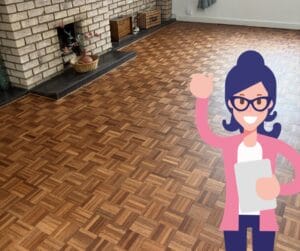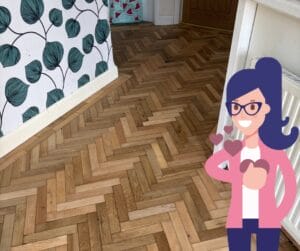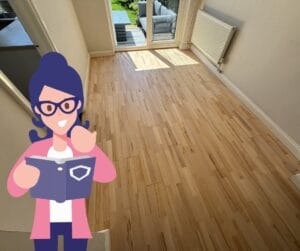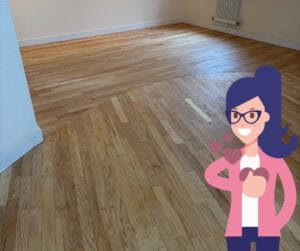
There’s a particular kind of frustration that comes with a tired wooden floor. You can tidy, you can style, you can light a candle, but your eye still goes back to the scuffs, the dull patches, the greyed edges where life has rubbed the finish away.
And it’s not vanity… It’s that a floor holds the mood of a home!
So, here’s a story about one Cambridge floor that stopped blending into the background and started feeling like itself again.
If you’re considering wood floor sanding in Cambridge, this is what the journey can look like, from “we’ll just live with it” to “oh, there you are”.
Key takeaways
- A tired wooden floor can make the whole home feel dull, even when everything else is clean and styled.
- Most “stains” and rug marks are often old finish and ground in grime… sanding can reveal a more even, warmer tone than you expect.
- The calm part of a great job is the preparation, protection, and dust control, not just the sanding itself.
- The finish choice decides the mood, matte for a soft natural look, satin for a little more light and everyday forgiveness.
- A restored floor is not about making it perfect… it is about making it feel intentional again.
- The best result is the one that suits real life… you should choose a process and finish that reduces stress, not adds to it.
A hallway that had forgotten it mattered
When we first met Anna, it was because she’d stopped inviting people in.
Not in a dramatic way. Just in that quietly British way where you start meeting friends at cafés instead, or you offer to host “when the weather’s better”, and you do not quite say out loud that you’re embarrassed by your own floor.
Her house was a classic Cambridge terrace, the kind with a long, narrow entrance that sets the tone the moment the front door opens. And the floor had taken a beating.
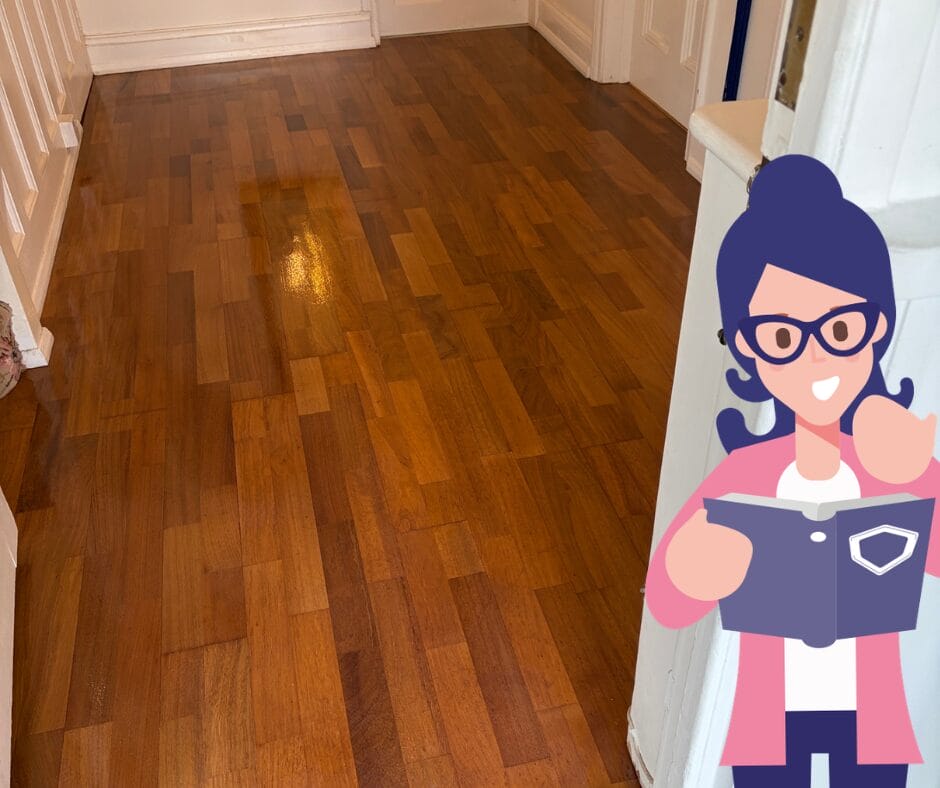
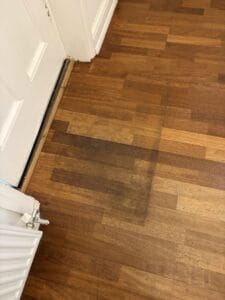
There were dark tracks where shoes had always landed, lighter islands where rugs had once protected the boards, and a dullness that made the WHOLE space feel tired even on a bright day. The boards were still solid, but the finish had gone patchy, like it had lost its confidence.
Anna said, “It used to feel warm. Now it just feels worn out.”
And that’s the thing, the floor was not ruined. It was just overdue for a reset.
Why “we’ll just live with it” usually lasts longer than it should
Most people put off sanding for one simple reason… it feels disruptive.
There’s dust to worry about, furniture to move, the smell, the drying time, the fear that it will go wrong. And if you’ve ever had work done in your home that felt rushed or careless, that fear makes perfect sense.
But there’s another reason people delay it, they forget how much a floor affects the way a room feels.
You can repaint a wall, and it helps, but a restored wooden floor changes the whole energy of a space. It gives the light somewhere to land. It makes the room feel calmer without trying.
The real question is not “Is sanding worth it?” It’s “How do we make this feel safe, planned, and worth the disruption?”
The first visit, looking properly, not guessing
We always start by looking at the floor as it is, not as we hope it might be.
Anna’s hallway had a few important signs. The boards were structurally sound, with no bounce or deep damage, which was good. But there were areas where the old finish had worn through completely, which explained the dark tracking.
There were also tiny gaps between some boards, not a problem, but something to factor in when choosing the finish and the final feel. If your floor has loose bits, movement, or splits, that’s usually a wood floor repairs conversation before sanding (or alongside it), so the result feels stable, not cosmetic.
Anna’s main worry was colour. She had lived with those “rug ghosts” for so long that she assumed they were permanent.
This is where sanding often surprises people. Many marks look like they are in the wood, but they are actually in the old finish and ground-in grime that sits on top of it. Once you remove that layer evenly, the wood usually looks far more consistent than you expect.
Not perfect, because real timber is allowed to look like timber, but consistent in a way that feels clean and intentional.
Our job at this stage was to set expectations gently and to plan a process that respected her home.
The day it starts, protecting the home before touching the floor

The “main character” moment does not begin with sanding. It begins with protection.
Anna had already painted the walls, and she wanted to keep the stair runner pristine. She also had that classic hallway furniture puzzle, you know the one… You have a console table, shoe storage, and the things that just never seem to have a home!
So, the first part of the job was careful prep. Protecting edges, planning where tools would go, and keeping the space tidy as we went. If you’re worried about mess, it’s worth reading about how dust controlled floor sanding works in real homes, because “low dust” only matters if the setup is thoughtful.
Because here’s the truth, the sanding itself is only part of what makes a job feel premium. The rest is how calm the process feels while you’re living through it.
We treat the setup like we’re borrowing your home, because we are.
The sanding, revealing the story without rewriting it
A good wooden floor has history. You do not want to erase it into something sterile.
You want to lift the heaviness, even out the wear, and bring back the grain so it looks alive again.
As the sanding progressed, Anna’s floor did something that floors often do… it changed personality in stages.
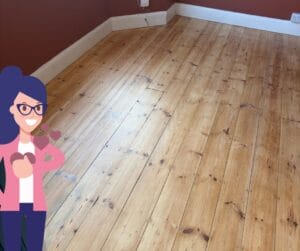
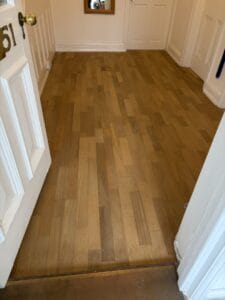
At first, it looked pale and unfinished, which can be alarming if you have never seen your boards raw. Then the grain began to show more clearly, and the tone warmed up. The darker patches softened. The “rug ghost” outlines started to disappear.
Anna stood in the doorway at one point and said, “It’s like it can breathe again.”
That’s not a technical term… but it’s exactly right.
Because the floor was not just scratched… It was suffocated by years of dull finish as well as uneven wear.
Sanding was not a makeover. It was a release.
Choosing the finish… the part that decides the mood
This is where so many people get stuck.
They think the finish choice is just a practical detail, but it is actually a design decision too. It affects how light moves, how clean the floor feels, and how forgiving it is for real life.
Anna wanted something that felt natural, not shiny, not “new build glossy”…. She also wanted it to be able to cope with daily use without needing constant fuss.
So, we talked through what matters. A very matte finish can look beautiful, but it can show marks more easily in busy areas if the home is hard on floors. A satin can reflect a little more light and feel slightly easier day to day. A high gloss is rarely right for lived-in family homes, because it tends to highlight every tiny texture, and it can feel too formal.
This is also where sealing matters. The sanding is the reset, but the protection is what keeps the floor feeling good. If you want the floor to stay “main character” without constant worry, read up on wood floor sealing and finishing, because the finish choice should suit the way you actually live.
The final choice was about protecting the floor and protecting her peace.
For maintenance basics from an industry body, you can also reference the British Wood Flooring Association guidance here!
Drying time and living around it, realistic, not idealised
One of the reasons people delay floor sanding is the fear of being displaced.
So, we speak about drying time like adults, not like a brochure.
Anna needed to use her front door. She needed a clear plan for that first day and night. She needed to know when she could put furniture back, when she could walk normally, and what “careful” actually means.
We set it out in plain terms, with sensible precautions, and we kept the process tidy, so it did not feel like her house had become a building site.
The whole thing felt manageable… because it was managed.
The reveal… when the hallway stopped saying sorry
The final moment was not the shine… It was the feeling.
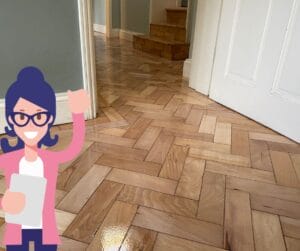
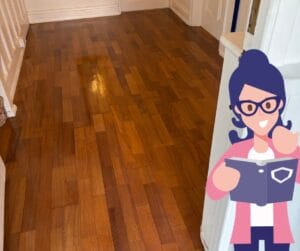
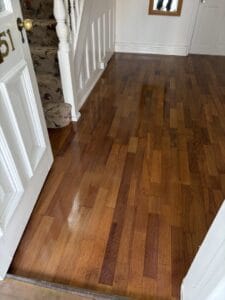
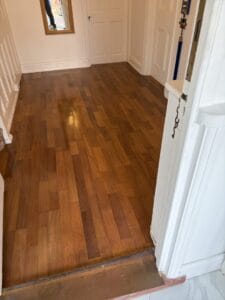
The boards looked even and warm.
The grain was suddenly visible again… it had a new lease of life!!
The space felt lighter… but not bleached.
The scuffed traffic path no longer looked like a permanent stain in the middle of her home.
Anna walked in barefoot… slowly… like people do when something feels precious.
She said, “Oh my, I forgot it could look like this!”
And that’s the real before and after… Not just visual… it’s more emotional.
A hallway that used to feel like an entry point now felt like an arrival.
The floor did not just look better. It changed how the house greeted people, including her.
What makes a floor feel like the main character
A floor becomes the main character when it looks intentional.
That comes down to three things.
First, consistency… yes, consistency, not perfection! The floor should feel even enough that your eye relaxes. Timber can still show its character, knots, gentle variation, and a little history, but it should not feel like damage is running the show.
Second, the right finish for the life being lived on it. A beautiful finish that stresses you out is not beautiful. The right finish supports the way you actually live.
Third, a process that respects the home. If the job feels chaotic, the result rarely feels calm. People remember how the work felt, not just how it looked.
If you’re comparing quotes, here’s what to check
If you’re getting quotes for wood floor sanding in Cambridge, it can be hard to compare like for like.
Look at what is included, not just the number. Ask what prep and protection are part of the job, and whether edges and details are handled properly. Clarify how dust is controlled and what your home will feel like during the work. And ask what happens if you notice something once it has cured, because a good service is not only the day of the job, it’s the accountability afterwards.
The “cheapest” quote is not always the lowest cost, especially if it leaves you with a mess, stress, or a finish that does not suit your home.
The next step, if this feels familiar…
If your wood floor has slipped into the background and you miss how it used to feel when you first moved in, not to worry, you don’t have to decide anything today.
But if you want an opinion on whether sanding is right, what finish would suit your home, and how to plan it without chaos, we can talk it through.
A quick look, a clear plan, and peace of mind that you’re making the right choice.
FAQs
How do I know if my wood floor needs sanding?
If the finish is worn through in places, looks patchy, or feels rough even after cleaning, sanding is often the next sensible step. If the boards are still solid, sanding can usually restore the look and protect the timber again.
Will sanding get rid of dark stains and rug marks?
Often yes, especially if the marks are in the old finish and ground-in grime rather than deep in the timber. Some deeper stains can lighten but not vanish completely. A good assessment will set expectations before any work begins.
Is floor sanding very dusty?
Modern professional sanding is designed to control dust far better than some older methods, but it is still a type of construction task. The key is just if they have protection, tidy work, and a clear end-of-day setup so your home still feels like your home, not a building site.
What finish is best for a busy home?
The best finish is really simple… It’s the one that suits your lifestyle and the look you want. So that it doesn’t make you feel on edge about using it… I mean that’s what it’s for right… walking on it. A conversation about sheen level, durability, and maintenance will make this decision seem easier than you think.
How long does wood floor sanding take?
It depends on the size & condition of the floor, and the finish system chosen. Most homes need a clear plan for access and drying time, so the process feels manageable rather than disruptive.