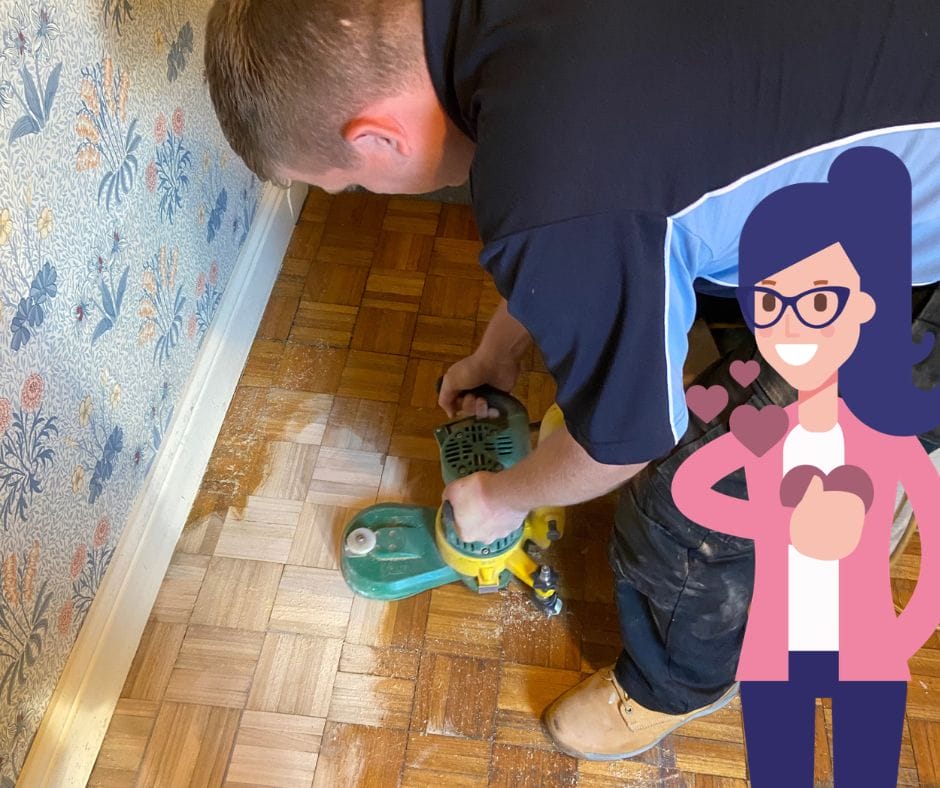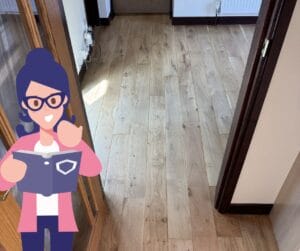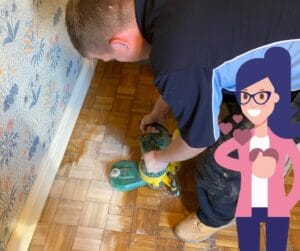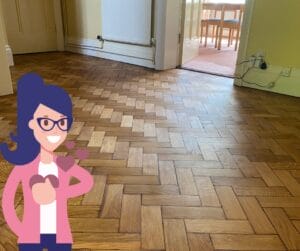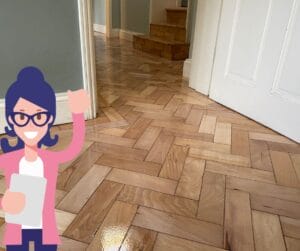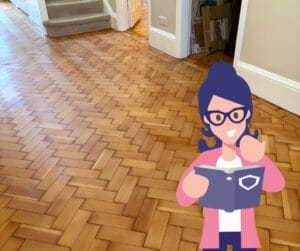
Yes, parquet flooring can be sanded in most homes. If the blocks are stable and there’s enough thickness left, sanding removes the worn surface and restores the original pattern and finish.
Key takeaways
- Most parquet floors can be sanded if they are in stable condition.
- Sanding removes wear, scratches, and dull patches.
- The process needs care due to the patterned layout.
- Not all floors are suitable… thickness and condition must be checked.
- A properly sanded parquet floor can last for many years.
What to know before sanding parquet flooring
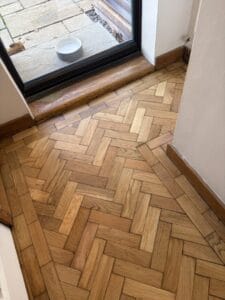
Parquet is different from standard floorboards. Each block is laid in a pattern, often herringbone or brick style, and that changes how it needs to be treated.
That matters because sanding isn’t just about removing the top layer. It needs to be controlled, and even across multiple directions, otherwise the pattern can lose definition or look uneven.
In most homes around Cambridge, parquet floors have already been sanded at least once. So the first step is always checking how much usable wood is left.
If there is enough depth, sanding is usually the safest way to restore the floor properly.
When parquet sanding is the right choice
Most people start looking into sanding when the floor no longer feels clean, even after regular care.
You might notice:
- worn paths where the finish has faded
- scratches or small dents from years of use
- dark patches where old coatings have broken down
- a general tired look across the whole room
When this happens, cleaning alone will not bring the finish back. The surface layer has already worn away.
Sanding removes that damaged layer and gives you a fresh, even base to refinish. That is where the real transformation happens.
When sanding might not be suitable
There are a few situations where sanding needs a closer look before going ahead.
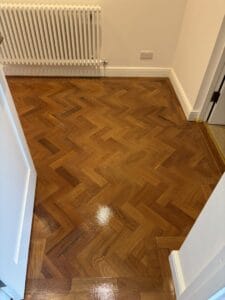
If blocks are loose, lifting, or heavily damaged, those areas need stabilising first. Sanding over movement can make the problem worse.
If the floor has already been sanded multiple times, there may not be enough thickness left. Parquet blocks are not as deep as full floorboards, so this check is important.
In older Cambridge properties, we sometimes see bitumen-backed parquet. This can still be sanded, but it needs the right preparation and care.
What happens during parquet floor sanding
Most homeowners want to know what the process feels like in their home, not just what the machines do.
The aim is to restore the floor with as little disruption as possible.
The process usually involves:
- preparing the room and checking for loose or damaged blocks
- sanding in controlled stages to level the surface
- refining the finish with finer sanding passes
- applying a protective finish like a lacquer or oil
Drying times depend on the finish chosen, but most floors are ready for light use within a day or two.
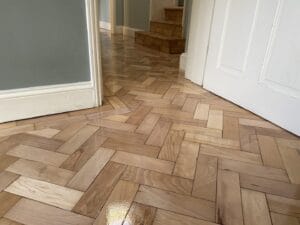
The biggest difference people notice is how consistent the floor looks again. The pattern becomes clearer, and the tone feels more natural.
How long does parquet sanding last?
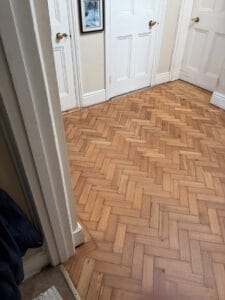
A professionally sanded parquet floor can last many years before needing attention again.
That depends on how the room is used, footwear, pets, and general wear. Hallways and living spaces will naturally show signs sooner than quieter rooms.
The benefit of doing it properly is that you reset the surface. With the right aftercare, you are not just improving the look, you are extending the life of the floor.
Is it worth sanding parquet instead of replacing it?
In most cases, yes.
Parquet flooring is a feature in its own right. Replacing it often means losing the original character of the room, especially in older Cambridge homes.
Sanding keeps what is already there and restores it properly.
It is usually more cost-effective than replacement, and far less disruptive.
If you’re comparing options, here’s what to check
If you’re looking at quotes or deciding whether to go ahead, it helps to compare like for like.
Make sure you understand what preparation is included, especially repairs or loose blocks. Check how many sanding stages are planned, as this affects the final finish. And ask about the type of seal or lacquer, as that changes durability and drying time.
Clear answers here tend to reflect a smoother experience on the day.
FAQs
Can all parquet floors be sanded?
Most can, as long as there is enough wood thickness and the blocks are stable. A quick inspection will confirm this.
How many times can parquet be sanded?
Usually, a few times over its lifetime, depending on the thickness of the blocks and how much has been removed previously.
Is parquet sanding messy?
Modern equipment is designed to control dust well. There will always be some disruption, but it is far cleaner than people expect.
How long does it take?
Most rooms can be completed within one to two days, depending on size and condition.
So, what’s your next step?…
If you’re unsure whether your parquet floor is worth sanding, the easiest way forward is to have it looked at properly.
We can check the condition, explain what’s possible, and give you a clear plan without pressure.
If it helps, we’re here to talk it through when you’re ready.