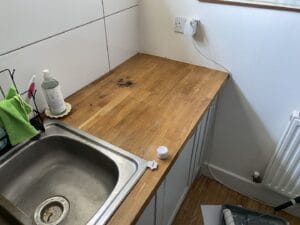
Picture this… You wipe the worktop, and it looks clean, but those dark marks keep coming back in the same spots. It can feel like the wood is “staining itself”, especially around the sink, the kettle, or where a cloth is usually left.
Don’t panic… the good news is that most black marks have a reason, and once you understand it, stopping it really does become simple.
Key takeaways
- Most black marks are caused by moisture, metal contact, or trapped damp (sometimes mildew).
- Sink areas are higher risk because water & daily contact wear the finish faster.
- Drying beats wiping, because it removes moisture instead of spreading it.
- Avoid leaving metal items or damp cloths sitting on the wood.
- If marks keep returning, there is usually an underlying moisture route or worn finish.
What black marks on a wooden worktop usually are
In most homes, black marks on wooden worktops are one of three things.
First, a chemical reaction in the wood (often tannins reacting with metal and moisture).
Second, moisture staining that has travelled into the grain and dried dark.
Third, mildew or mould staining where water has been trapped for too long.
They can look similar, but the “why” matters because prevention is different.
Why black marks often show up around sinks and taps
The sink area is the perfect storm. Water sits, clothes stay damp, and metal items often rest on the surface.
If your worktop is oak, walnut, chestnut, or another tannin-rich timber, moisture plus iron can create a dark blue-black stain. This can happen from something as small as a wet tin can, a metal pan base, a cast iron trivet, a rusty bottle ring, or even iron particles in some scouring pads.
It feels unfair because you did not “spill” anything dramatic. But the wood is reacting quietly over time, the mark looks sudden when it finally darkens.
The hidden culprits that catch people out
A lot of black marking comes from everyday habits that feel harmless.
Leaving a damp tea towel folded on the worktop is one of the biggest ones, especially if it is left overnight. The moisture cannot evaporate evenly, it soaks in and darkens the grain.
Plant pots and vases are another. Condensation collects under the base, then sits against the wood. Even if you only notice a faint ring at first, repeated moisture can turn it grey-black.
Another common one is storing a wet sponge or cleaning brush by the sink. The water drips, the area stays slightly damp, the finish slowly loses its protection right where you need it most.
When black marks are actually mould or mildew
If the mark is patchy, slightly fuzzy-looking, or sits in a damp corner that never seems to fully dry, it may be mildew staining rather than a metal reaction.
This often happens where water gets underneath the lip by the sink cut-out, where silicone has failed, or where the worktop meets a tiled splashback and moisture creeps in.
In those cases, removing the visible stain is only half the job. If moisture is still getting in, the mark will return… the real fix is drying and sealing the vulnerable edge properly.
What to do when a black mark appears
The first step is to work out which category it fits, because that tells you what will actually help.
If it is a metal and moisture reaction, it often needs specialist treatment to lift the stain from within the wood fibres, then a light refinish to restore protection. If it is moisture staining, it may need careful drying, local sanding and re-oiling. If it is mildew-related, you need to deal with the trapped moisture and the source, not just the surface.
If you are ever unsure, it is worth getting advice before you try multiple products. Over-wetting the area or using harsh cleaners can set the stain deeper, and a small issue becomes a larger repair.
How to prevent black marks on a wooden worktop
Prevention is mostly about two things… keeping water from sitting and keeping metal off damp wood.
The simplest habit is drying, not just wiping. Wiping spreads moisture, but drying removes it, the wood stays stable.
Use a small tray or mat for anything metal that might be wet, such as tins, pans, utensils, even soap dispensers if the base stays damp.
Keep clothes hung up to dry rather than folded on the worktop. If you like keeping a cloth by the sink, swap it daily and let the surface fully dry underneath.
And keep the finish topped up. A worktop oil, hardwax oil, or sealed finish (depending on what your worktop has) is there to slow down moisture absorption. When water starts to darken the wood quickly, or the surface feels “thirsty”, it usually means the protective layer is tired, therefore staining becomes more likely.
How to tell if your worktop finish needs attention
You do not need to guess. The worktop will show you.
If water no longer beads and instead sinks in quickly, protection is dropping. If the area around the sink looks dull compared to the rest, it is wearing faster there. If you can feel roughness or raised grain, moisture is getting into the fibres, therefore marks and movement become more likely.
A small, regular maintenance routine is nearly always easier than a rescue job.
If you are comparing options, what matters most
If you are deciding whether to tackle marks yourself or bring in help, compare like for like.
The key questions are what finish is currently on the worktop, how deep the staining is, and whether moisture is getting in from an edge or joint. A professional approach will protect surrounding areas, treat the stain appropriately, and restore the finish, reducing the likelihood that the problem will return. If the plan is only “make the mark lighter”, it may look better briefly, but not stay better, therefore you end up back at the same point.
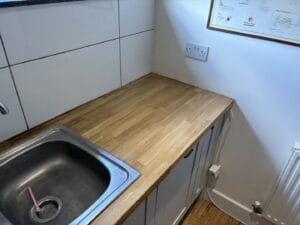
Check out our before and after YouTube of Black Marks on a Wooden Worktop:
FAQs
Are black stains on wood always mould?
No. Many black stains on wooden worktops are a reaction between tannins in the timber and iron in metal objects, triggered by moisture. Mould tends to be patchier and linked to persistent damp, especially at edges and joints.
Why does it happen more on oak worktops?
Oak is tannin-rich, which makes it more prone to dark reactions when iron and water are present. This is normal behaviour for the timber, but it does mean that prevention and finish maintenance matter more.
Will re-oiling stop black marks coming back?
It can help a lot, because a well-maintained finish slows water absorption. But if the stain is caused by metal contact on a damp surface, you still need to change that habit, too. Protection plus behaviour is what stops repeat marking.
Can I just bleach the stain out?
Household bleaches and strong cleaners can discolour timber and damage finishes. They can also push moisture deeper if overused. If you want to treat a mark, it is safer to get advice on the right method for the wood and finish you have.
When should I get professional help?
If the mark is deep, widespread, or keeps returning in the same area, it is worth getting it assessed. The goal is not only to lighten the stain, but to restore the protective finish and fix any moisture entry points, therefore the worktop stays looking good.
If you want, send us a quick photo of the mark and tell us what the worktop is (oak, beech, walnut, etc.). We will tell you what it most likely is, and the way to stop it from happening again.