White water stains on hardwood floors can appear quickly. A damp glass, a leaking plant pot, wet shoes left by the door, or a small spill that sits overnight can leave a pale, cloudy mark that suddenly becomes the only thing you notice when you walk into the room.
The good news is that white water stains are often less serious than dark or black stains. In many cases, moisture has affected the finish on the floor rather than soaking deeply into the timber itself.
That does not mean you should rush in with vinegar, scrubbing pads or strong cleaning products. With wood floors, the wrong first step can sometimes cause more damage than the original mark.
This guide explains what white water stains usually mean, what you can safely do first, what to avoid, and when sanding or professional wood floor restoration may be the better option.
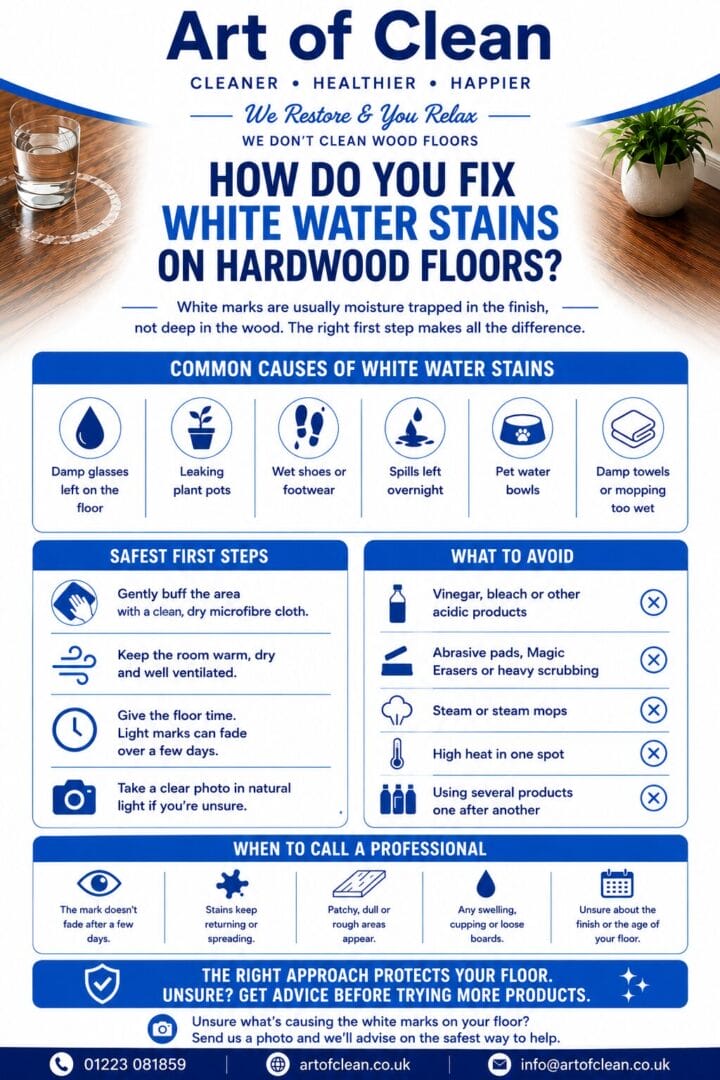
What causes white water stains on hardwood floors?
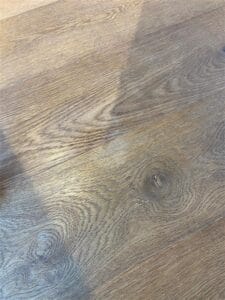
White water stains usually happen when moisture becomes trapped in the protective finish on the surface of the wood.
That is why these marks often look pale, cloudy or slightly milky rather than dark brown or black. The moisture may not have reached the timber itself, but it has affected how the finish reflects light.
You may notice white marks after a wet glass has been left on the floor, a plant pot has leaked, a steam mop has been used, wet shoes have sat near a doorway, or a small spill has been missed overnight. Pet water bowls, damp towels and heat combined with moisture can also leave cloudy marks.
These stains are often more visible on darker timber floors, glossy finishes and rooms where natural light catches the surface.
Why are white stains different from black stains
The colour of the stain gives a useful clue.
White cloudy marks usually mean moisture is sitting near the surface, often in the finish. Black stains usually mean water has gone deeper into the timber and reacted with the wood itself.
That difference matters because surface-level moisture marks are usually easier to improve than deep staining.
Here’s a simple way to think about surface moisture marks and deeper staining…
| Stain type | What it usually means | DIY possible? | Professional sanding needed? |
| White cloudy marks | Moisture trapped in the finish | Sometimes | Sometimes |
| Grey patches | Longer-term moisture exposure | Rarely | Usually |
| Black stains | Deep water or pet damage | Unlikely | Often |
| Raised boards or swelling | Moisture inside the timber | No | Inspection recommended |
If your floor has darker staining, the wider guide Can You Get Stains Off My Wood Floor? It will be the better page to link to once the pillar blog is live. The attached plan sets this white water stain article up as a supporting cluster page for that broader stain removal guide.
Click to enlarge:
Can white water stains disappear on their own?
Sometimes, yes.
Very light white marks can fade as trapped moisture slowly leaves the finish. This is more likely when the stain is fresh, the room is warm and dry, and no strong products have already been used.
If the mark only appeared today or yesterday, it is usually better to pause before trying anything harsh.
Give the floor a little time. Keep the room dry and well ventilated. A fresh surface mark may soften or fade over a few days.
The mistake many people make is reacting too quickly. Scrubbing, heating or adding several products one after another can damage the finish and turn a small mark into a larger dull patch.
What should you avoid using on white water stains?
I can’t stress enough how much I would avoid vinegar, bleach, abrasive pads, Magic Erasers, steam, strong household cleaners, and heavy scrubbing…
Now don’t get me wrong… before working for Art of Clean, I would’ve reached for anything Google said…
But now that I have seen the damage these “hacks” might do, I would definitely not do any of them!
I see vinegar recommended online A LOT, but acidic products can dull many wood floor finishes, especially on older floors or engineered wood.
Abrasive pads can scratch or flatten the sheen. Steam can push more moisture into the finish, which is the opposite of what you want.
The original white mark may have been manageable. The damaged finish left by a harsh remedy can be the bigger repair.
Be careful with heat as well. Too much heat in one place can affect the finish or dry the timber unevenly.
If the floor is valuable to you, newly finished, engineered, or already worn in places, it is safer to ask for advice before trying home remedies.
What is the safest first step?
Start with a clean, dry microfibre cloth.
Gently buff the area without pressing hard. Sometimes the cloudy look is not a stain at all, but residue, cleaning product build-up or moisture sitting on the surface of the finish.
After that, give the floor time in a warm, dry room. Do not soak the area. Do not scrub it. Do not keep adding products to see what happens.
Some people use a hairdryer on a low heat setting to help release very light moisture marks. If you do this, keep it at a safe distance and keep it moving. Never hold heat over one spot. If the finish starts to dull or change, stop straight away.
A clear photo is often more useful than another product. If you are unsure what the mark is, take a picture in natural light before trying anything stronger.
Do baking soda, oils or mayonnaise work?
You will find plenty of online suggestions for baking soda, olive oil, mayonnaise, toothpaste and other household remedies.
The problem is that wood floors do not all have the same finish. A method that seems harmless on one floor can leave residue, dulling or patchiness on another.
A lightly damp baking soda paste may improve some small fresh surface marks, but it can also dull the finish if rubbed too hard or used with too much water. Oils and mayonnaise can leave greasy residue behind, especially if they work into gaps, grain or older finishes.
For a small hidden test area, a very gentle method may be low risk. For a visible room, a valuable floor or engineered wood, it is usually better to ask first.
The safest rule is simple: if the mark matters to you, do not experiment with several home treatments in a row.
When is the mark more serious?
A white mark is more concerning if the floor feels rough, raised or slightly swollen.
That can mean moisture has affected more than the finish. You may notice raised grain, a change in texture, slight board movement, or a mark that keeps returning after cleaning.
Repeated white marks can also suggest that the protective finish has worn thin. Once the finish stops protecting the timber properly, moisture can leave marks more easily every day.
This often happens near doorways, kitchens, pet water bowls, plant pots, and areas cleaned with too much water.
If the surface feels raised or rough, stop home treatment and get advice. At that point, the question is not just how to remove the mark. It is about protecting the timber underneath.
When does sanding become the better option?
Professional sanding may be the better option when the white mark is old, widespread, rough, uneven, or part of a floor that is already scratched and worn.
If water has sat for a long time, if steam mops have been used repeatedly, or if the protective finish has worn away, local cleaning may not be enough. The mark may sit below the surface finish, or the surrounding floor may be too worn for a small repair to blend well.
Sanding removes the affected surface evenly before the floor is finished again. That usually gives a cleaner and more consistent result than trying to spot-treat several patches.
For older floors, many homeowners choose to restore the whole room once white marks, scratches and dull areas start appearing together. It can make more sense than chasing one mark at a time.
If you are also weighing up repair costs, this guide may help: wood floor repair costs in Cambridgeshire.
What does a professional check first?
A good assessment should not jump straight to sanding.
A professional will usually check whether the stain is sitting in the finish or has reached the timber, whether the area is raised, how worn the surrounding finish is, and whether previous products have changed the surface.
The type of floor matters too. Solid wood and engineered wood need different levels of care.
Engineered wood has a real timber top layer, but that layer can be thin. Some engineered floors can be sanded carefully. Others have too little wear layer left for deeper sanding.
The aim is to choose the least disruptive option that is likely to give a good result. That might be a gentle improvement, a local repair, recoating, sanding and refinishing, or wider restoration if the whole floor needs attention.
Can engineered wood floors get white water stains?
Yes. Engineered wood flooring can still get white water marks because it has a real wood surface and a protective finish.
The difference is what can safely be done afterwards.
With solid wood, there is usually more timber available for sanding. With engineered wood, the wear layer needs checking first. If too much of the top layer is removed, the floor may be permanently damaged.
If you are not sure whether your floor is solid wood or engineered wood, do not sand it yourself. Ask before using strong products or attempting any deeper repair.
How do you stop white water stains from coming back?
Most repeat white marks happen because moisture sits on the floor too long, or because the finish no longer gives enough protection.
Wipe spills quickly. Avoid steam mops. Use trays under plant pots. Keep pet water bowls on a suitable mat. Use breathable entrance mats by doors. Do not leave damp towels, shoes or bags sitting on the floor.
It is also worth watching areas where the finish looks dull, thin or patchy. A timely recoat can often protect the floor before moisture reaches the timber.
Wood floors do not need fussy care, but they do need the right kind of care. Less water, quicker drying and a sound protective finish make a big difference.
What should you ask before booking floor restoration?
If the mark has not improved, it is worth asking what will be checked before any sanding is recommended.
A careful company should be able to explain whether the mark looks like finish damage or deeper timber staining, whether spot improvement is realistic, whether the floor is solid or engineered, what finish would be used afterwards, and whether the repaired area is likely to blend with the rest of the room.
Dust control is worth asking about too, especially if the floor is in a lived-in home.
Be cautious of anyone who promises that every watermark will disappear completely without seeing the floor. Some marks can be removed. Some can be improved. Some may need wider sanding and refinishing to make the floor look even again.
Frequently asked questions
Can white water stains on hardwood floors be removed?
Often, yes. Fresh white marks are usually easier to improve because they often sit in the finish rather than deep in the timber. Older, rough or widespread marks may need sanding and refinishing.
Are white water marks permanent?
Not always. Some light marks fade naturally as the finish dries. Others stay visible if moisture has affected the finish or timber more deeply.
Should I use vinegar on white water stains?
Usually no. Vinegar is acidic and can damage or even dull some wood floor finishes, especially on engineered floors, older finishes or visible areas.
Can a steam mop cause white marks on wood floors?
Yes. Repeated steam exposure can push moisture into the finish and may eventually affect the timber underneath.
Are white stains easier to fix than black stains?
Usually, yes. White stains are often closer to the surface. Black stains usually suggest deeper moisture or pet damage, which is harder to remove.
What if the white mark feels rough or raised?
Stop home treatment and ask for advice. Roughness, swelling or raised grain may mean the moisture has reached the timber, not just the finish.
Before you give up on the floor
White water stains can look frustratingly obvious, especially in natural light, but many are more repairable than people first think.
The safest approach is to avoid panic treatments, understand what the mark is telling you, and get advice before the finish is made worse.
If you are unsure whether the mark is in the finish or the timber, send a clear photo. We can usually tell you whether gentle care, a recoat, sanding or a proper inspection is the sensible next step.
This is a YouTube Video of the interview that we got the information from:

Written by Tracey Gilbey, Marketing
For further advice or information on our Carpet and Soft Furnishing care, please don’t hesitate to contact the Art of Clean team on 01223 901549 in Cambridge. Our services include Carpet Cleaning, Upholstery Cleaning, oriental and area Rug Cleaning, Curtain Cleaning, Patio and Driveway Pressure washing, Leather Cleaning, Stone and Tile Floor Cleaning and Wood Floor Sanding and Restoration. We also supply new flooring and carpets through our sister company Art of Flooring. Farthings Cambridge provides our Dry Cleaning service.