When the cold sets in across Cambridge and the surrounding villages, many families notice their wood floors change. You might hear new creaks, see small gaps appear, or find patches that look drier or duller than they did in autumn. It can feel worrying, especially if the floor is a big part of your home. The good news is that most winter changes are normal, and if any real damage is developing, you can spot it early.
This guide walks you through what is worth checking, why it happens, and when restoration can help bring your beautiful wood floors back to life before spring.
Why winter affects wood floors in Cambridge homes
Wood is a natural material that reacts to the environment around it. In winter, two things happen at the same time. The air outside becomes colder and wetter, and the air inside becomes drier because of central heating. That shift pulls moisture out of the boards, which makes them shrink slightly.
Small gaps, light creaking and changes in tone are very common at this time of year.
Families often notice these things most in Cambridge, Ely, Newmarket and the surrounding areas because many homes use their heating for long periods, especially in January and February. If the air becomes too dry, the wood contracts more than usual and the floor can start showing signs of stress.
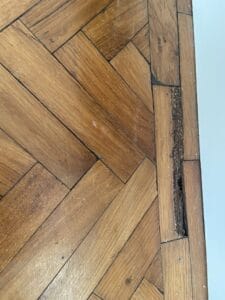
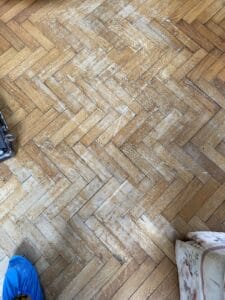
What winter damage to wood floors looks like
Here are the most common things people notice:
- Gaps between planks
A few millimetres is normal in winter. These usually close again once spring brings moisture back into the air. If gaps keep getting bigger or stay open, it can be a sign that the floor needs attention. - Dry or dull patches
Cold air and central heating can draw the natural oils out of the wood. Some patches may look pale or feel rough underfoot. This is often the first stage before cracking begins. - Creaking that is louder than usual
Every floor makes noise, but louder or sharper sounds can mean the boards are moving more than normal due to shrinkage. - Cupping or slight warping
If moisture from wet shoes, pets or outdoor grit sits on the surface, the edges of the boards can rise slightly. This often starts near doors or kitchens. - Small cracks
If the wood becomes too dry, slivers of wood can lift or hairline cracks may appear. These usually need a professional eye to decide whether sanding or repair will help.
Why dryness, moisture and temperature changes matter
Most homes sit comfortably when indoor humidity stays between 40 and 60 per cent. Once heating is on for long hours, the humidity often drops much lower. That makes the wood release moisture quickly.
At the same time, water, snow or grit from outside can soften the finish. Families in Cambridge and the surrounding villages often experience this near front doors or garden entrances.
The combination of dryness and moisture is what creates winter damage. Dryness shrinks the boards. Moisture makes them swell. When the two happen repeatedly, the protective finish eventually begins to fail.
How to check your wood floor before spring
You do not need tools or specialist knowledge. A simple walk around your home can help you spot any changes.
- Look for patches that look lighter than the rest of the floor
This often means the finish is thinning. If left too long, those areas may start absorbing spills. - Run your hand across the surface
If the floor feels rougher in certain places, sanding and refinishing can restore the smooth, even feel. - Step across the floor and listen
If you hear new sounds, the boards may be moving more than they should. - Check areas near doors, kitchens and hallways
These are the places where winter moisture, grit and footfall tend to cause the most wear.
If anything feels unfamiliar or more noticeable than in previous winters, it is worth getting advice. Most issues are easy to correct when caught early.
Can sanding and restoration help after winter damage?
In many cases, yes. Sanding and restoration can give tired floors a fresh start by removing damaged layers, evening out the surface and applying a stronger protective finish. This brings back warmth and colour while helping the wood cope better with future changes in humidity.
If you want to understand the full process, you can take a look at our step-by-step restoration approach. It explains how we protect your home, what the team does each day, and how the finish is built to last.
Some families ask whether sanding is necessary or if a clean and light buff would be enough. The answer depends on how deep the winter wear is. That is why many people start with a quick chat rather than jumping straight into decisions. You can also browse more guides in our Knowledge Centre if you want to explore different care options.
How to keep winter damage from becoming a long-term problem on your wood floor
It only takes a few small habits to stop seasonal wear from turning into permanent damage.
- Wipe up moisture quickly
Snow, rain and slush leave minerals on the wood. Wiping them up prevents finish damage. - Use mats at entrances
This protects the finish from any grit that sneaks in, and helps the floor keep its STUNNING colour. - Keep temperature changes gentle
Sudden heating can cause fast shrinkage. A steady, comfortable temperature is best. - Use a small humidifier if your home feels very dry
This helps the boards stay stable.
These steps do not replace sanding or refinishing when a floor is already worn, but they help protect the finish and keep the wood healthier between professional treatments.
When winter changes might mean it is time for restoration
If the gaps stay open long into spring, or if you see cracks that were not there before, the finish may no longer be protecting the boards. In cases like this, sanding and restoration prevent things from getting worse.
If you are comparing options or want to see how we structure our care levels, this page explains the difference between each service:
Service Levels for Wood Floor Restoration
And if you ever feel the floor might be too damaged to save, our sister company Art of Flooring can help with replacement choices, including design advice and appointment-led showroom support.
Key Takeaways
- Winter dryness and moisture can cause gaps, dullness or light movement in wood floors.
- Many winter changes are completely normal and usually improve once humidity rises in spring.
- Early signs, like rough patches or lifting finish, can be restored through sanding and refinishing.
- A simple walk around your home will help you spot changes before they become bigger problems.
- If you aren’t sure, you can always speak to someone for guidance.
Frequently Asked Questions
- Will winter gaps in my wood floor close up again in spring?
Most small gaps do close naturally once humidity rises. If the gaps stay open or keep widening, the boards may need professional attention. - Can winter damage be repaired without sanding the whole floor?
Light dryness or dull patches can sometimes be refreshed with cleaning and maintenance. Deeper wear, cracks or cupping usually need sanding to restore an even finish. - Is it safe to use water-based cleaners in winter?
You can use them lightly, but avoid soaking the floor. Too much water softens the finish and can cause swelling. A slightly damp mop is enough. - When should I ask someone to look at the floor?
If you see cracking, large gaps, raised edges or finish that has worn through, it is best to get advice. You can always contact us, and we will be happy to help you.
If your floors feel a little tired after winter, you are not alone. Small seasonal changes are normal, but if something does not look right, we are here to help you understand what is happening and what can be done next.
You can see our wood floor restoration service here: