Wood floor stains can feel personal. One small mark from a pet accident, a plant pot, muddy shoes, or a dropped glass of red wine can suddenly become the only thing you notice every time you walk into the room.
The good news is that many wood floor stains can be improved, reduced, or fully removed. Some need gentle cleaning, some need specialist stain treatments, and others may need sanding and refinishing to restore the timber properly. It all depends on what caused the stain, how long it has been there, and whether it has soaked into the wood itself.
If you are trying to work out whether your floor can be saved, this guide will walk you through the most common wood floor stains, what usually causes them, and what can realistically be done next.
Common Wood Floor Stains And What Usually Helps
| Stain Type | Common Cause | DIY Possible? | Usually Needs Sanding? |
| White marks | Moisture or heat | Sometimes | Occasionally |
| Black stains | Pet urine or leaks | Rarely | Often |
| Grease stains | Kitchen oils | Sometimes | Sometimes |
| Rust marks | Metal moisture reaction | Occasionally | Often |
Why wood floor stains happen in the first place
Wood is naturally porous. Even sealed floors are still vulnerable once moisture, oils, pet accidents, or harsh cleaning products sit on the surface for too long.
Some stains stay in the finish layer only. Others soak deeper into the timber fibres. That is usually the difference between a quick improvement and a full restoration job.
Older floors around Cambridge, Ely, Soham, and the surrounding villages often show staining more clearly because the protective finish has worn down over time. Once that happens, everyday spills can leave lasting marks surprisingly quickly.
White stains and cloudy marks on wood floors
White stains are one of the most common issues people notice on wooden flooring. These marks usually come from trapped moisture or heat sitting in the finish layer.
You might see them after:
- Wet shoes or umbrellas
- Plant pots
- Steam mops
- Hot mugs or takeaway containers
- Minor water spills left overnight.
The encouraging part is that white stains often sit in the surface finish rather than deep inside the wood.
In some cases, gentle methods like mineral spirits, a low-heat hairdryer, or a baking soda paste may improve the appearance. Care is important, though, because aggressive rubbing can damage the finish further.
If the mark has spread across multiple boards, professional sanding and resealing may be the cleaner long-term option.
Dark black stains on wood flooring
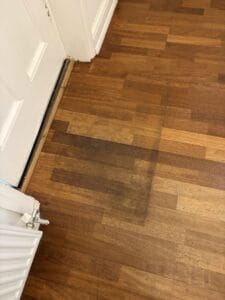
Dark stains usually mean moisture has penetrated deeper into the timber. These are often linked to pet urine, long-term leaks, overflowing plant pots, or repeated water exposure.
These stains can look alarming because they often turn the wood black or very dark brown around the grain.
The colour change happens because tannins in the wood react with moisture and bacteria over time.
Sometimes, hydrogen peroxide treatments can lighten the affected area, but deep black staining often requires sanding. In severe cases, individual boards may need replacing if the damage has gone too deep.
If the floor smells musty as well as looking stained, that is usually a sign that the problem has reached below the surface.
Pet stains on hardwood floors
Pet stains deserve their own mention because they are often a mix of moisture damage, odour, and bacteria.
The challenge with dog or cat urine is timing. Fresh accidents are usually manageable. Older stains that have soaked through the finish become much harder to reverse completely.
People often try strong DIY chemicals first, which can accidentally bleach the wood unevenly or damage the protective coating.
Professional restoration usually focuses on three things:
- Removing the stain itself
- Neutralising odours trapped in the timber
- Restoring colour consistency afterwards
Some floors recover beautifully. Others may need isolated board replacement before refinishing.
Water damage and grey patches
Grey staining often appears after repeated moisture exposure or small leaks that were not spotted quickly enough.
This can happen near:
- Dishwashers
- Doorways
- Radiators
- Bathrooms
- Patio doors
- Under rugs with trapped condensation
Grey patches are usually a sign the timber has stayed damp for too long. Sometimes the floor simply needs sanding back and refinishing. Other times the boards may have started to weaken structurally.
One of the biggest mistakes people make is sealing over grey stains without properly drying or treating the area first. The stain often returns underneath the finish later.
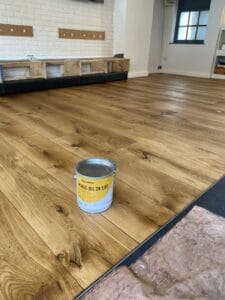
Grease and oil stains on wood floors
Kitchen floors often develop darker, greasy patches over time, especially near cookers and dining areas.
Grease sits differently to water stains because oils soak slowly into the grain and attract dirt over time.
Small fresh marks can sometimes be lifted using baking soda or absorbent powders, but older grease staining usually needs deeper cleaning before refinishing.
Engineered wood flooring can be slightly more delicate here because heavy sanding may not always be possible, depending on the wear layer thickness.
Ink, paint, and dye stains
These are some of the trickiest stains because colour pigments bond quickly with timber fibres.
Common causes include:
- Felt-tip pens
- Hair dye
- Paint spills
- Craft projects
- Printer ink
Quick action matters more here than with many other stains. Once pigments soak below the finish layer, removal becomes harder without sanding.
Sometimes localised refinishing works well. Sometimes the colour remains faintly visible even after restoration.
That sounds frustrating, but most people are surprised by how much improvement is still possible with professional sanding and colour blending.
Rust stains from furniture and plant pots
Metal furniture legs, damp tins, and leaking plant pots can leave orange or dark rust marks on wood flooring.
Rust reacts chemically with timber tannins in a similar way to moisture damage, especially on oak flooring.
Light stains may respond to specialist wood cleaners. Deep rust marks often need sanding to fully remove the discolouration.
If the stain has spread around a plant pot, it is worth checking the floor underneath for hidden moisture damage too.
Sun fading and colour patches
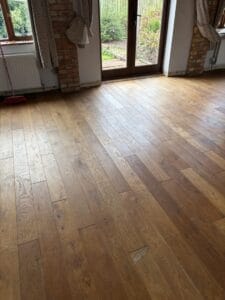
Not every stain is dark. Sometimes the problem is uneven fading where rugs, furniture, or sunlight have changed the floor colour over time.
This is especially common with natural oak floors in bright rooms.
You might notice:
- Pale rectangles under moved rugs
- Darker edges around furniture
- Yellowing in sunlit areas
The floor itself is usually healthy. The colour difference simply becomes more obvious as the wood ages.
Sanding and refinishing usually restores consistency across the room.
Can sanding remove wood floor stains?
In many cases, yes.
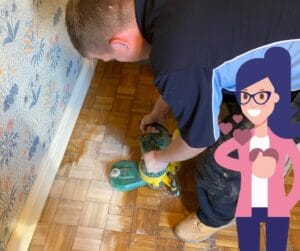
Professional wood floor sanding removes the top surface layer of timber, which means many stains disappear completely once the affected wood is sanded back.
This is often the best solution for:
- Deep water marks
- Pet stains
- Black tannin stains
- Surface damage
- Old finish discolouration
Some stains go deeper than expected though, particularly pet urine and long-term leaks. In those cases, sanding may reduce the appearance dramatically without removing every trace completely.
A good floor restoration company will normally test the area first and explain honestly what level of improvement is realistic.
If you are also weighing up repair costs, this guide may help:
How Much Does It Cost To Repair A Wood Floor In Cambridgeshire?
When stain removal becomes floor restoration
Sometimes the stain itself is only part of the issue.
Older floors often have:
- Worn finishes
- Scratches
- Dull patches
- Uneven colour
- Previous DIY repair attempts
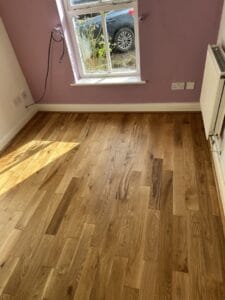
That is why many homeowners choose full sanding and refinishing once stains start becoming noticeable. The result usually feels like getting the whole room back, not just removing one mark.
For homes around Cambridge and Cambridgeshire, this can make older timber floors feel warm, clean, and cared for again without replacing them completely.
Can engineered wood floors be restored too?
Often yes, but with more care.
Engineered wood flooring has a real wood surface layer on top of a stable core. Some engineered floors can be lightly sanded and refinished, while others have very thin wear layers that limit restoration options.
The stain type matters here as well. Surface stains are usually easier to improve than deep moisture damage.
If you are unsure what type of floor you have, a professional inspection is usually safer than aggressive DIY treatments.
How to stop stains from happening again
Most long-term wood floor staining comes from moisture sitting unnoticed for too long.
A few simple habits help protect restored floors:
- Wipe spills quickly
- Use breathable mats near entrances.
- Avoid soaking wet mops.
- Add pads under plant pots.
- Keep pet accidents from sitting overnight.
- Recoat protective finishes before they fully wear away
The earlier a stain is dealt with, the better the chances of avoiding deep restoration work later.
If you’re comparing quotes, here’s what to check
Some companies only quote for sanding itself, while others include stain treatment, repairs, filling, finishing, and aftercare advice as part of the service.
It is worth checking:
- Whether stain testing is included
- If damaged boards can be replaced
- What finish system will be used afterwards?
- How much dust control is included
- Whether the company expects every stain to disappear completely
Clear expectations matter here. A trustworthy floor restoration specialist will explain what is likely to improve, what may remain faintly visible, and which option makes the most sense for your floor.
Frequently asked questions
Can old stains really come out of wood floors?
Many can. Surface stains often respond well to cleaning or sanding. Deep black stains from moisture or pet urine can be harder, but professional restoration usually improves them significantly.
Will sanding damage my wood floor?
Not when done correctly. Professional sanding removes only a controlled top layer of timber and is designed to restore the floor safely.
Can I remove wood floor stains myself?
Some light surface stains can improve with careful DIY treatment. Strong chemicals, over-wetting, or aggressive sanding can make damage worse though, especially on engineered flooring.
Are black stains permanent?
Not always. Some black stains sand out completely. Others may leave slight colour variation if the moisture damage has gone deep into the timber.
Do engineered wood floors stain differently?
Yes. Engineered flooring has a thinner real wood layer, so restoration options depend on how deep the stain is and how thick the wear layer remains.
How do professionals treat wood floor stains?
Usually, through a combination of cleaning, stain treatment, sanding, colour blending, and resealing, depending on the stain type and floor condition.
Before you give up on the floor
Most wood floor stains are not the end of the floor.
Some need quick cleaning. Some need careful restoration. Some simply need an honest assessment before anyone promises a perfect result.
The important thing is knowing what caused the stain, how deep it has gone, and what approach protects the floor long term.
If you are unsure, getting advice early usually prevents a small stain from becoming a much bigger repair later.
We’re here when you’re ready.