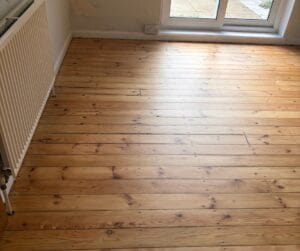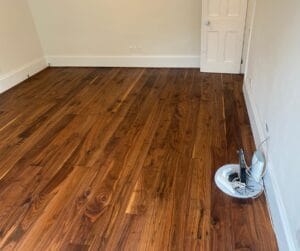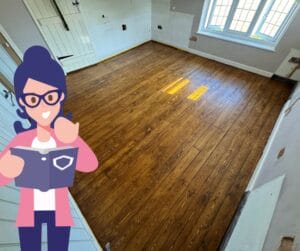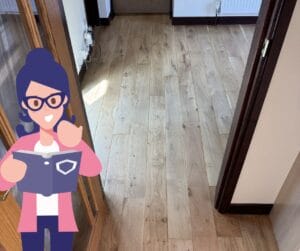
Grease and oil stains on wood floors are common in kitchens, dining rooms and busy family areas. They often start as small darker patches near the cooker, under the dining table, or where food is prepared.
Over time, they can spread, collect dirt and make the floor look tired even after it has been cleaned.
The good news is that some grease marks can be improved.
Fresh oil marks are often easier to deal with than older stains.
Older grease stains can be more stubborn because the oil may have soaked through the finish and into the grain of the wood.
This guide explains why grease stains behave differently, what you can safely try at home, and when professional wood floor restoration may be the better option.
Why do grease stains look different from water stains?
Water stains on wood often show as white rings, grey marks or dark patches.
Grease and oil stains usually behave differently.
Oil does not evaporate in the same way as water. It can sit in the surface, soften old finishes, soak slowly into exposed timber and attract dirt.
That is why a grease stain can look darker and slightly dirty rather than pale or cloudy.
In a kitchen, this can happen from cooking oil splashes, dropped food, oily pet food, furniture polish, waxy cleaning products or years of fine grease in the air.
The National Wood Flooring Association gives simple maintenance advice for wood floors, including cleaning spills quickly and avoiding wet cleaning methods that can damage timber.
Their general wood floor maintenance guidance is a useful external reference for homeowners who want to look after wooden floors properly: NWFA wood floor maintenance advice.
Where grease and oil stains usually appear
Grease marks are most common in places where oil is used or where food is often dropped. You might notice them:
- Near the cooker or hob.
- Under a dining table.
- Around a kitchen island.
- Beside pet feeding bowls.
- Near bins or recycling areas.
In walkways where outdoor dirt and kitchen grease get walked together into the floor.
Sometimes the floor is not stained by one big spill. It is simply a build-up of tiny amounts of grease, cleaning residue and dirt over many months or years.
How to tell if the grease is on the surface or in the wood
A surface grease mark may feel slightly sticky or dull. It may improve after careful cleaning with a suitable wood floor cleaner. These marks are usually sitting in the finish rather than deep in the wood.
A deeper oil stain is different. It may look like a dark patch that stays visible even after the floor has been cleaned. The edge may look soft or uneven rather than sharply outlined. If the finish is worn, scratched or bare, the oil has a much easier route into the grain.
A simple way to think about it is this: if the grease is on the finish, cleaning may help. If the grease is in the wood, the floor may need deeper cleaning, sanding or refinishing.
For a wider look at different stain types, this cluster page should link back to the main guide: Can You Get Stains Off My Wood Floor?
What to do if the oil spill is fresh
Fresh oil spills need a gentle, quick response. Do not rub hard, because rubbing can push oil further into worn areas of the floor.
Blot the spill with kitchen roll or a clean absorbent cloth. Press gently and keep changing to a clean section until no more oil transfers.
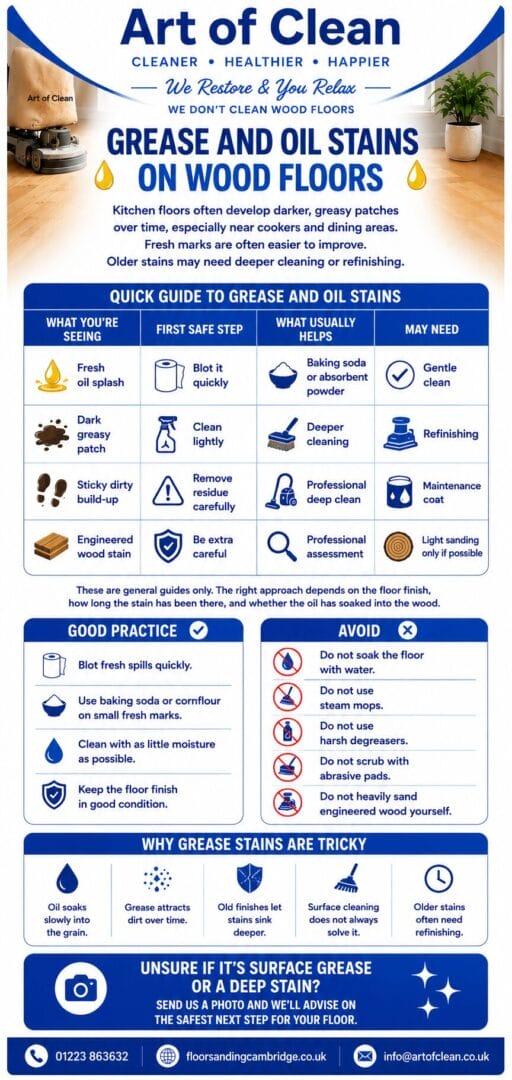
For a small fresh mark, you can try sprinkling baking soda, cornflour or another absorbent powder over the area. Leave it to sit, then lift it away carefully. The aim is to draw out oil without soaking the floor.
After that, clean lightly with a wood floor cleaner that is suitable for your floor finish. Use as little moisture as possible and dry the area afterwards.
Avoid steam mops, harsh degreasers and strong household chemicals. They may remove some grease, but they can also damage the floor finish or leave the patch looking worse.
Can baking soda remove oil from a wood floor?
Baking soda can sometimes help with small, fresh oil marks because it is absorbent. It is not a guaranteed stain remover, and it is not a cure for older grease that has gone deep into the timber.
Use it carefully. Sprinkle it over the mark, leave it to absorb, then remove it without scrubbing aggressively. If you make a paste, use great care because too much water is not friendly to wood floors.
If the mark is on an oiled wood floor, be especially careful. Some oiled floors are designed to be maintained with specific care products.
Using the wrong cleaner can strip protection or leave an uneven patch. Floor Sanding Cambridge’s wood sanding and oiling page explains that hard wax oil gives a natural finish and helps resist moisture and dirt, but even protected floors still need the right care.
Why older grease stains are harder to remove
Older grease stains usually need more than a surface clean. This is because oil can move into the open grain, especially where the finish has worn away.
Kitchens are a perfect example. A wood floor near a cooker may deal with heat, foot traffic, cleaning products, food spills and fine airborne grease. Over time, the finish wears thinner. Once that protective layer is no longer doing its job, grease and dirt can become part of the floor rather than something sitting on top.
At this stage, repeated mopping often makes the floor look no better. In some cases, it can make things worse because moisture can affect the surrounding boards.
Will sanding remove grease and oil stains?
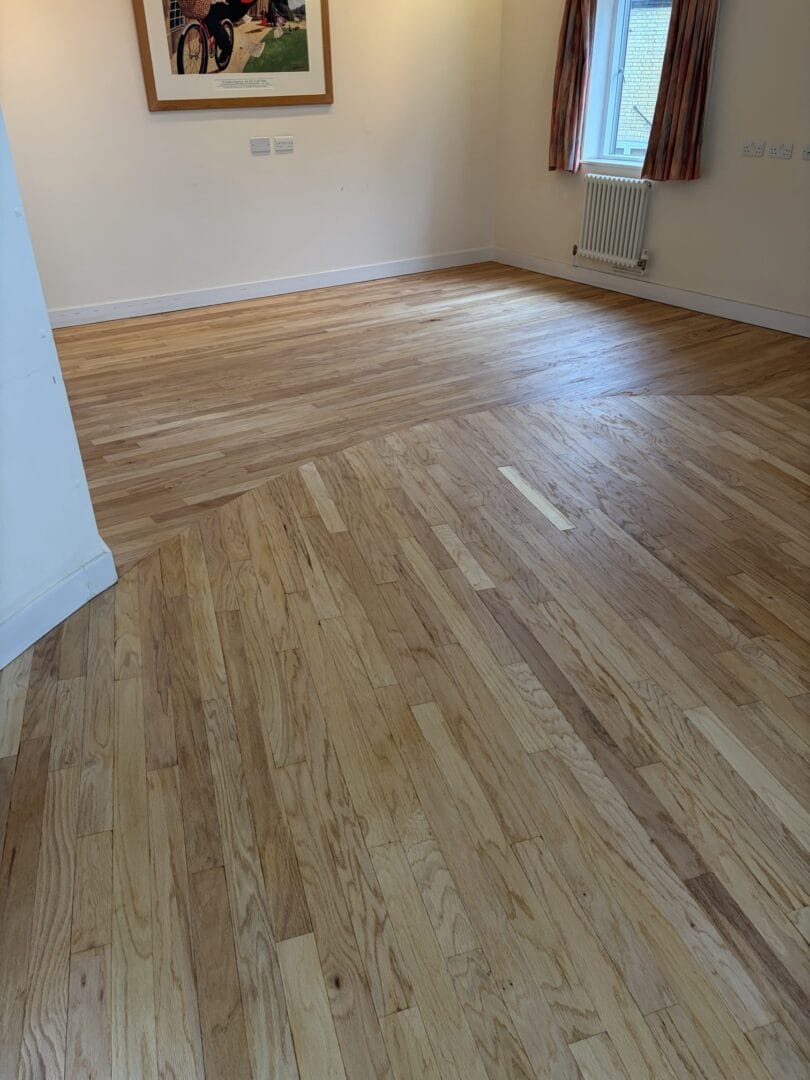
Sanding can often improve grease and oil stains, but it depends how deep the oil has gone.
If the stain is mainly in the old finish or the very top of the timber, sanding and refinishing can make such a big difference. If the oil has gone deep into the boards, sanding may reduce the mark but not remove every trace of it.
This is why a proper assessment matters. A professional can look at the type of wood, the finish, the depth of the stain and whether the floor is solid wood or engineered wood.
For floors that need a tougher protective finish after sanding, the wood sanding and lacquer service page is a useful guide. Lacquer can be a practical choice for some busy areas, depending on the look and use of the room.
What about engineered wood flooring?
Engineered wood flooring needs extra care. It has a real wood layer on top, but that layer is not always thick enough for heavy sanding. This top layer is often called the wear layer.
If the wear layer is thick enough, careful sanding may be possible. If it is thin, aggressive sanding can damage the board and expose the layer underneath. That is why older grease staining on engineered wood should be checked before anyone starts sanding.
Sometimes the answer may be a lighter clean and recoat rather than a full sand. Sometimes local repair is possible. In more severe cases, board replacement may be needed before refinishing.
Why the finish matters
The right answer depends partly on whether your floor is oiled, lacquered or finished with something else.
An oiled floor can often be easier to refresh in smaller areas, but oil stains can also blend into the finish and become difficult to separate from normal wear.
A lacquered floor has more of a surface film. If that film is intact, it can give good protection. If it is scratched, worn or cracked, grease can creep into the damaged areas and leave darker patches.
This is why two similar looking stains can need different treatment. The stain is only part of the story. The finish, age and condition of the floor matter too.
What not to do with grease stains on wood floors
- Do not soak the floor with water.
- Do not use a steam mop.
- Do not scrub with abrasive pads.
- Do not pour strong degreaser onto the floor.
- Do not keep trying different chemicals if the first one fails.
- Do not sand one patch heavily by hand and expect it to blend in.
These steps can cause dull patches, raised grain, uneven colour or damage to the protective finish. It is usually better to stop and get advice before a small stain turns into a larger repair.
When a professional clean may be enough
Not every greasy floor needs sanding. If the dirt and grease are mostly sitting in the finish, a professional deep clean may improve the floor without removing wood.
This can be useful when the floor is generally sound but looks dull, sticky or uneven. A careful clean can remove residues that normal mopping leaves behind. After that, the floor may be suitable for a maintenance coat or refresh, depending on the finish.
The wood floor restoration page explains that some floors do not need sanding and can be deep-cleaned and finished with the right oil where suitable.
When refinishing is the better option
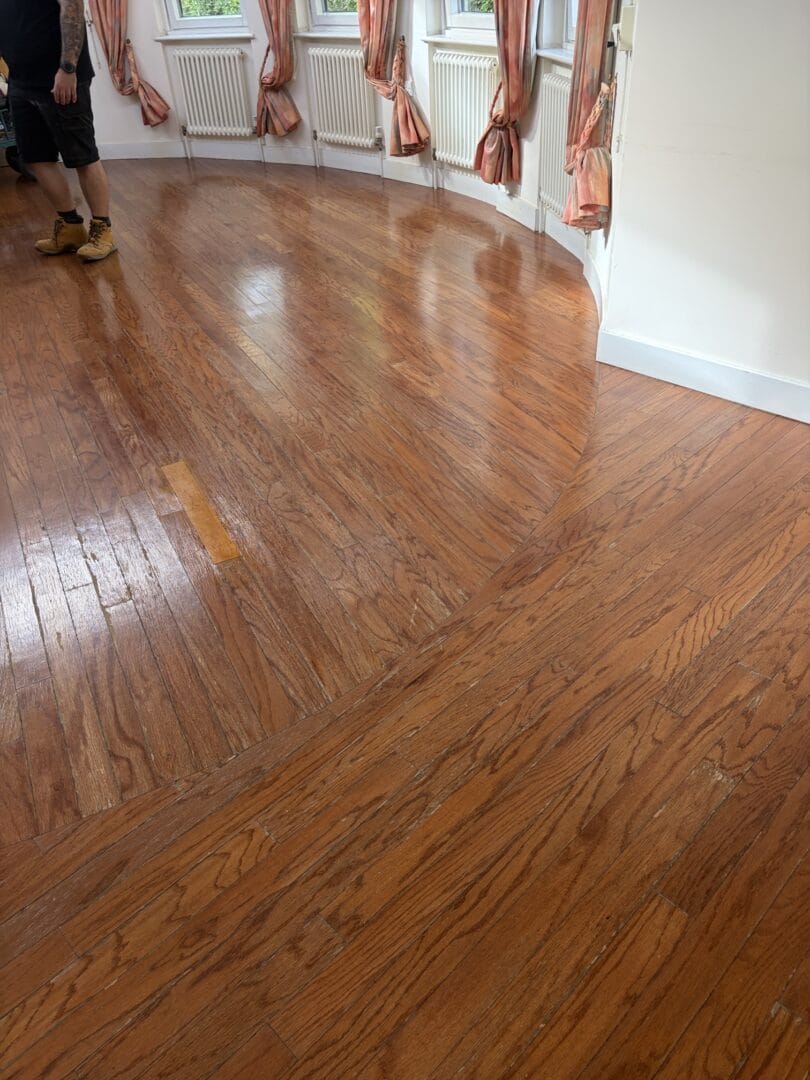
Refinishing is often the better option when the stain is old, dark, widespread or sitting in a worn area of floor.
This may involve sanding the floor back, treating the stained area where possible, then applying a new protective finish. The aim is not just to improve the stain. It is also to protect the floor so everyday kitchen use does not mark it as easily again.
Refinishing may be worth considering if:
- The greasy patches stay dark after careful cleaning.
- The floor feels sticky or dirty soon after mopping.
- The finish is worn near the cooker or dining area.
- There are several stains across the same room.
- You want the whole floor to look even again.
- You are already planning to restore the floor.
Can the stain always be removed completely?
Not always. This is important to say clearly.
Some grease and oil stains can be removed or greatly improved. Others can be reduced but may leave a faint shadow, especially if the oil has soaked deeply into older timber. Very deep stains may need board replacement if a completely even result is wanted.
A good floor restoration company should be honest about this before the work starts. The aim is to give you a realistic idea of what can be improved, what may remain, and which option gives the best balance between result, cost and disruption.
How to prevent grease stains coming back
Once the floor has been cleaned or refinished, prevention is much easier than stain removal.
- Wipe cooking oil spills straight away.
- Use mats in splash-prone areas, but choose breathable mats that will not trap moisture underneath.
- Clean with the product recommended for your floor finish.
- Avoid oily soaps and waxy cleaners unless they are right for your specific floor.
- Do not drag dining chairs across the finish.
- Keep pet feeding areas clean and dry.
- Book maintenance before the finish wears through to bare wood.
This last point matters. Most serious stains happen when the protective finish has already worn thin. Keeping the finish in good condition gives the timber a better chance.
Need help with grease stains on a wood floor in Cambridge?
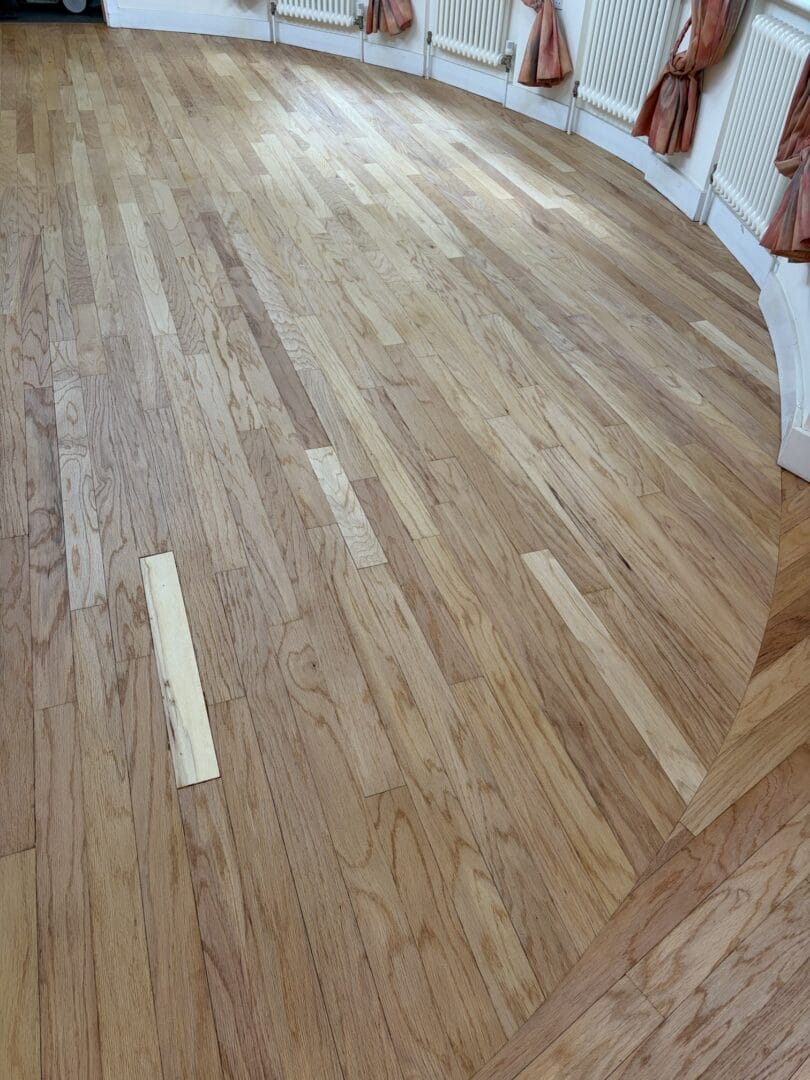
If your kitchen floor has dark greasy patches, oil marks or worn areas that no longer clean up properly, it may still be possible to improve it. +
Floor Sanding Cambridge can assess the floor, explain whether cleaning, sanding, oiling, lacquer or repair is the most sensible next step, and help you avoid doing anything that could make the stain worse.
You can start with the main wood floor stain guide or get in touch through the contact page for advice about your own floor.