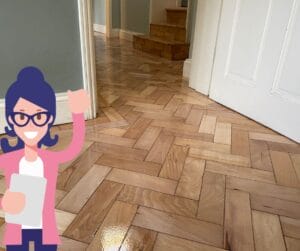
Not every tired wooden floor needs sanding. Sometimes a careful clean or recoat may be enough. The important part is knowing which route is right before you spend money on the wrong work.
When a wooden floor starts to look dull, grey, patchy or marked, it is easy to assume it needs sanding. In some cases, that will be true. If the protective finish has worn away and the timber itself is scratched, stained or exposed, sanding may be the sensible next step.
But not every tired-looking floor has reached that stage.
Sometimes the problem is surface dirt. Sometimes it is a cleaning product build-up. Sometimes the finish is still there, but it has lost its even appearance. In those cases, a professional clean or a light recoat may improve the floor without removing wood unnecessarily.
This guide explains how to tell the difference, what a technician checks first, and when cleaning, recoating or sanding is likely to be the right option.
The quick answer…
If the protective finish is still mostly intact, cleaning or recoating may be enough. If the finish has worn through and the wood itself is marked, grey, rough or stained, sanding may be needed.
A wooden floor usually has a protective finish on top. That finish might be oil, lacquer or another treatment. Its job is to help protect the timber underneath from dirt, moisture and everyday wear.
When the finish is still doing its job, the floor may only need cleaning, maintenance or a fresh coat of finish.
When the finish has failed, the timber can start absorbing dirt and moisture. This is when the floor may look grey, dark, rough or patchy. At that point, cleaning alone may not be enough because the problem is no longer just sitting on the surface.
If your floor still looks dirty after mopping, this may also be a sign that the issue is more than simple dust or daily dirt. Our guide on why a wooden floor still looks dirty after mopping explains this in more detail.
Why a wooden floor can look tired without being ruined
A tired floor is not always a failed floor.
Wooden floors work hard. Hallways, kitchens, living rooms and dining areas often show wear long before the rest of the home. Shoes bring in grit. Chairs move backwards and forwards. Pets, children, furniture and cleaning routines all affect the finish over time.
A floor may look tired because of:
- small scratches in the finish
- dull patches from everyday traffic
- cleaning product residue
- Light surface soiling
- Grit damage near entrances
- areas where rugs or furniture have changed the wear pattern
- a finish that has thinned but not completely failed
In these situations, the floor may still have enough protection left for cleaning or recoating to be considered.
The key question is not simply, “Does the floor look dull?” It is, “Is the problem on top of the finish, in the finish, or into the wood?”
When cleaning may be enough
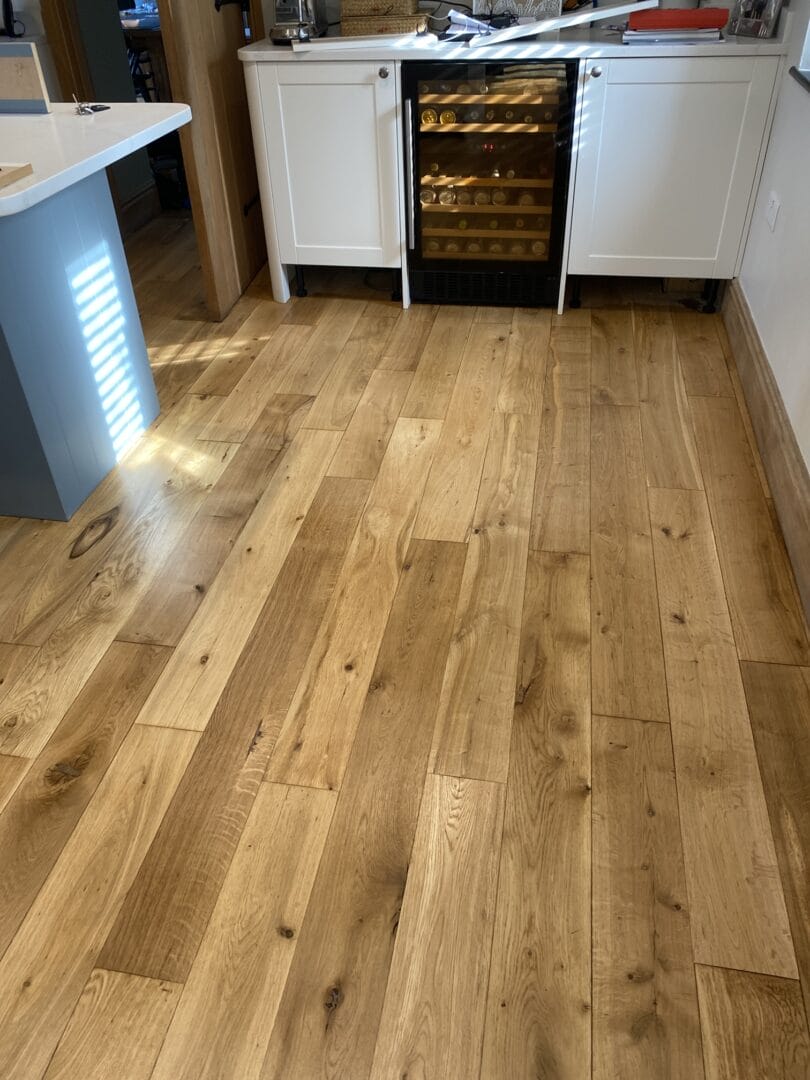
Cleaning may be suitable when the dirt is sitting on top of the finish, not inside the wood.
Professional wood floor cleaning is not the same as mopping. A normal mop may move soil around, leave moisture behind or add more product to a floor that already has residue on it. Professional cleaning uses suitable equipment and products to remove soil from the surface more evenly.
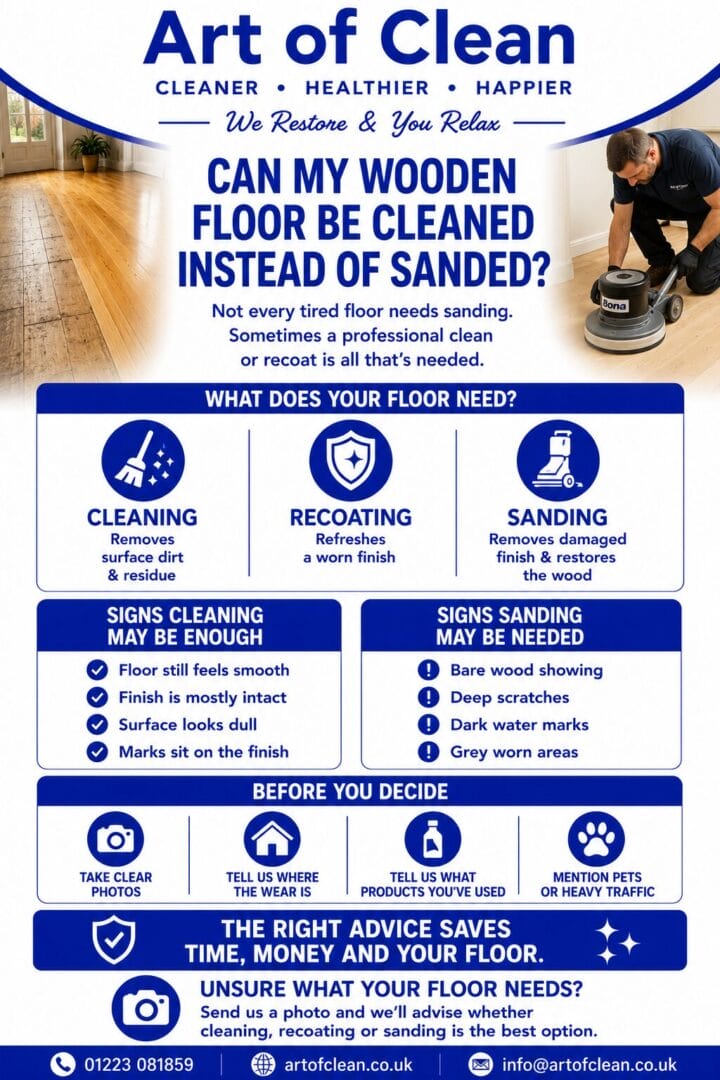
Cleaning may be worth considering when:
- The floor still feels fairly smooth.
- There are no obvious bare grey patches.
- The finish still looks present across most of the room.
- Marks appear to be surface-level
- The dullness may be caused by product build-up.
- The floor has not been heavily scratched or water-damaged
Cleaning will not turn a worn-out finish into a new one, and it will not remove serious damage from the timber. But where the floor is mainly dirty or dulled by residue, it may be the most sensible first step.
This is why an assessment matters. A floor that looks dull in a photo may clean up well, while another floor that looks similar may have a finish failure that needs more work.
When recoating may be the better middle option
Recoating can be useful when the finish is tired, but the floor has not yet gone too far.
Sometimes a floor sits between cleaning and sanding. It may not be badly damaged enough to justify full sanding, but it may need more than cleaning.
Recoating means applying a fresh layer of finish over the existing surface, where the existing finish is suitable and sound enough to accept it. This can help improve protection and appearance without removing as much material from the floor.
Recoating may be suitable when:
- The existing finish is still bonded to the floor.
- The floor has light wear rather than deep damage.
- There are no major stains on the timber.
- The floor does not need heavy sanding to even it out.
- The finish type is compatible with the proposed new coat.
Recoating is not always possible. If the existing finish is peeling, contaminated, too worn or incompatible, a new coat may not bond properly. Deep scratches, black stains, heavy water damage or worn bare timber will not simply disappear under a new finish.
Where oil finishes are suitable, you can read more about wood sanding and oiling. For homes where a harder-wearing finish is needed, our page on wood sanding and lacquer may also be useful.
When sanding is likely to be needed
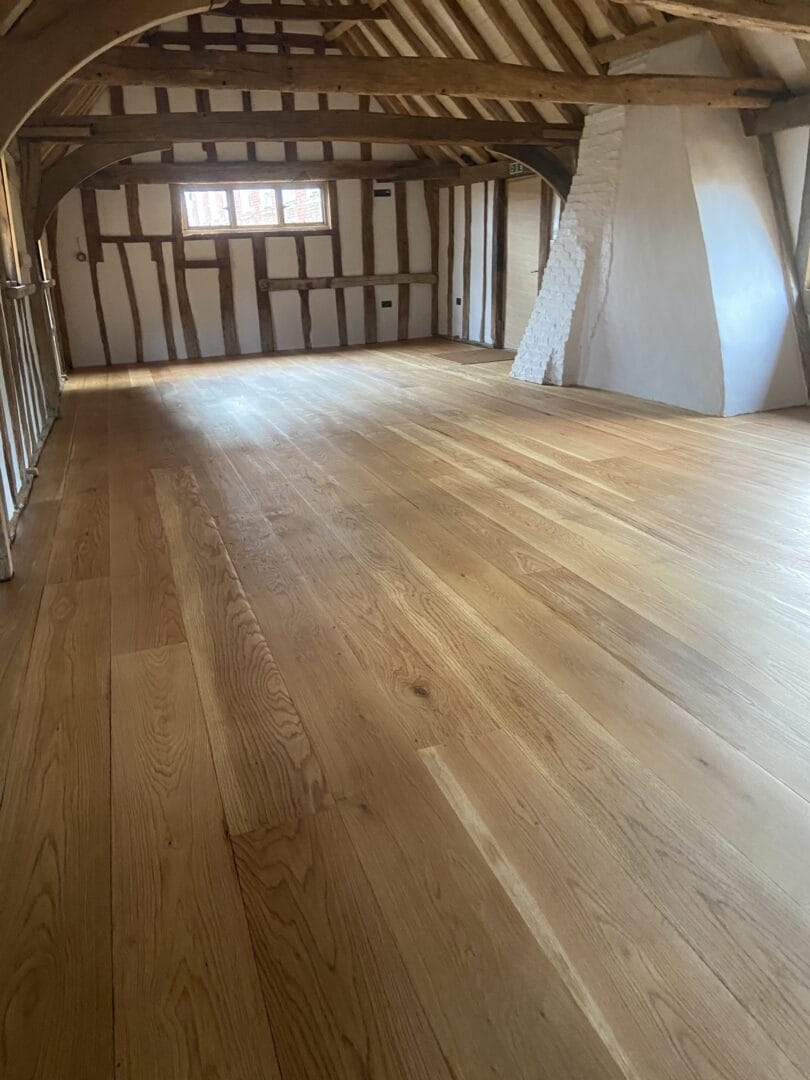
Sanding is usually considered when the protection has failed and the problem has reached the wood itself.
Sanding removes the old finish and a fine layer of the timber surface. It gives the floor a fresh base before a new finish is applied. This can be the right route when the floor has moved beyond cleaning or recoating.
Sanding may be needed when you can see:
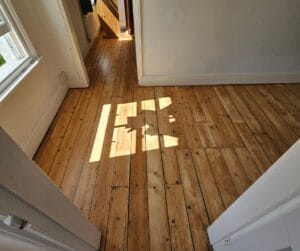
- grey worn areas where the finish has gone
- dark water marks or black staining
- deep scratches or dents
- rough patches where bare wood is exposed
- old coatings that are peeling or uneven
- patchy areas that no longer respond to cleaning
- stains that have soaked into the timber
- boards that need repair before finishing
This does not mean every mark will vanish completely. Some stains go too deep. Some boards carry old damage, previous sanding history or colour variation that remains part of the floor. A good technician should explain what can realistically be improved and what may still be visible.
For floors that need more than cleaning, our wood floor restoration service explains how different floors may need different preparation, sanding, repair and finishing approaches.
What a technician checks before recommending sanding
A good assessment should not rush straight to sanding.
Before recommending cleaning, recoating or sanding, a technician should look at the floor properly. The right route depends on the construction, condition and cause of the problem.
A proper assessment may include checking:
- What type of wood floor is it
- Whether the floor is a solid wood or engineered wood
- How much wear layer is available
- whether the finish has failed or simply dulled
- whether moisture has reached the timber
- whether scratches are in the finish or into the wood
- Whether previous cleaning products have affected the surface#
- whether boards are loose, damaged or uneven
- whether the room use is causing repeated wear
- whether pets, grit, furniture or water are adding to the problem
- whether sanding is safe, necessary and good value
This matters because the most expensive option is not always the right option. Some floors can be improved with a smaller maintenance step. Others need sanding because cleaning would only improve them briefly. A few may need repair or replacement in areas before any finish work is worth doing.
The aim should be clear advice, not pressure.
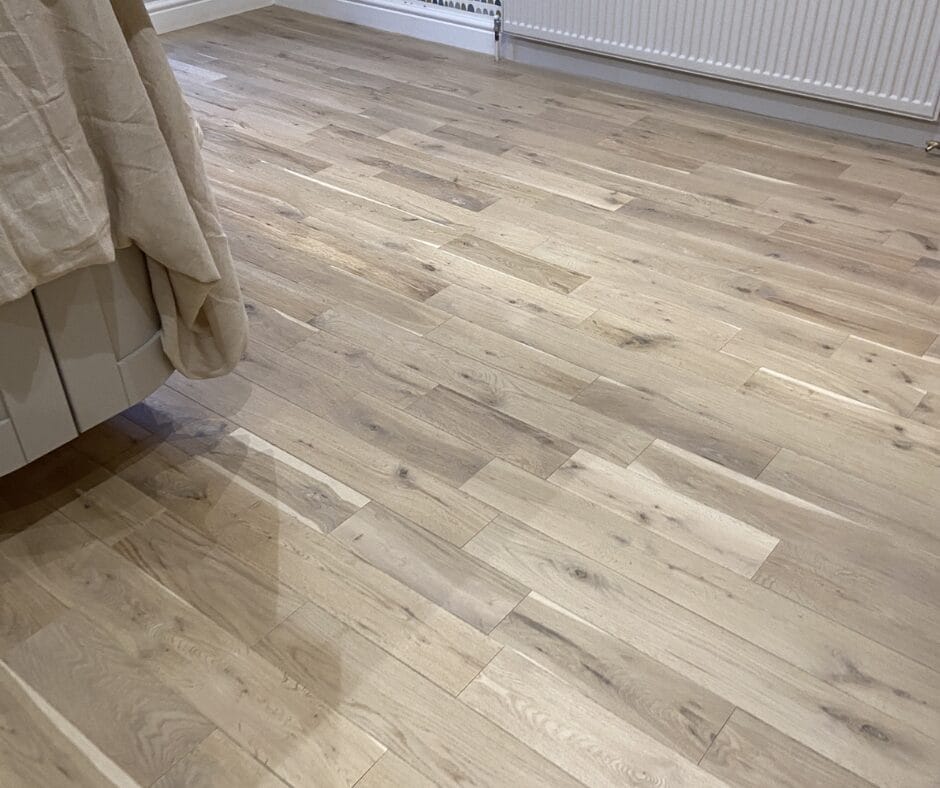
Engineered wood needs extra care.
Not every engineered wood floor can be sanded safely.
Engineered wood does have real wood top layer, but that layer can vary in thickness. Some engineered floors can be sanded carefully. Others have too little wear layer left, especially if they have already been sanded before.
Before sanding engineered wood, a technician needs to understand:
- the thickness of the top layer
- whether the floor has been sanded previously
- How deep the scratches or stains are
- whether the boards are stable
- whether cleaning or recoating would be safer
- whether sanding could expose the lower layers
This is why engineered flooring should not be treated like solid wood without checking. Removing too much material can permanently damage the floor.
For more details, read our guide to wear layers on engineered wood floors.
Why does the cause matter as much as the treatment?
If the cause is not fixed, the same damage can come back.
A floor may be cleaned, recoated or sanded beautifully, but if the cause of the wear remains, the problem can return faster than expected.
Common causes include:
- grit coming in from outside
- lack of entrance matting
- chairs scraping across the same area
- pet claws
- wet mopping
- steam cleaning
- unsuitable cleaning products
- water around sinks, doors or plant pots
- furniture without protective pads
- heavy traffic through one route in the room
This is especially important in kitchens, hallways, garden rooms and open-plan living spaces. These areas often collect grit and moisture, so the finish works harder than it does in quieter rooms.
A useful assessment should help you understand not only what the floor needs now, but also how to look after it afterwards.
Why some people hope to avoid sanding
Sanding is often the right answer for a worn floor, but it is still sensible to avoid unnecessary sanding.
Clients may want to avoid sanding because of cost, disruption, furniture moving or concerns about dust. Those are reasonable concerns.
Modern sanding should be much more controlled than many people expect, but it still involves preparation, access, machinery and finishing time. If cleaning or recoating is enough, it makes sense to consider those options first.
If sanding is needed, it helps to know what to expect. Our guide on whether floor sanding creates lots of dust explains how dust control works and what clients should understand before the job.
Clean, recoat or sand?
The right choice depends on where the problem sits: on the finish, in the finish or in the wood.
Cleaning may suit floors with surface dirt, residue, dullness and a finish that is still mostly intact.
Recoating may suit floors where the finish is tired but still sound enough to accept another coat.
Sanding may suit floors with failed finish, deeper scratches, grey bare wood, stains, old coatings or uneven appearance.
Repair or replacement may be needed where boards are loose, badly damaged, unstable, too thin or affected by serious moisture problems.
The best route is the one that gives the floor a sensible future, not just the quickest visual improvement.
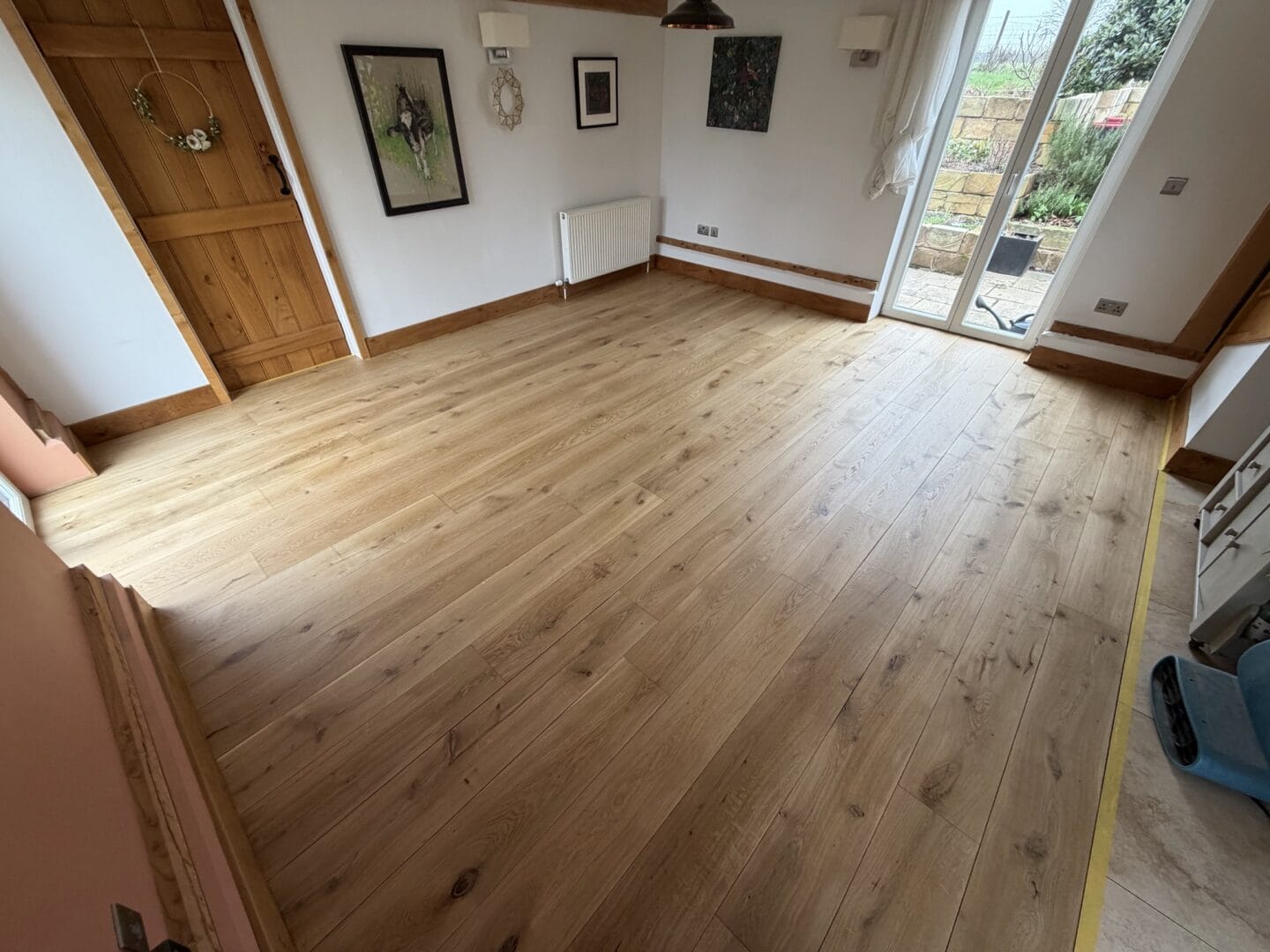
What to do before asking for advice
Take a few clear photos in daylight and tell us what has already been used on the floor.
If you are not sure whether your wooden floor needs cleaning, recoating or sanding, a little information can help us guide you more accurately.
Useful details include:
- Photos of the whole room
- Close-up photos of the worst areas
- Whether your floor is solid or engineered wood, if known
- What cleaning products have been used
- Whether the floor has been sanded before
- Where the wear is worst
- Whether there are pets, water marks or heavy traffic areas
- Whether any boards feel loose or rough
You do not need to diagnose the floor yourself. That is what the assessment is for. The photos and details simply help us understand whether the floor is likely to need cleaning, recoating, sanding or a closer inspection.
If you are unsure what your wooden floor needs, ask us to take a look. We can help you understand the sensible next step before you commit to the wrong work.