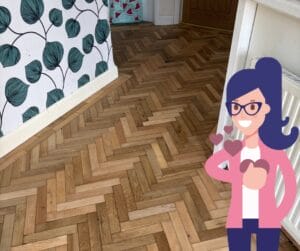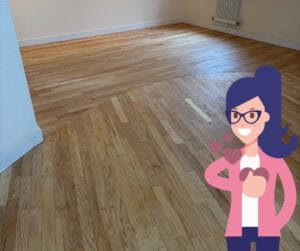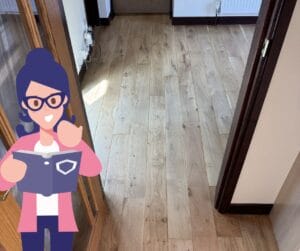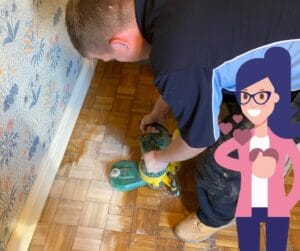
Yes, in many cases you can change the colour of a wood floor by sanding it back and applying a wood floor stain, coloured oil or suitable finishing system. This can make a floor look warmer, darker, softer, more modern or more in keeping with the room.
There are limits, though.
A wood floor is not like painting a wall. The final colour depends on the timber, the age of the floor, previous coatings, sanding results, the product used and how the wood absorbs the colour. A sample is always useful, but even a sample cannot promise that every board will look exactly the same.
That is why colour staining needs careful preparation, realistic expectations and a protective finish afterwards.

What does staining a wood floor mean?
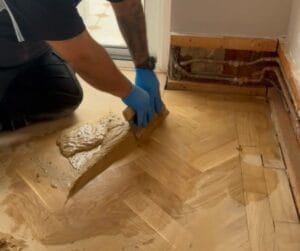
Staining a wood floor means adding colour to the wood before it is sealed.
The stain changes the appearance of the timber but still allows the grain and natural character to show through. This is different from painting, which covers the wood more heavily.
Some clients want to make a pale floor deeper and warmer. Others want to soften orange tones, create a darker oak look, blend old and new boards more evenly, or give a room a more considered finish after sanding.
The right approach depends on the floor.
What we can usually do
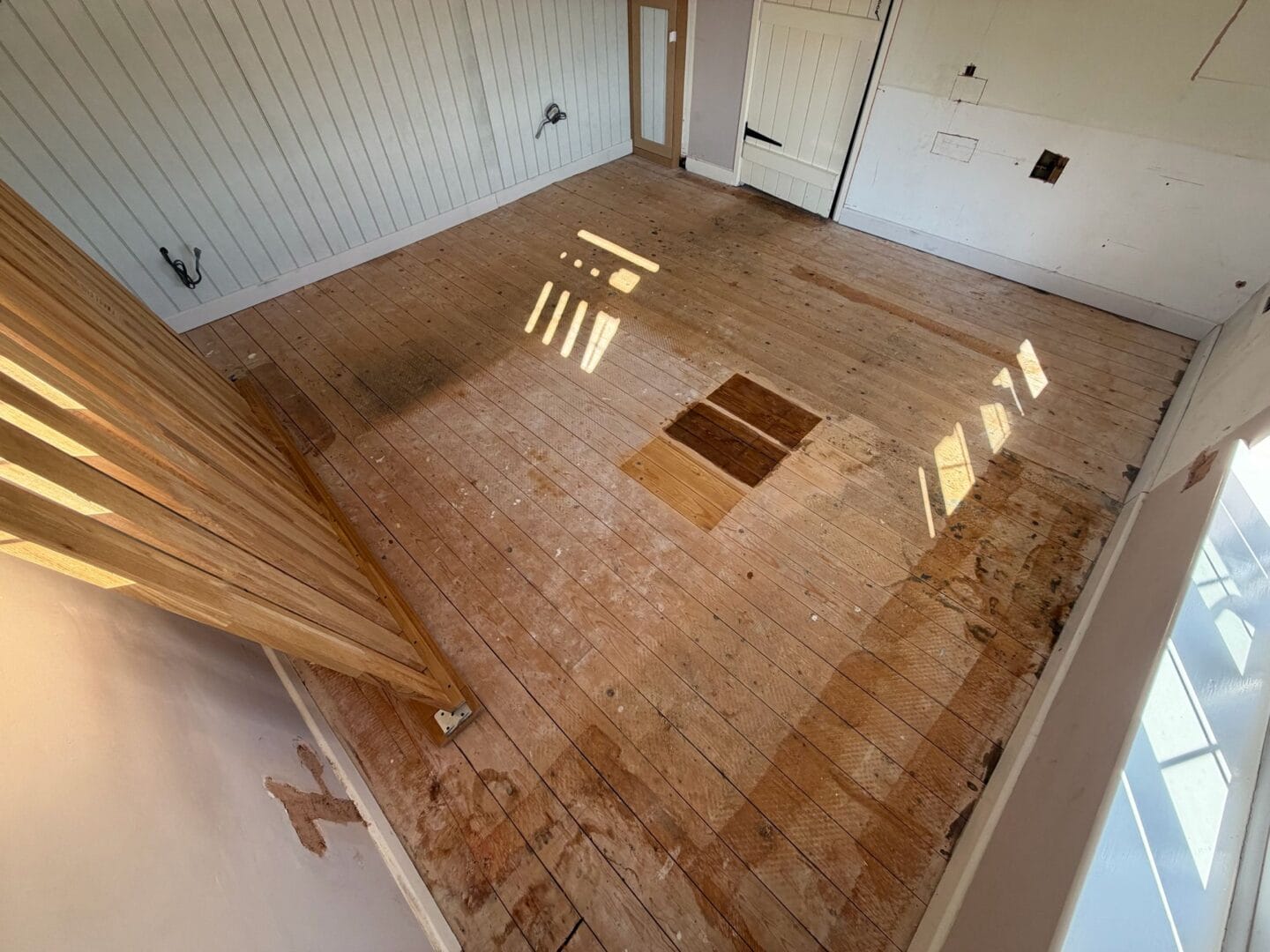
Where the floor is suitable, we can sand the surface back, prepare the timber, test colour options and apply a stain or coloured finish before protecting the floor.
This may help if you want to:
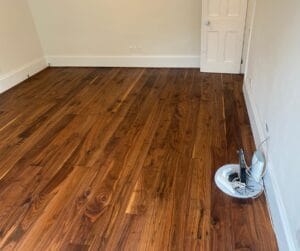
- make a floor darker
- reduce a yellow or orange tone
- create a warmer oak appearance
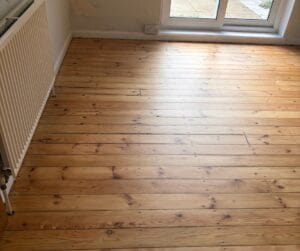
- give pine boards more depth
- make a room feel more modern
- blend a repair more carefully
- change the feel of a floor after sanding
- choose a finish that suits the room better
The aim is not only to change the colour. It is to choose a finish that works with the floor, the room and the way the space is used.
Why preparation matters so much
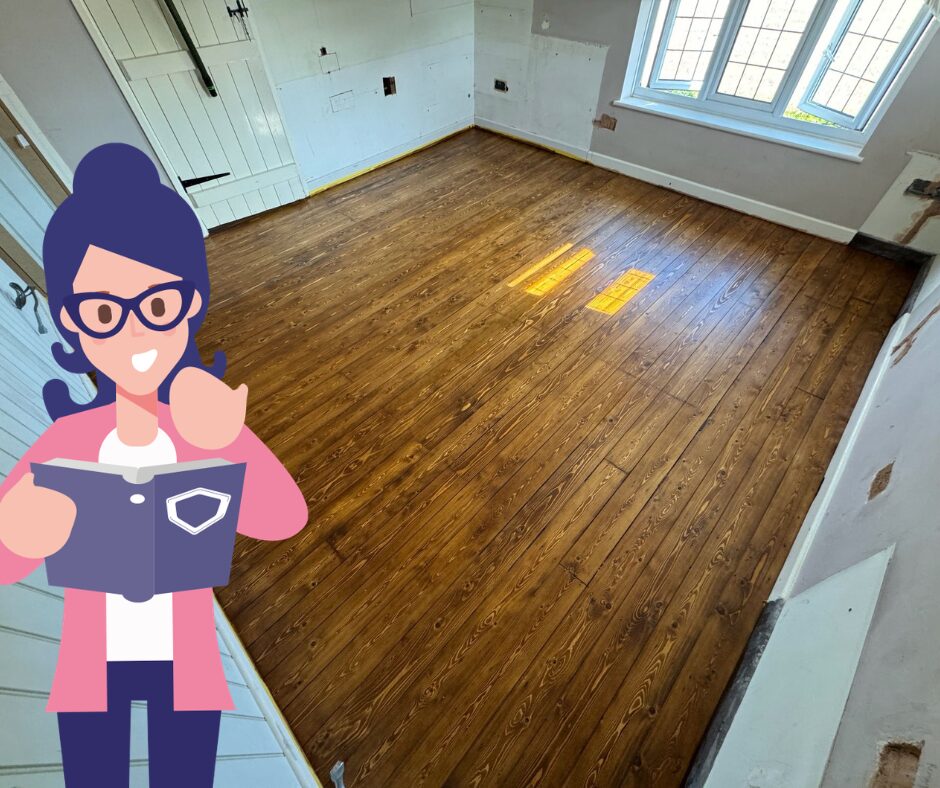
Colour staining shows the preparation underneath.
If a floor is unevenly sanded, the colour may take unevenly. If old finish remains in the grain, the stain may not absorb properly. If dust is left on the floor, it can affect the final appearance.
This is why the sanding stage matters before any colour is applied.
The floor needs to be prepared as evenly as possible, including the main floor area, edges and detailed areas. The surface also needs to be cleaned carefully before the stain or finish is applied.
Good staining starts before the colour tin is opened.

Why colour samples are important
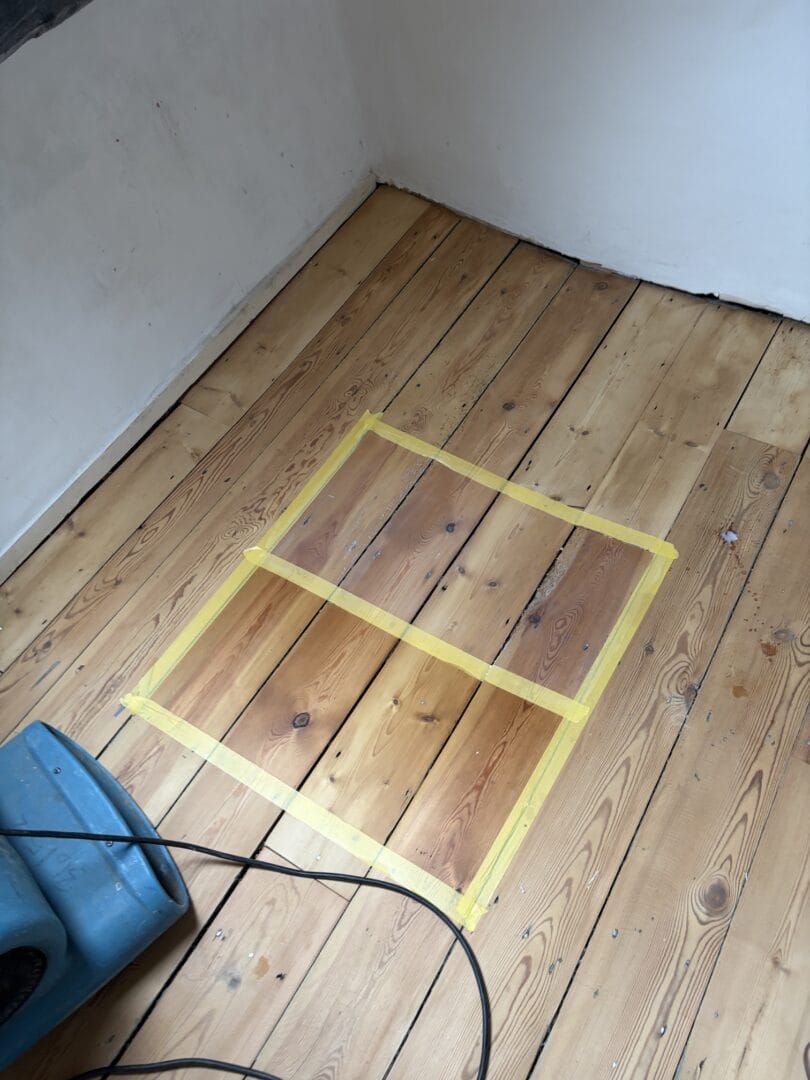
We would always recommend testing colour before committing to the full floor.
A sample helps show how the colour reacts with your timber. The same stain can look different on oak, pine, parquet, engineered wood or older boards. It can also look different depending on natural light, room lighting, furniture and the final protective finish.
Samples are there to guide the decision, not to create a factory-perfect promise.
Wood is natural. Even on one floor, different boards can absorb colour differently.
The limits of changing floor colour
There are some honest limits.
You can often make a floor darker, warmer or richer. It is usually much harder to make a dark floor look pale if the colour has gone deep into the timber or if old staining remains in the grain.
Some old boards have strong colour variation. Some pine can go patchy or warm in tone. Some repairs may still show. Some parquet blocks may take colour differently from each other. Some engineered floors may not have enough wear layer to sand and stain safely.
Previous coatings can also affect the result. If oils, waxes, paints, old stains or household products have soaked into the wood, the new colour may not behave evenly.
A careful assessment helps decide what is realistic before work begins.
Can you match a colour exactly?
We can aim for a colour direction, but exact colour matching is not always possible.
This matters when clients want to match new boards to old boards, copy a photo from Pinterest, match another room, or recreate a showroom finish.
Different wood species, board ages and previous finishes all affect the result. Even if the product name is the same, the finished colour can still vary from floor to floor.
A better way to approach it is to choose a colour family, such as light natural oak, warm medium brown, darker traditional tone or a softer modern look, then test what is realistic on the actual floor.
Stain still needs protection.
A wood floor stain is not usually the final protective layer.
Once the colour has been applied and dried correctly, the floor normally needs a suitable protective finish. This may be a lacquer, oil, hard wax oil or another system chosen for the room and floor type.
This top coat matters because it protects the colour and the timber underneath.
Without the right protection, the floor can mark, wear or absorb moisture more easily. Busy rooms, kitchens, hallways, pets, children, dining chairs and shoes all need to be considered when choosing the final finish.
Darker colours need careful expectations.
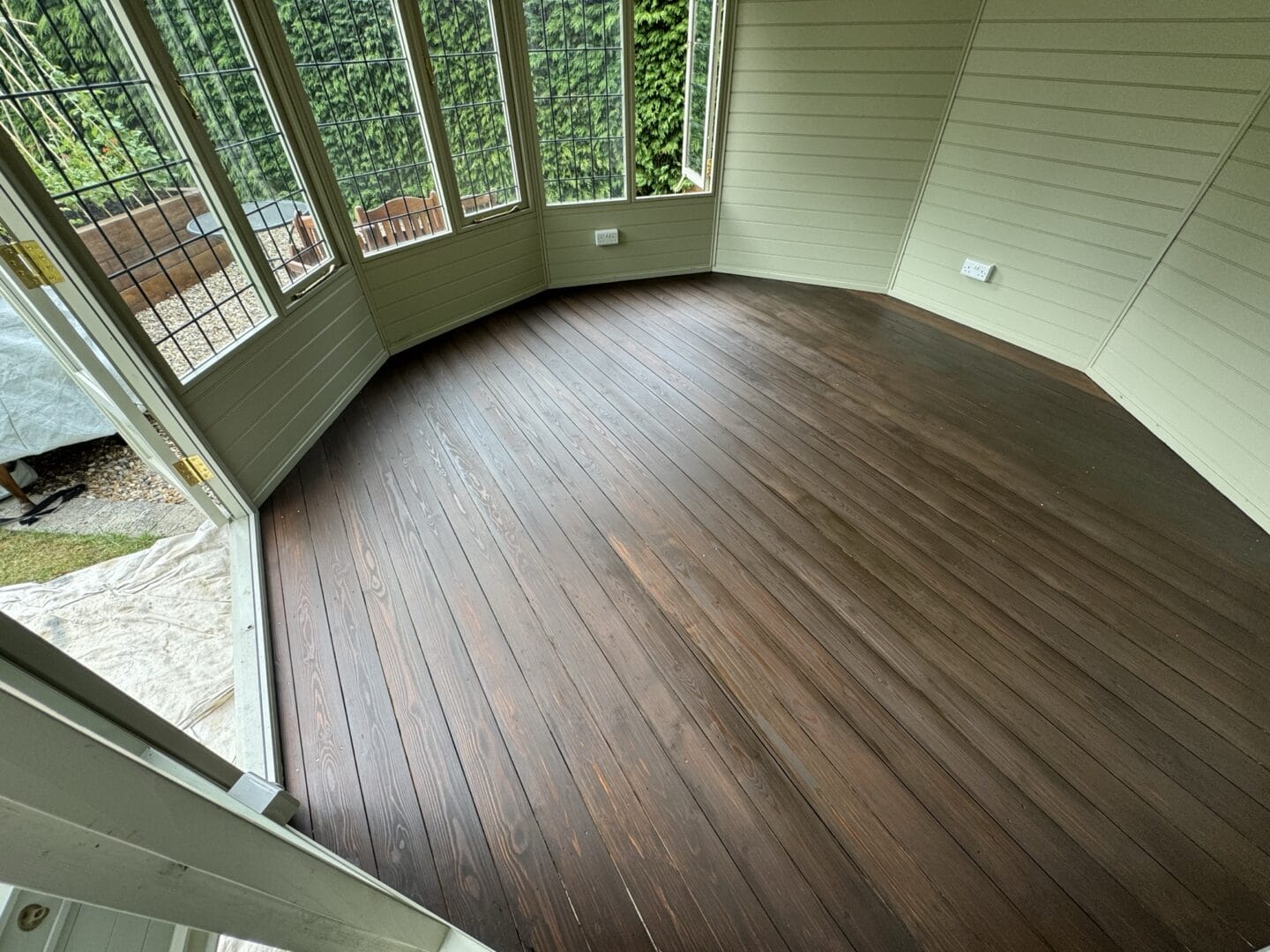
Darker floors can look beautiful, but they can also show dust, scratches and wear more clearly than some lighter finishes.
This does not mean a darker floor is a bad choice. It simply means it needs to suit the room and the client’s expectations.
A dark stain in a quiet sitting room may behave differently from a dark stain in a busy hallway, kitchen or family room. If the room gets heavy use, we would talk through how the finish may wear and what aftercare will be needed.
The best colour is not always the most dramatic colour. It is the one that works well in real life.
Lighter and softer colour changes
Some clients do not want a dramatic change. They simply want the floor to feel cleaner, calmer or less orange after sanding.
This may be possible with the right sanding and finish choice, but again, the timber sets the limits. Pine, oak and older boards all have their own natural tone. A finish can influence that tone, but it cannot completely change what the wood is.
For many homes, a subtle colour adjustment gives the best result because it works with the floor rather than fighting it.
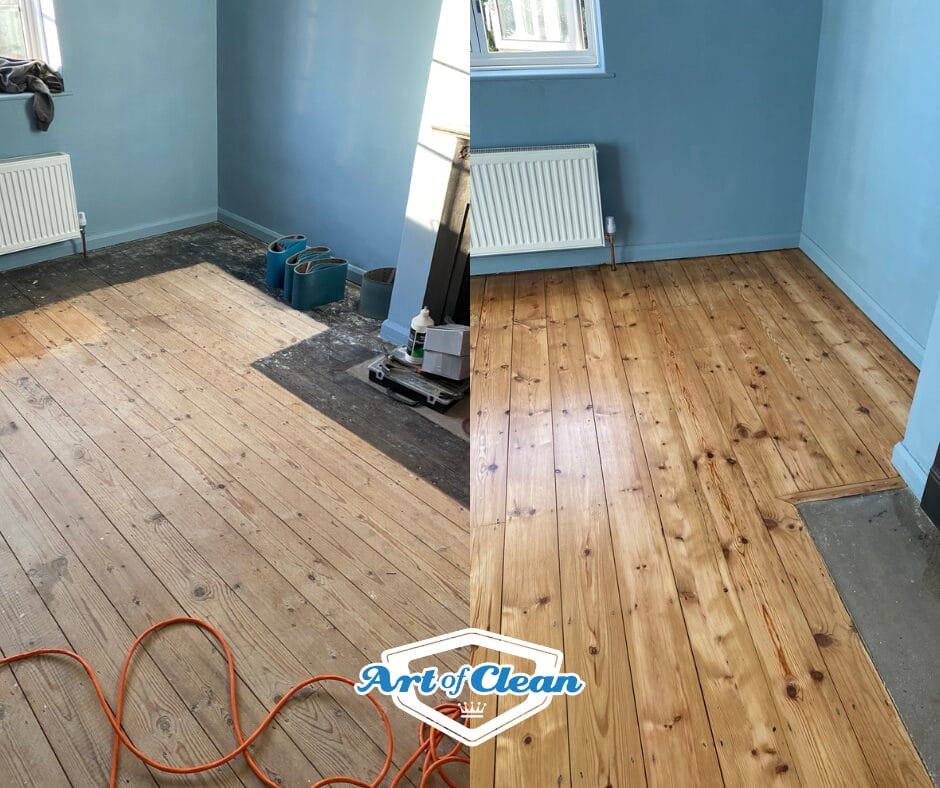
What happens during the process?
A typical colour change starts with assessment.
We look at the type of floor, its condition, previous finish, repair needs and whether it can be sanded safely. The floor is then sanded and prepared. Colour samples may be tested on the actual floor, usually in a discreet area or on prepared sample sections where possible.
Once the colour is chosen, the stain or coloured finish is applied carefully and evenly. After drying, the protective finish is applied.
Curing and drying times depend on the product system used, so the room may need to stay clear for a period of time before furniture, rugs and normal use return.
What should clients avoid doing themselves?
It is worth being careful with DIY colour staining.
Uneven sanding, missed edges, dust, lap marks, over-application, poor wiping, wrong product choice or applying the wrong top coat can all affect the result. Once a stain has gone into the timber, it is not always simple to reverse.
Clients should also be cautious about choosing a colour from a small online image. A product photo cannot show exactly how that colour will behave on your floor in your home.
If you are unsure, it is safer to ask before applying products.
The honest answer…
Yes, many wood floors can be colour stained or finished in a different tone.
We may be able to make the floor warmer, darker, softer, richer or more in keeping with the room. We can also talk through samples, finish options and aftercare so the floor works in everyday use.
The limitations are important. The final colour depends on the wood, the sanding, the previous finish, the product, the age of the boards and how the floor absorbs the stain. Exact colour matching cannot always be promised, and some floors are not suitable for aggressive sanding or dramatic colour change.
If you are thinking about changing the colour of your wooden floor, send us a few photos or arrange a visit. We can help you understand what is realistic and which finish route is most suitable for your room.