Your dining table has probably seen it all. Sunday roasts, family celebrations, homework sessions and the occasional dinner party that went on a little longer than planned.
But while everyone is enjoying themselves around the table, spare a thought for the wooden floor underneath!
All those chairs sliding back and forth, feet shuffling about, and everyday comings and goings can eventually leave their mark.
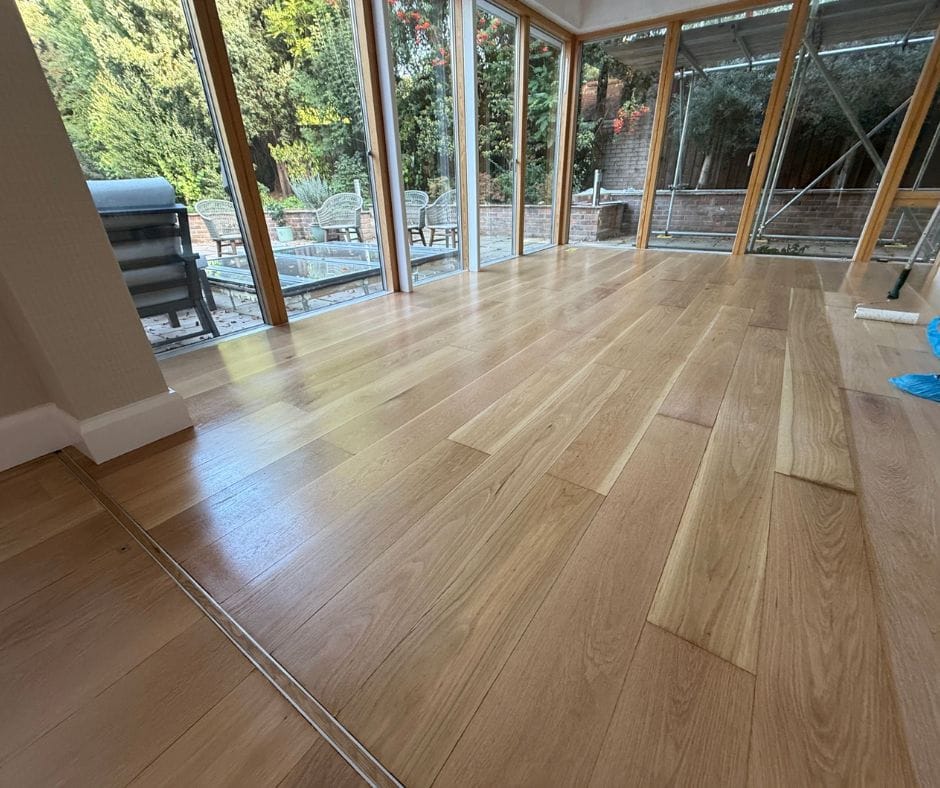
That’s exactly what happened to a lovely wooden dining room floor we recently worked on in Great Shelford, near Cambridge.
The floor had become noticeably worn around the dining table, and the homeowner wanted to bring it back to life.
The builder had originally planned to tackle the job but couldn’t get hold of the equipment needed. So, that’s where specialist floor restoration came into the picture.
And what a difference a little professional attention can make!
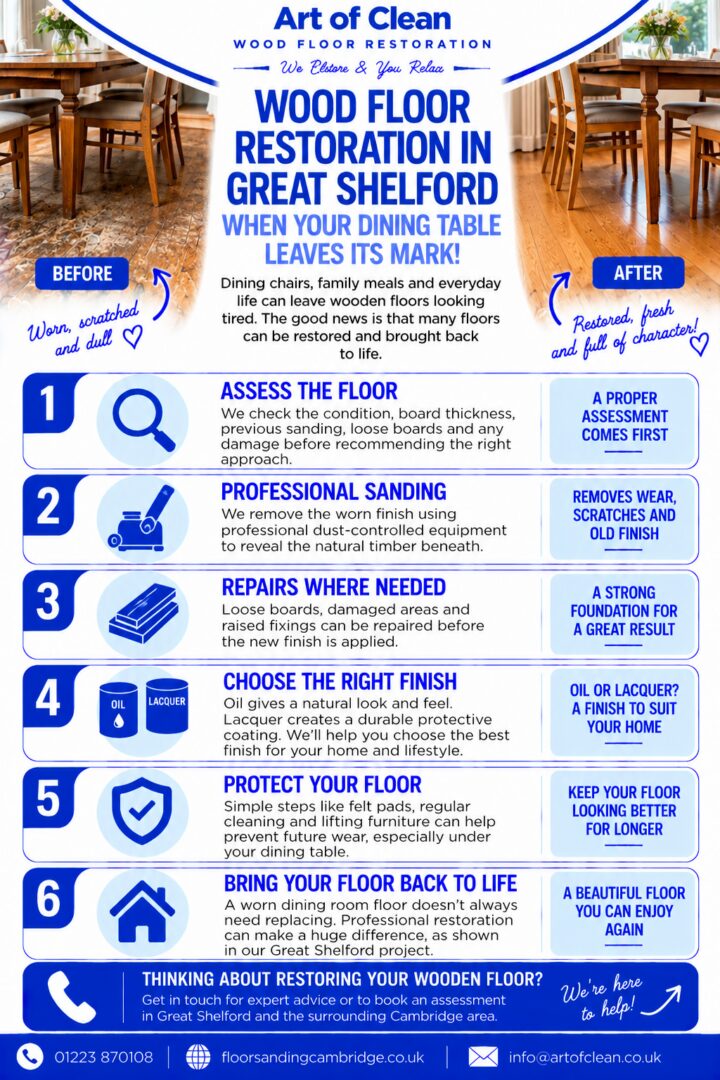
Why does the floor under your dining table wear out first?
Think about how many times you move your dining chairs in a week.
Pull one out for breakfast. Push it back. Pull it out again for lunch. Then dinner. Add the children, visitors and the odd family gathering, and those chair legs are getting quite the workout!
Unfortunately, your wooden floor is taking the punishment.
Over time, all that movement can wear away the protective finish, leaving the floor looking:
- Dull and tired compared with the rest of the room.
- Scratched where chairs have been moved.
- Patchy, with some areas looking lighter or darker.
- Worn down to the bare timber in places.
And here’s something worth knowing: a wooden floor that looks worn isn’t necessarily a wooden floor that needs replacing.
Sometimes the timber underneath is still in good condition. It’s the protective finish that’s had enough.
That’s why it’s worth finding out what’s actually worn before deciding what to do next.
Our Great Shelford dining room project
In this Great Shelford home, the main problem was the worn area beneath the dining table.
The homeowner had already arranged for their builder to look at the work, but the necessary equipment wasn’t available.
Now, a builder can be brilliant at many things, but restoring a wooden floor takes the right equipment and an understanding of how the timber and finish will respond.
After all, you only have so much wood to work with. You don’t want someone sanding away more than necessary!
The first consideration with any restoration is whether the floor is suitable for the work and what approach will give it the best chance of a good result.
This particular project also gave us something we love being able to share: real before-and-after photographs.
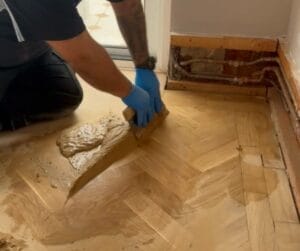
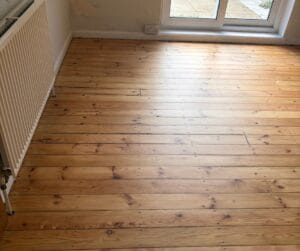
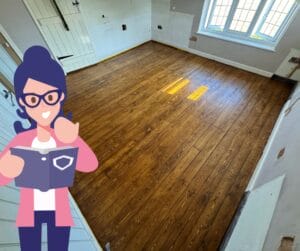
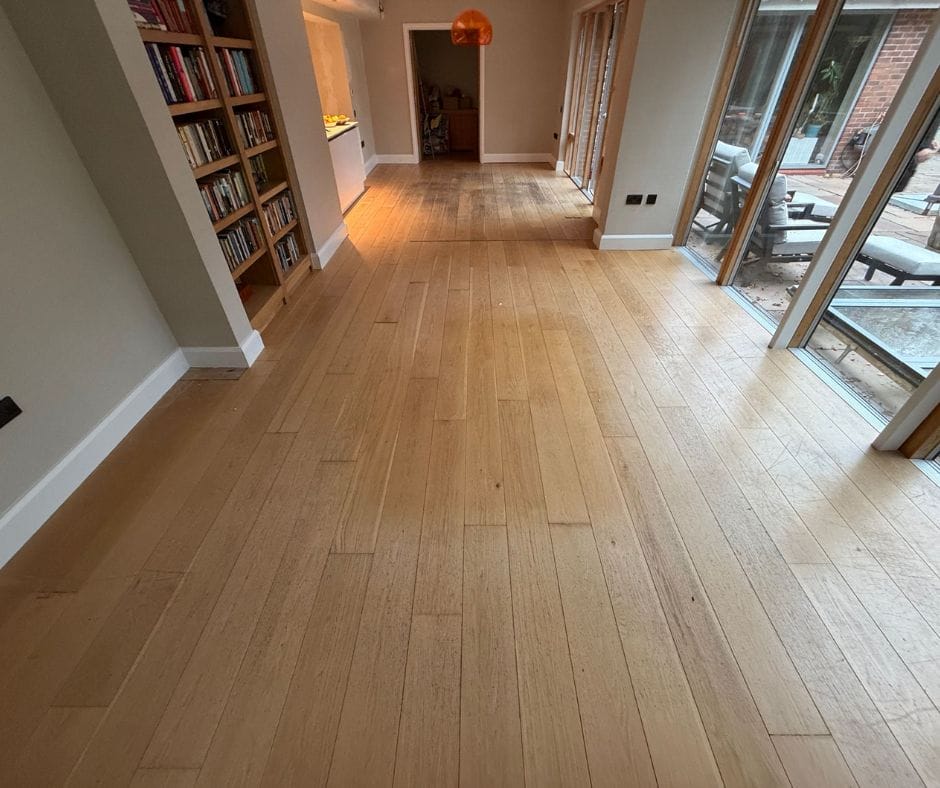
Before: Wear had become noticeable around the dining table in this Great Shelford home.
Can a worn wooden floor really look good again?
Quite possibly, yes!
If the wooden floor is in suitable condition, professional sanding and refinishing can remove worn surface coatings and improve many everyday scratches and marks.
A new finish can then help protect the timber against normal household use.
But surface wear differs from more serious damage.
If the problem is mostly in the protective coating, the improvement can be considerable.
If deep scratches, dark stains or damage have gone right into the wood, some marks may remain even after sanding.
And that’s perfectly fine. Wood is a natural material, not a sheet of plastic. A little character isn’t always a bad thing!
The important part is knowing what you can realistically improve before work begins.
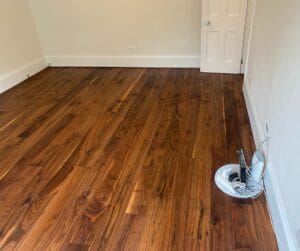
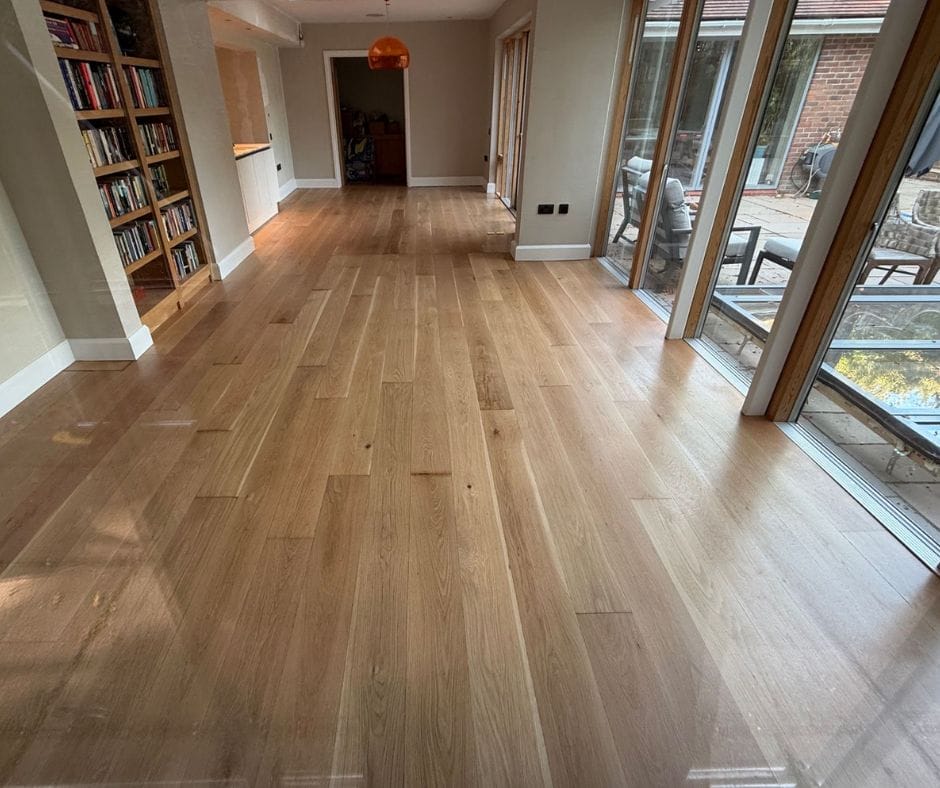
After: The completed wooden dining room floor following restoration.
Do you really need to sand the entire dining room?
Here’s a question worth asking before you commit to sanding the whole floor.
If only the area beneath the table is worn, does the entire room need doing?
Not necessarily.
It depends on the finish type, how badly the floor is worn, and whether a repaired area can blend with the rest of the room.
Some oiled wooden floors can be suitable for local maintenance or repairs.
With certain lacquered floors, blending a small repaired patch can be more difficult. Treating a larger area may give a more even appearance.
Sometimes, if the finish is still reasonably sound, professional cleaning and recoating may be an option without full sanding.
That’s why the first step shouldn’t be choosing a sanding machine. It should be understanding what the floor actually needs.
You might need a full restoration. You might need a smaller treatment.
Either way, it’s worth asking!
Five simple ways to stop your dining chairs attacking your floor
Right, now for the really useful bit.
If you’ve got a wooden dining room floor, here are five things that can help protect it, whether it’s newly restored or has been there for years.
-
Give your chair legs some slippers!
Not actual slippers, of course.
Good-quality felt pads or suitable furniture glides underneath chair legs can help reduce scratching when chairs move.
Check them regularly, though. Grit can become trapped underneath damaged pads and turn them into little scratching tools.
-
Keep that grit away
Very tiny bits of dirt and grit might seem harmless, but under a moving chair leg they can act like sandpaper.
Regular sweeping or vacuuming with a wood-floor-friendly attachment can make a real difference.
-
Don’t drag heavy furniture
Need to move the dining table?
Lift it with help rather than dragging it across the floor. Your back and your wooden floor will both appreciate a bit of planning.
-
Use the right cleaning products
Not every bottle labelled ‘floor cleaner’ is suitable for every wooden floor.
Some products can leave residues or affect the finish. Check what type of coating you have and use a cleaner recommended for it.
And go easy on the water. Wooden floors generally don’t appreciate being soaked!
-
Deal with worn patches before they become a bigger job
If the finish is starting to look thin or dull in busy areas, don’t automatically wait until the timber is badly worn.
Depending on the floor, maintenance at the right time may help avoid the need for more extensive sanding later.
A little attention now can sometimes save a bigger job down the line.
Is your wooden floor trying to tell you something?
Take a quick look around your dining room.
Does the floor under the table look different from the rest? Are there scratches around the chair legs? Has the finish lost its shine where everyone sits?
Those are signs worth paying attention to.
They don’t automatically mean your floor needs sanding, but they do suggest it may be time to find out what’s happening.
The wooden dining room floor in our Great Shelford project is a good example of why existing timber is worth assessing before anyone starts talking about replacing it.
And whether your home is in Great Shelford, Trumpington, Stapleford or elsewhere around Cambridge, the same principle applies.
A tired-looking wooden floor might still have plenty of life left in it.
At Floor Sanding Cambridge, we help homeowners understand whether their wooden floors would benefit from sanding, refinishing, repairs or a less intensive treatment.
If your dining room floor is looking a little worse for wear, get in touch and tell us what’s happening.
We’ll help you work out what makes sense for your floor, without assuming you need the biggest job possible.
Frequently Asked Questions About Wood Floor Restoration
-
Can you restore a wooden floor that’s worn under a dining table?
Yes, in many cases! If your dining chairs have left scratches, dull patches or worn areas, professional restoration may help bring the floor back to life.
The important thing is checking whether the damage is just in the protective finish or goes deeper into the wood. Some floors need sanding and refinishing, while others may only need a little maintenance.
-
Do I need to sand the whole room if only one area is damaged?
Not always, and that’s good news!
If the wear is limited to one area, you may be able to do a local repair. However, it depends on the type of wood, the existing finish and how well the repaired area can blend with the surrounding floor.
Sometimes sanding and refinishing the whole room gives a more even result. A proper assessment will help determine what’s worthwhile.
-
How can I protect my wooden dining room floor from chair scratches?
Those dining chairs might look innocent, but they’re often the biggest troublemakers!
Try fitting good-quality felt pads underneath the chair legs, keeping grit off the floor and lifting furniture instead of dragging it.
Regular cleaning with products suitable for your floor finish will also help. Also check those felt pads occasionally, as they can wear out or collect grit.
Restoration can be more cost-effective than replacing a wooden floor, particularly when the existing timber is in good condition.
However, the cost depends on the size of the room, the condition of the boards, any repairs needed and the finish you choose.
If you’re in Great Shelford or the surrounding Cambridge area, it’s worth having your floor assessed before deciding to replace it. You may find that your existing wooden floor still has plenty of life left in it!