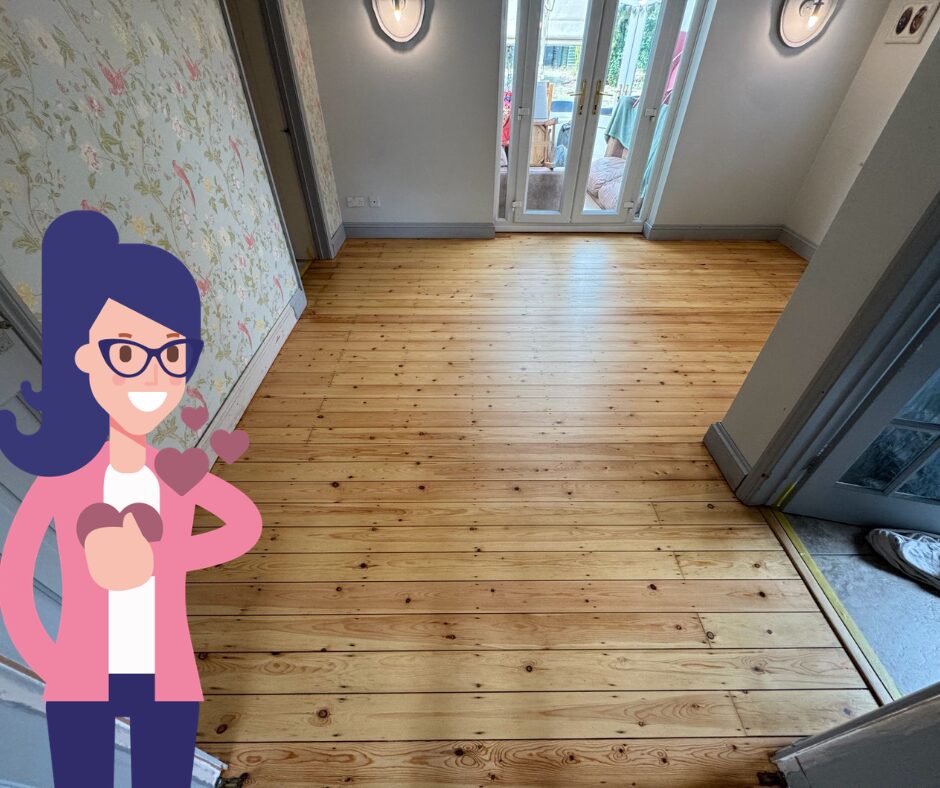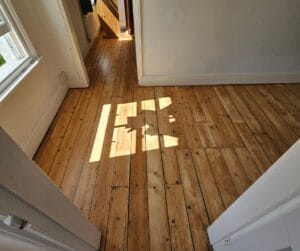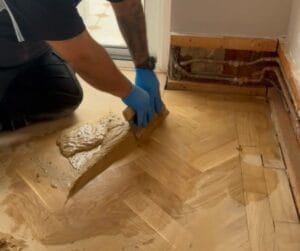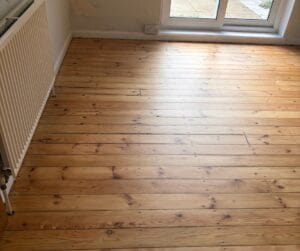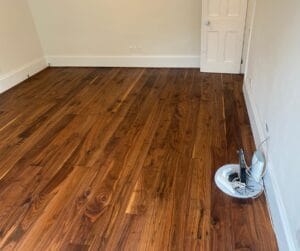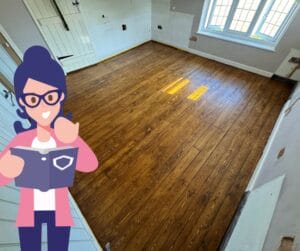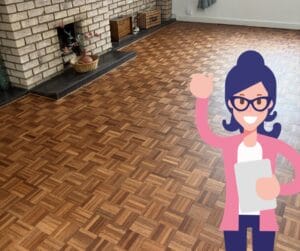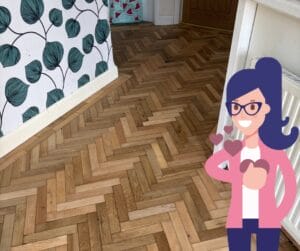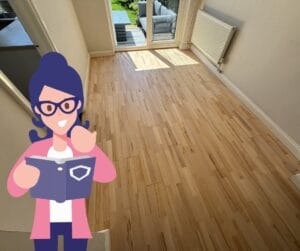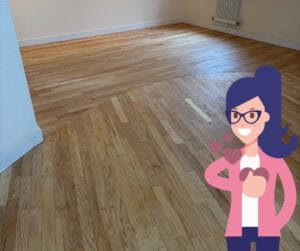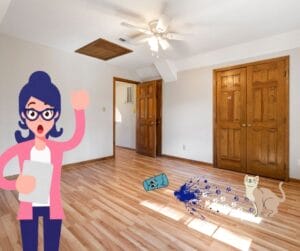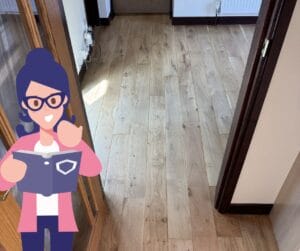
If your floorboards look scratched, dull, stained or hard to clean, sanding may bring them back to life. But the best results start before you switch on the sanding machine.
Many Cambridge homes have wooden floors with a story behind them. In some Victorian terraces around Mill Road, older floorboards may have been hidden under carpet for years. In family homes across Cambridgeshire, a hallway floor may have taken years of shoes, dogs, chairs, school bags and everyday traffic. In newer properties, engineered wood may look tired but still needs careful checking before anyone sands it.
Floorboard sanding is not just about removing the old surface. It is about working out what the floor is, whether it can safely be sanded, how much timber can be removed, what repairs are needed and which finish will suit the room afterwards.
This guide explains what to expect, what can go wrong, and when it is better to ask for a professional assessment before taking on the job yourself.
Quick answer: what does sanding floorboards do?
Sanding floorboards removes the worn top surface of the timber so the floor can be smoothed, repaired where suitable, and finished again with oil, lacquer, or another suitable protective coating.
It can help with:
- surface scratches
- dull or greyed areas
- worn finish
- old marks in the surface
- light unevenness
- tired pine floorboards
- some old varnish or lacquer coatings
- floors that need a cleaner, smoother finish
It cannot solve every problem. Deep stains, thin boards, loose boards, severe water damage, previous poor sanding, woodworm damage or engineered wood with a thin wear layer all need proper assessment first.
If you are not sure whether your floor needs sanding, restoration, repair or simple maintenance, start with the main wood floor services page.
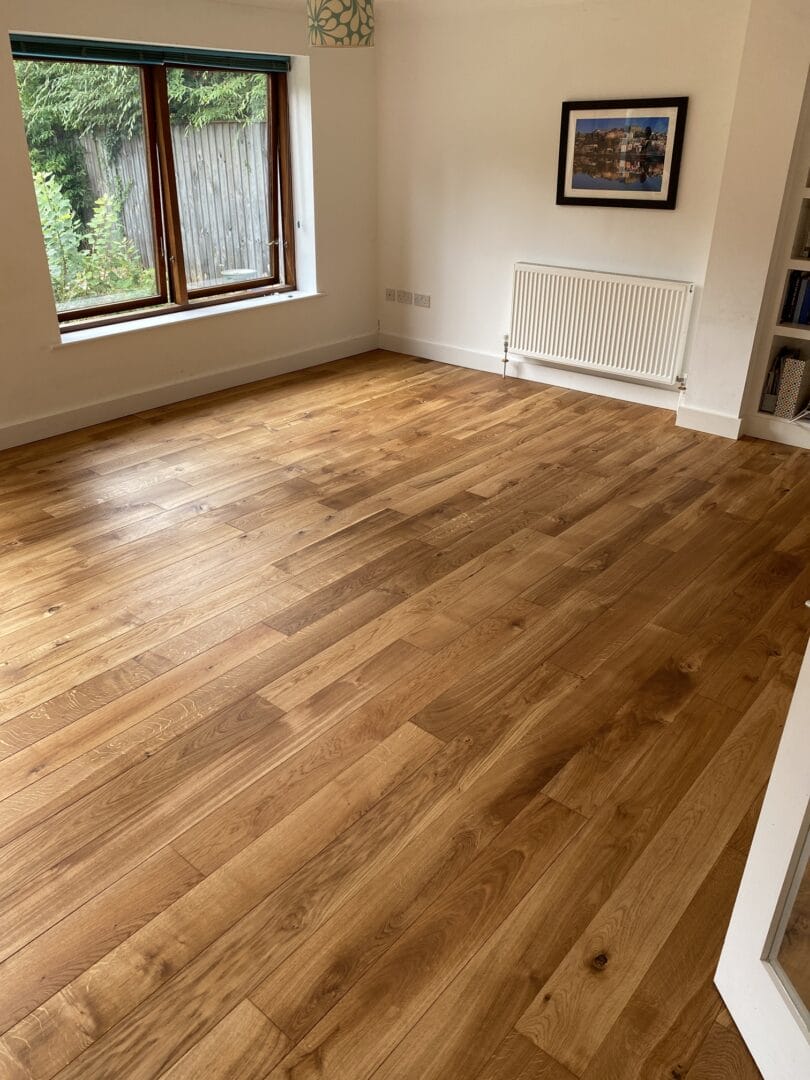
Is sanding floorboards always the right answer?
No. A tired wooden floor does not always need full sanding.
Sometimes the protective finish has failed, but the timber underneath is still sound. Sometimes cleaning and recoating may be enough. Sometimes the floor is too worn, too thin or too damaged for sanding to be the best value route.
This is especially important with engineered wood flooring. Engineered boards have a real wood wear layer on top, but that layer can vary in thickness. Some engineered floors can be sanded lightly. Some should not be sanded again. A professional should check the wear layer before making a recommendation.
You may find this comparison useful: Wood Floor Refreshing vs Wood Floor Sanding vs Wood Floor Restoration.
Before sanding: what should be checked first?
The first stage is assessment, not sanding.
Before a floor is sanded, these checks matter:
| What to check | Why it matters |
| Floor type | Solid wood, pine floorboards, parquet and engineered wood all need different judgement. |
| Board condition | Loose, split, missing or damaged boards may need repair before sanding. |
| Nail heads and fixings | Nails must sit below the surface so they do not damage sanding equipment. |
| Previous finishes | Old lacquer, paint, oil, wax or unknown coatings can affect the sanding process. |
| Stains and water marks | Some marks improve, but not every stain can be removed fully. |
| Wear layer | Engineered wood must have enough real wood left to sand safely. |
| Room use | A hallway, kitchen or dog-friendly home may need a different finish from a quiet bedroom. |
| Furniture and access | The room usually needs to be cleared so the floor can be sanded evenly. |
Craig often sees that jobs run more smoothly when furniture, access and room preparation have been discussed before the day. If a piano, wardrobe, bed frame or heavy table may be difficult to move, tell the team early. It is much easier to plan safely than to discover the problem on the morning of the job.
For floors that need more than simple sanding, see wood floor restoration in Cambridge.
Can old Cambridge floorboards be restored?
Often, yes, but it depends on the floor.
Older pine floorboards can have real character, especially in Cambridge homes where carpets have been lifted after many years. They may show gaps, nail holes, colour variation, old stains and uneven wear. That does not automatically mean they are beyond help.
In some cases, old boards can be sanded, repaired and finished beautifully. In other cases, some boards may need replacing, fixing or stabilising first. The final colour can also be difficult to predict because old pine, previous coatings, sunlight and age all affect how the timber responds.
It is safer to say “let’s assess it” than “yes, it will come up perfectly.”
If the floor has been hidden under carpet, do not assume it needs covering with new boards straight away. It may be worth getting an opinion before deciding whether to restore, repair or replace.
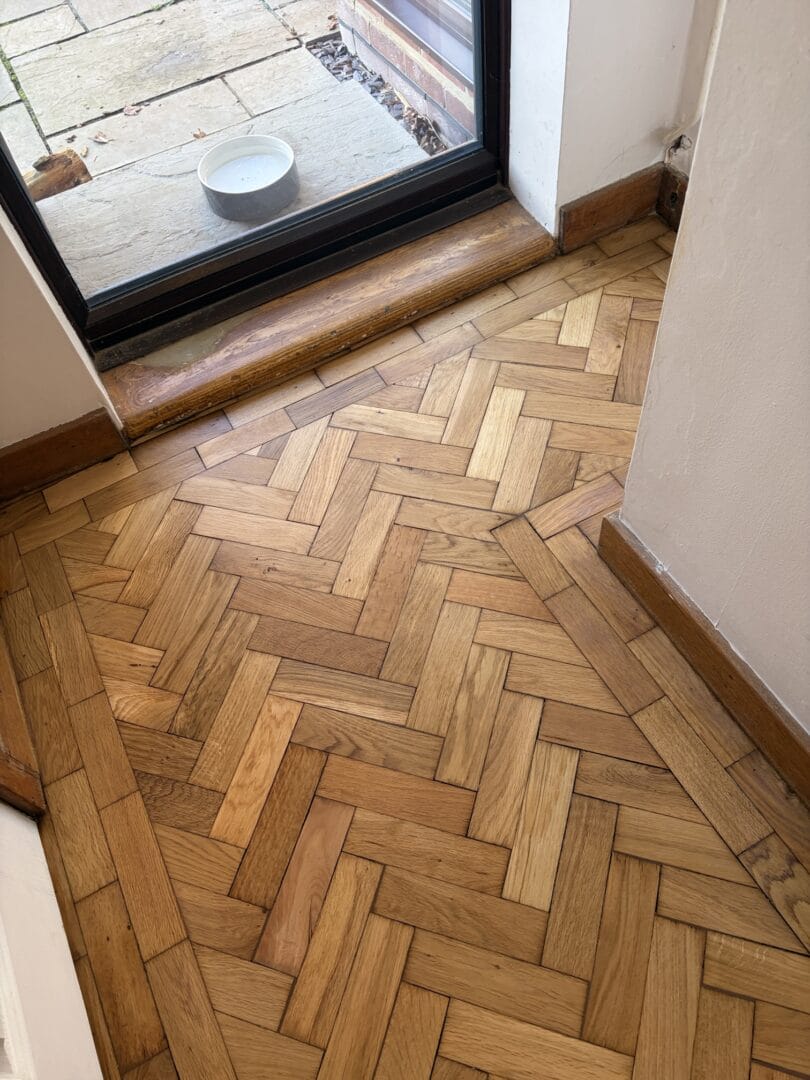
What equipment is used to sand floorboards?
Proper floor sanding normally uses more than one machine.
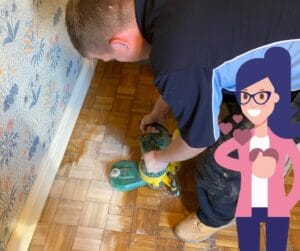
A large floor sander is used for the main open area. An edge sander works around the sides of the room, near skirting boards, thresholds and radiator pipes. Corners and awkward details may need smaller tools, scrapers or hand sanding.
The sanding is usually done in stages, moving through different abrasives. The right starting grit depends on the condition of the floor. A lightly worn lacquered floor does not need the same approach as painted boards, deep scratches or a badly uneven hallway.
Skipping grit stages will leave scratches that only show once the finish is applied. This is one reason DIY sanding can become frustrating. The floor may look acceptable when bare, then suddenly show sanding marks after oil or lacquer goes down.
Is floor sanding dusty?
Floor sanding creates dust, but good professional equipment and careful working can make the process much cleaner and more controlled.
It is better not to describe any sanding process as completely dust-free. Fine dust can still gather around edges, corners and details. The more honest phrase is low-dust or dust-controlled sanding.
Dust control matters for the finish as well as the home. Fine dust left behind can affect how the finish sits on the floor. Professional sanding should include high-filtration vacuuming, dust extraction and careful cleaning between stages.
Wood dust is also a health consideration. The Health and Safety Executive explains that cutting and sanding wood with power tools can produce significant dust, so proper control is important. You can read the HSE guidance here: Construction dust: cutting and sanding wood.
The Floor Sanding Cambridge Knowledge Centre also has a useful guide on this topic: Does Floor Sanding Create Lots of Dust?.
Should you choose oil or lacquer after sanding?
The best finish depends on the look you want, how the room is used and how you want to maintain the floor.
Lacquer sits on the surface and gives the wood a protective coating. It is often chosen for durability and easier cleaning, especially in busy rooms. Oil or hard wax oil penetrates the timber more and can give a natural look. In some situations, oiled floors may be easier to repair locally, but they also need the right maintenance.
A quiet bedroom, a hallway, a kitchen, a living room with pets and a design-led space may not all need the same finish.
You can compare the service options here:
Do not choose a finish only from a photo. Ask how the room is used, how much maintenance you are comfortable with and what level of sheen you prefer.
Can you sand floorboards yourself?
Some people can sand a small, straightforward room themselves, but DIY floor sanding is not risk-free.
A hired floor sander is powerful. If it is held still for too long, started in the wrong position or used too aggressively, it can leave dips, chatter marks or uneven sanding lines. Edge sanding can also leave circular marks if it is not blended properly.
DIY may be more realistic if the room is small, the boards are solid and stable, and you are comfortable with heavy equipment. Professional sanding is usually safer if the floor is old, uneven, engineered, painted, stained, heavily worn, important to the look of the home or likely to need repairs.
| DIY sanding may suit you if | Professional sanding is safer if |
| The room is small and simple | The floor is old, thin or uneven |
| The boards are solid and stable | The floor may be engineered wood |
| You understand sanding grit sequences | There are deep stains or unknown coatings |
| You can manage dust and room preparation | The room is important to daily life |
| You accept the result may not be perfect | You want a cleaner process and more consistent finish |
The real question is not “can I hire a sander?” It is “can this floor be sanded safely, and will I be happy with the finish afterwards?”
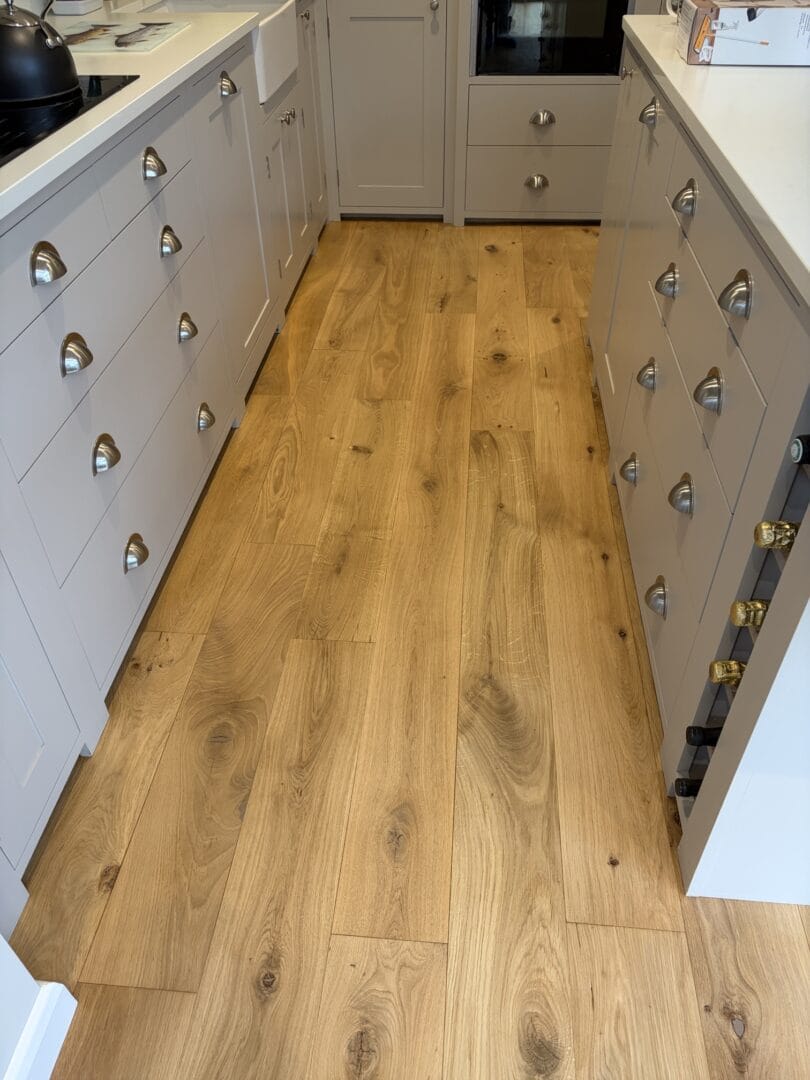
Common floorboard sanding mistakes
Most sanding problems come from rushing the assessment, preparation or finishing. Common mistakes include starting with too aggressive a grit, missing nail heads, sanding unevenly, skipping grit stages, forgetting the edges, leaving dust behind, choosing the wrong finish or putting furniture back too soon.
Another mistake is assuming that every mark will disappear. Some stains sit deep in the timber. Some dark patches come from water, pet accidents, plant pots or previous products. Sanding may improve them, but it may not remove them completely.
Robby often checks whether the protective finish has failed rather than assuming the wood itself is ruined. Once the finish has worn through, dirt, moisture and unsuitable cleaning products can reach the timber more easily. That is why diagnosis matters before deciding whether to clean, recoat, sand or replace.
For more on stain expectations, see Can You Get Stains Off My Wood Floor?.
What happens after the floorboards are sanded?
Sanding prepares the timber, but the finish protects it.
After sanding, the floor is cleaned carefully to remove fine dust. The chosen finish is then applied. Depending on the system, this may be lacquer, oil or hard wax oil.
Drying and curing times vary. Some finishes allow careful light foot traffic sooner than others, but heavy furniture, rugs, pets and normal cleaning usually need longer. The finish may look dry before it has reached full strength.
In the first few days, avoid:
- outdoor shoes
- dragging furniture
- damp mopping
- replacing rugs too early
- letting pets run across the floor
- using cleaners before you know they are suitable
A freshly finished floor will reward your patience. Waiting another day could protect the result for much longer.
For longer-term care, read What Maintenance Do Hardwood Floors Need?.
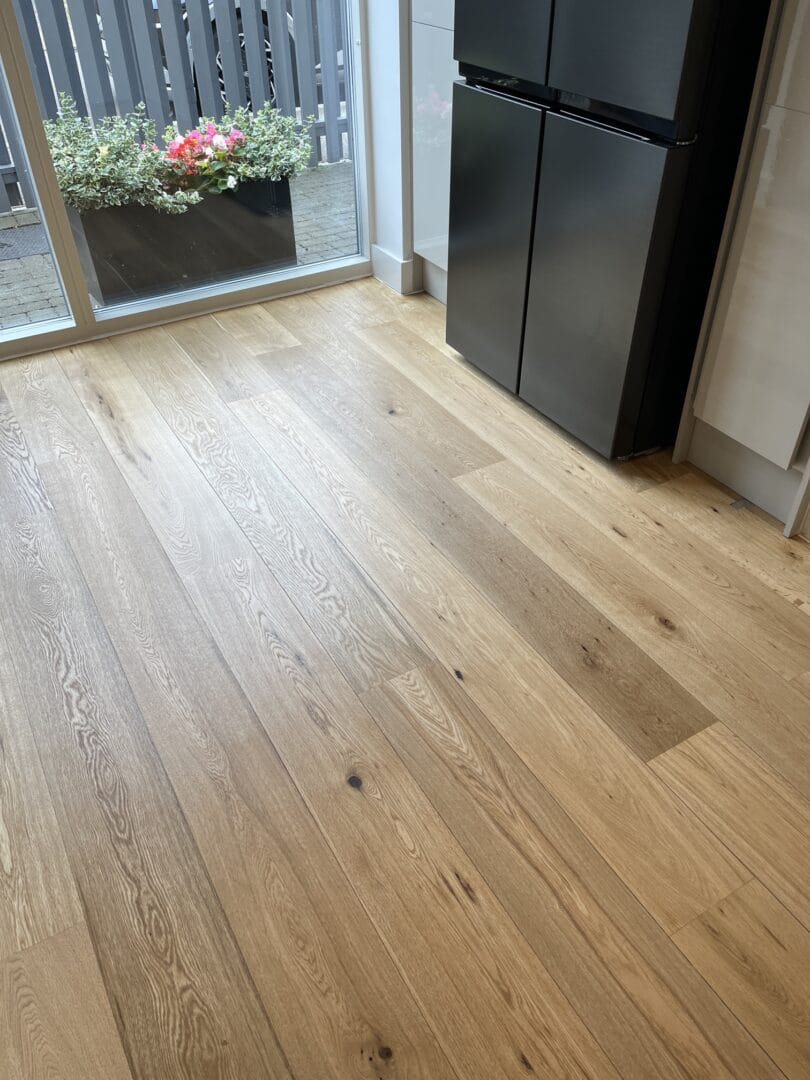
How to prepare your room before floor sanding
Good preparation helps the job run safely and smoothly.
Before the work starts, think about where furniture will go, how people will move through the home and whether pets need to be kept away from the room. If the floor is in a hallway, kitchen or main living space, it is worth planning how the household will manage while the finish dries.
Before booking, it does tend to help if you can:
- Always take clear photos in a natural light
- Mention all stains, pet marks, water damage or even old repairs
- Say if the floor might be engineered wood
- Tell the team about heavy, awkward furniture
- Ask whether oil or lacquer is likely to suit the room
- Ask when you can walk on the floor again
- Ask when rugs, furniture and normal cleaning can return
You do not need to know all the answers before asking for advice. A good floor sanding company should help you understand the options clearly.
Local advice for Cambridge and Cambridgeshire homes
Homes across Cambridge and the surrounding villages vary widely.
A Victorian terrace near Mill Road, a period home in Chesterton, a family house in Trumpington and a newer property outside the city may all have different floor constructions, finishes and levels of wear.
Some floors have been sanded before. Some have been covered by carpet. Some have gaps, loose boards, stains near radiators or heavy wear by garden doors. Some engineered floors look like solid wood until the wear layer is checked.
That is why local floor sanding work should start with the floor in front of you, not a standard assumption.
Floor Sanding Cambridge carries out preparation, sanding, oiling, lacquering, repairs and restoration across Cambridge and Cambridgeshire. The main service overview is here: Floor Sanding Cambridge.
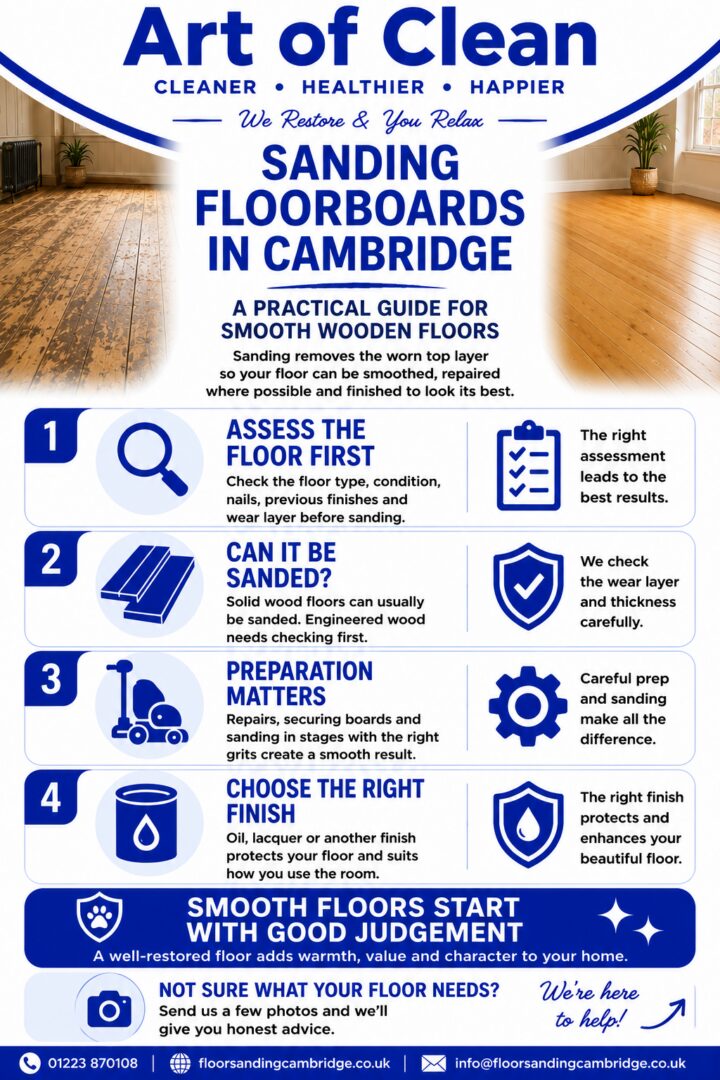
Smooth floors start with good judgement.
Sanding floorboards can make a room feel cleaner, brighter and more finished, but the best results come from careful judgement.
Before sanding starts, check the floor. Before choosing a finish, you should understand how you will use the room. Before furniture goes back, the finish needs time to dry and cure properly.
If your floorboards are scratched, dull, stained or difficult to clean, you do not have to decide everything yourself. Start with a practical assessment and find out whether sanding, restoration, recoating or repair is the right next step.
For help with wood floor sanding in Cambridge, visit Floor Sanding Cambridge or explore the Knowledge Centre for more wood floor advice.
FAQs about sanding floorboards
- How many times can floorboards be sanded?
It depends on the thickness and condition of the boards. Solid wood floorboards can often be sanded more than once, but every sanding removes timber. Engineered wood needs extra caution because the top wear layer may be limited.
- Can painted floorboards be sanded?
Sometimes, but painted floors can be slower and more complicated. Paint can clog abrasives, hide old repairs and sometimes contain unknown older coatings. A proper assessment is sensible before sanding painted boards.
- Will sanding remove gaps between floorboards?
No. Sanding smooths the surface but does not close gaps. Some gaps can be filled where suitable, but older floors often move seasonally. The right approach depends on the size of the gaps and the type of floor.
- Can sanding remove black stains?
It may improve some dark marks, but not all black stains can be removed. Water damage, pet stains, metal reactions and deep contamination can sit below the surface. Sanding should not be sold as a guaranteed stain removal method.
- Is lacquer better than oil?
Neither is automatically better. Lacquer is often chosen for a hard-wearing surface and easier cleaning. Oil can give a more natural look and may be repairable locally in some situations. The right choice depends on the room, the timber and how the floor will be used.
- Can I stay in the house while floor sanding is done?
Often, yes, but it depends which rooms are being treated, the finish used and how access works. If the stairs, hallway or bedroom floors are being finished, you may need to plan carefully around drying times and access routes.