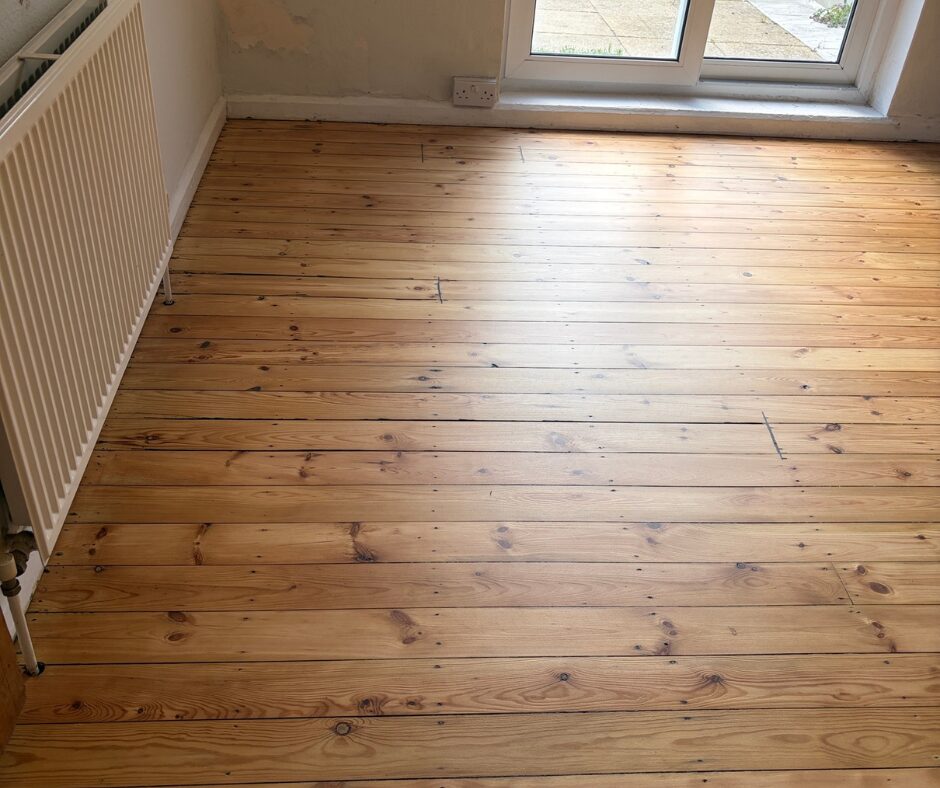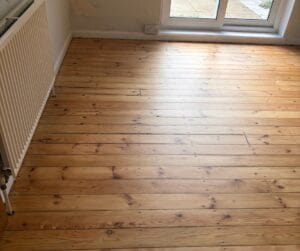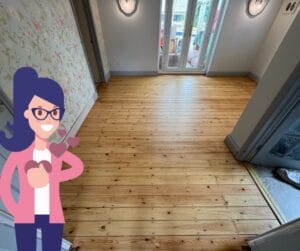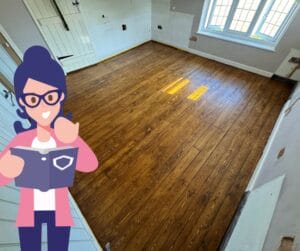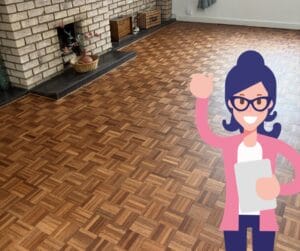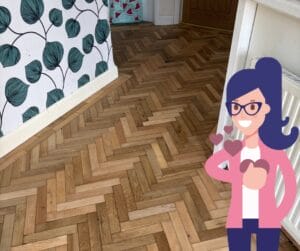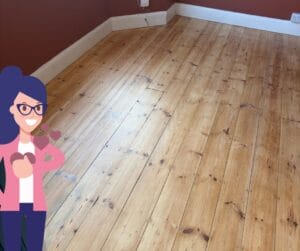
Old pine floors can look worse than they really are.
In many Huntingdon homes, pine boards have lived through years of carpets, furniture, foot traffic, pets, decorating work and everyday family life.
By the time they are uncovered, they may look scratched, patchy, orange, grey, stained or uneven.
That does not always mean they need to be ripped out.
A pine floor can sometimes be sanded, repaired and finished so it feels clean, warm and useful again.
In other cases, replacement may be the more sensible option. The important thing is knowing what to look for before you make the decision.
This guide explains what can usually be done with pine floors, when restoration may be worth considering, where the limits are, and why a test patch can be a useful step before committing to the full job.
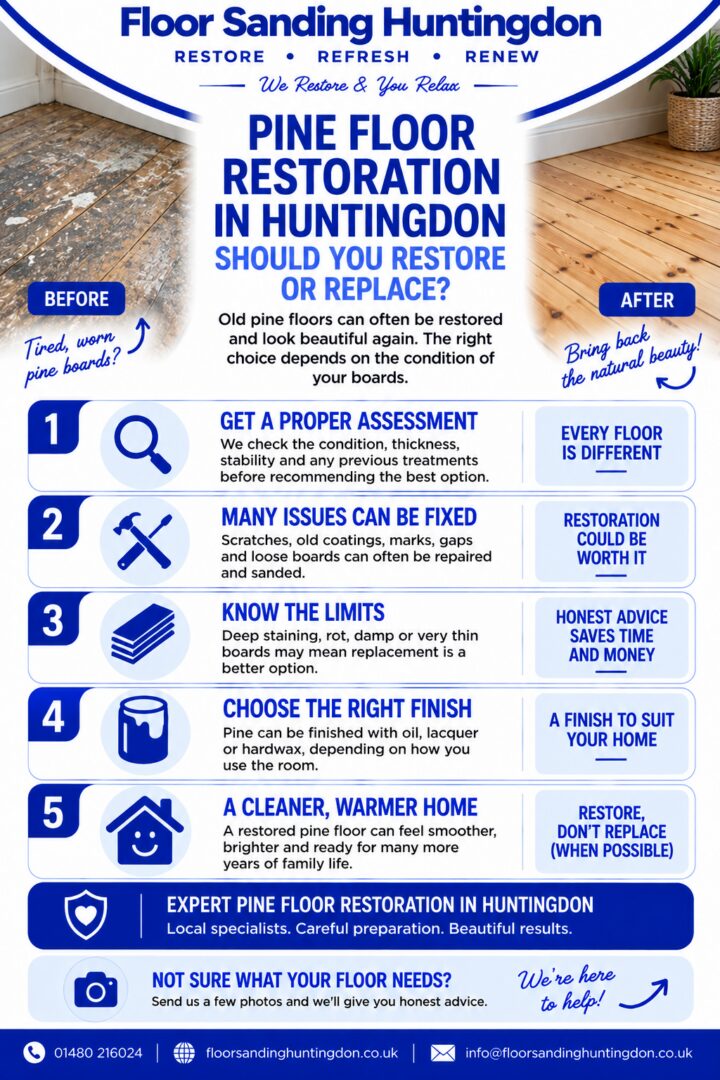
Why pine floors in Huntingdon homes often need a careful look
Huntingdon and the surrounding villages have a mix of older homes, renovated properties, family houses and period cottages. In many of these homes, people have had hidden pine boards under carpet for years.
That can be good news, because the boards may have been protected from daily wear. It can also hide problems.
Once the carpet comes up, you may find old paint, adhesive, staples, dark marks, replacement boards, gaps, raised nails, woodworm marks, staining or boards that have moved over time.
Important point: a pine floor should be assessed as a real floor in a real room, not judged only from one photo. Condition, thickness, stability, previous treatments, and the expected finish all matter.
Restore or replace: the quick comparison.
| What you find | Restoration may be worth exploring | Replacement may be more sensible |
| Surface scratches | Often, if the boards are sound | If scratches are part of deeper structural damage |
| Paint or old coating | Sometimes, but it can hide surprises | If removal would leave too much damage behind |
| Grey worn areas | Often, if the timber has enough life | If the boards are too thin or soft |
| Deep black staining | May improve, but not always fully | If the stain is deep, widespread or caused by ongoing moisture |
| Gaps between boards | Sometimes, depending on size and movement | If the floor is unstable or draught issues need building work |
| Loose or split boards | Often, with repair or replacement boards | If too many boards are damaged or unsafe |
| Mixed old and new boards | Sometimes, with realistic expectations | If the colour difference would bother you too much |
| Rot or active damp | Not until the cause is dealt with | If the timber has lost strength or moisture is still present |
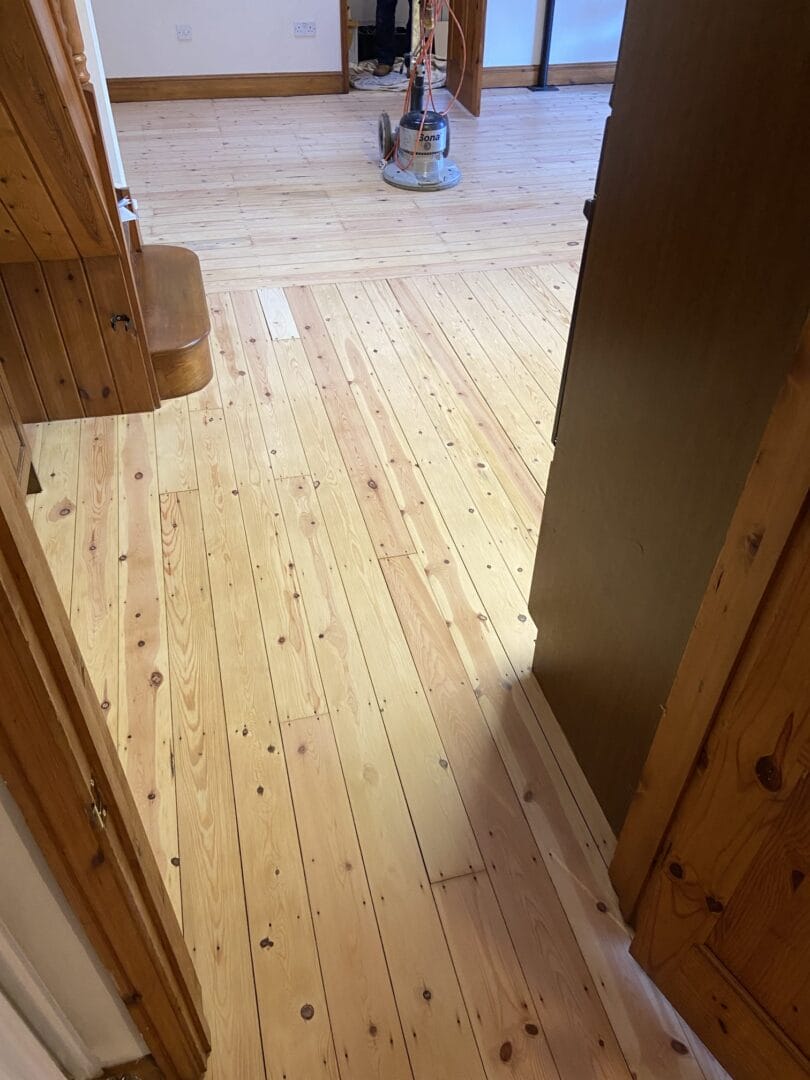
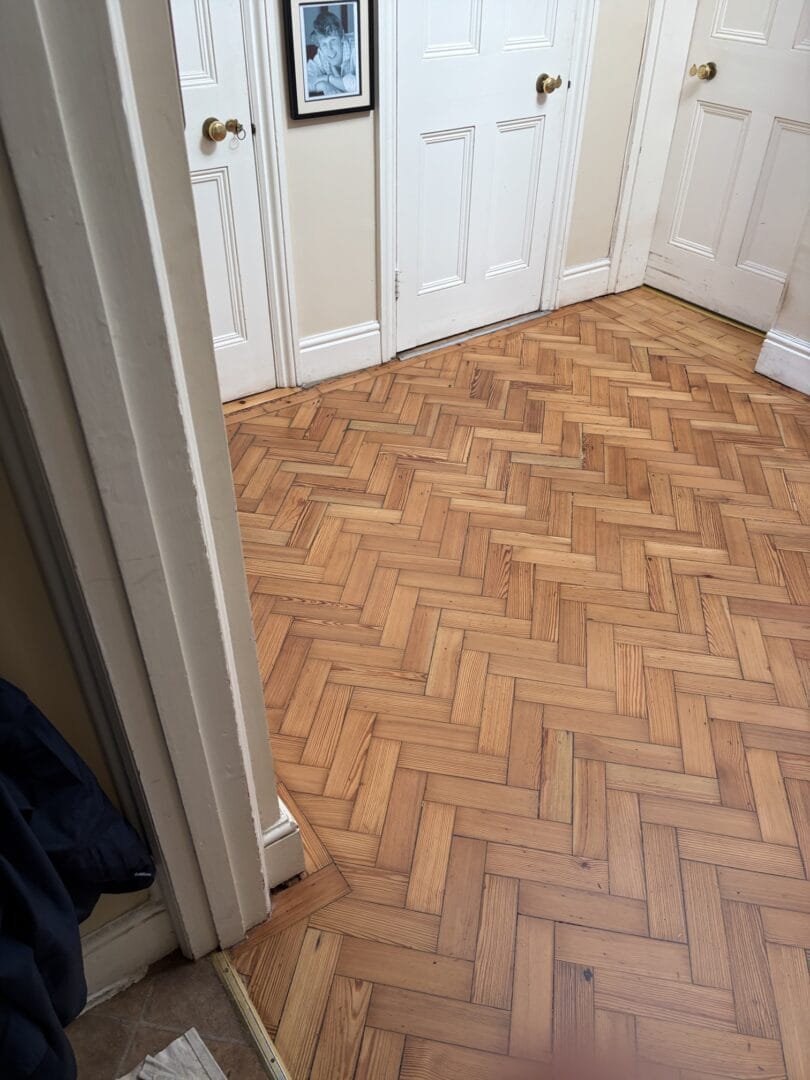
When you can restore pine wood floors.
Pine boards can often be restored when the timber is still sound, the boards have enough thickness, and the problems are mainly surface wear, old coatings or normal age.
A good result may be possible where the floor has:
Scratches from normal use, old varnish, dull or patchy finish, lighter staining, marks from furniture, paint that can be removed carefully, or boards that need small repairs before sanding.
Older pine does not need to look perfect to be worth keeping. In fact, part of its appeal is usually the character. Nail holes, small colour changes, old board movement and slight variation can all belong to the floor.
The aim is not always to make pine look like a new showroom floor. Often, the better aim is to make it cleaner, smoother, better protected and more comfortable to live with.
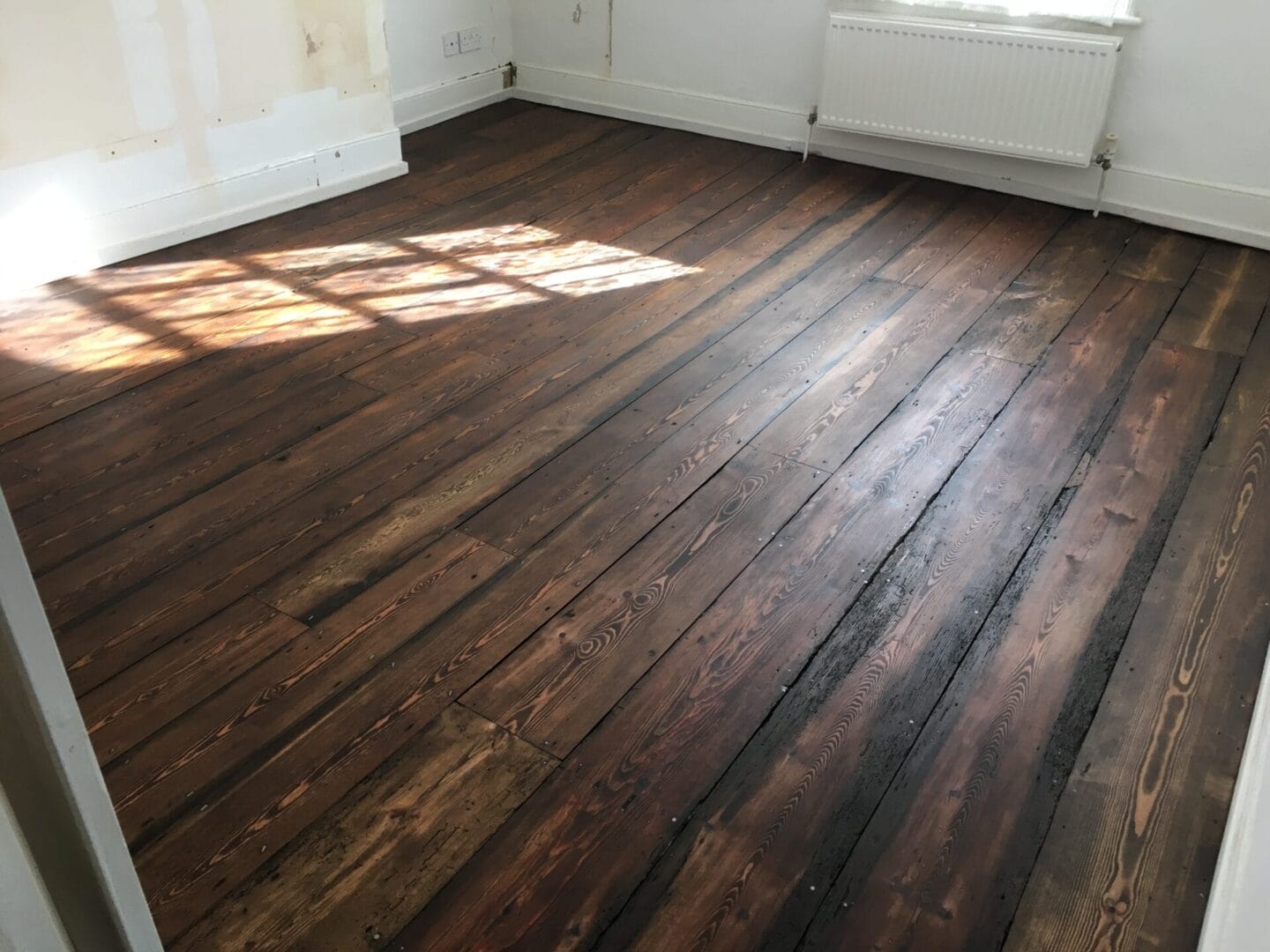
When pine floor restoration has limits
Pine is softer than many hardwoods, so it needs sensible expectations. It can dent, mark and absorb stains more easily. It can also change colour in ways that are hard to predict.
The biggest limits are usually hidden damage, deep staining, previous treatments and board condition.
Painted floors are a good example. A painted pine floor may look simple from the surface, but the paint can hide replacement boards, old stains, repairs or damage. Once sanding begins, the full picture becomes clearer.
Deep pet staining, water marks, radiator leaks, plant pot stains and old chemical marks may not disappear completely. Sanding can improve many marks, but it cannot promise to remove every stain without taking away too much timber.
There are also times when sanding is not the right first answer. If the boards are loose, thin, rotten, damp, badly split or structurally weak, those issues need to be dealt with before the floor is treated as a cosmetic sanding job.
What we check before recommending sanding
Before deciding whether to sand and restore a pine floor, a professional should look at more than the surface colour.
They would normally check:
The condition of the boards, whether any boards are loose or split, whether nails or fixings need attention, the type of previous finish, whether old paint or adhesive is present, how deep the staining appears to be, whether replacement boards are already mixed in, how the room is used, and what kind of finish would suit the household afterwards.
That last point matters. A quiet bedroom does not put the same pressure on a finish as a hallway, kitchen, playroom or busy family space.
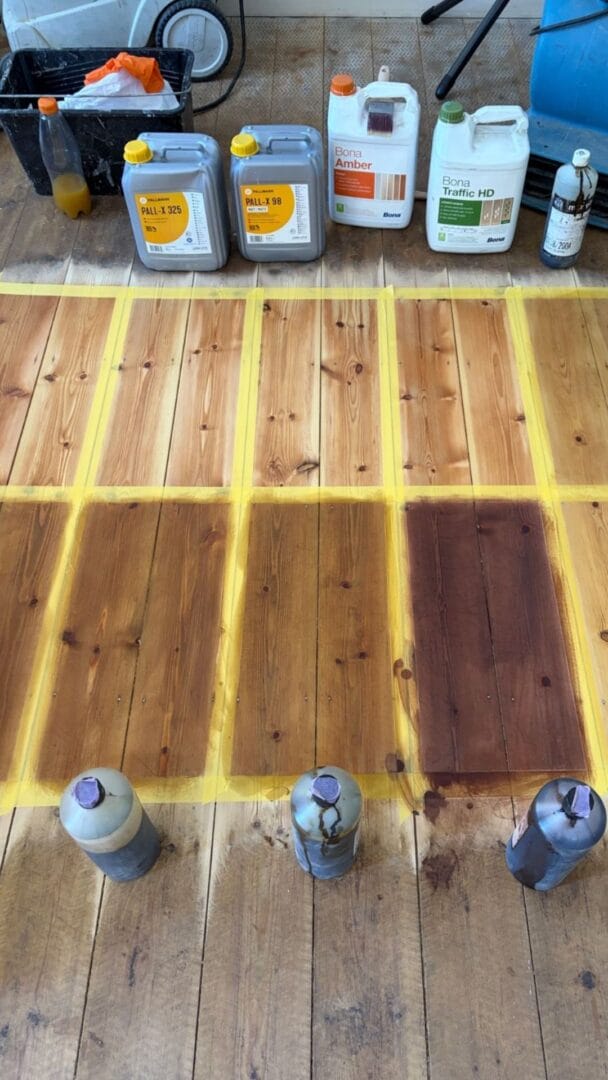
Why a test patch can help
A test patch is not a magic answer, but it can be very useful.
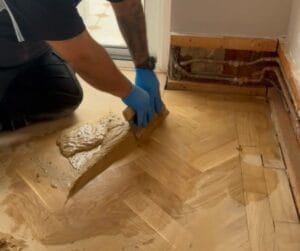
On pine floors, especially painted or heavily coated boards, a small sample area can show what may be hiding underneath. It can also help you see how the timber responds to sanding and what the colour might look like with different finish options.
A test patch helps turn guesswork into a more informed decision.
It can help answer questions such as:
Will the paint come away cleanly? Are there newer boards mixed with old boards? Is the staining likely to remain visible? Does the pine go warmer, lighter, more orange or more rustic than expected? Would oil or lacquer suit the look and use of the room?
It is still only a sample. The rest of the floor may reveal more once work starts. But for many clients, a test patch gives a calmer starting point before deciding whether to restore or replace.
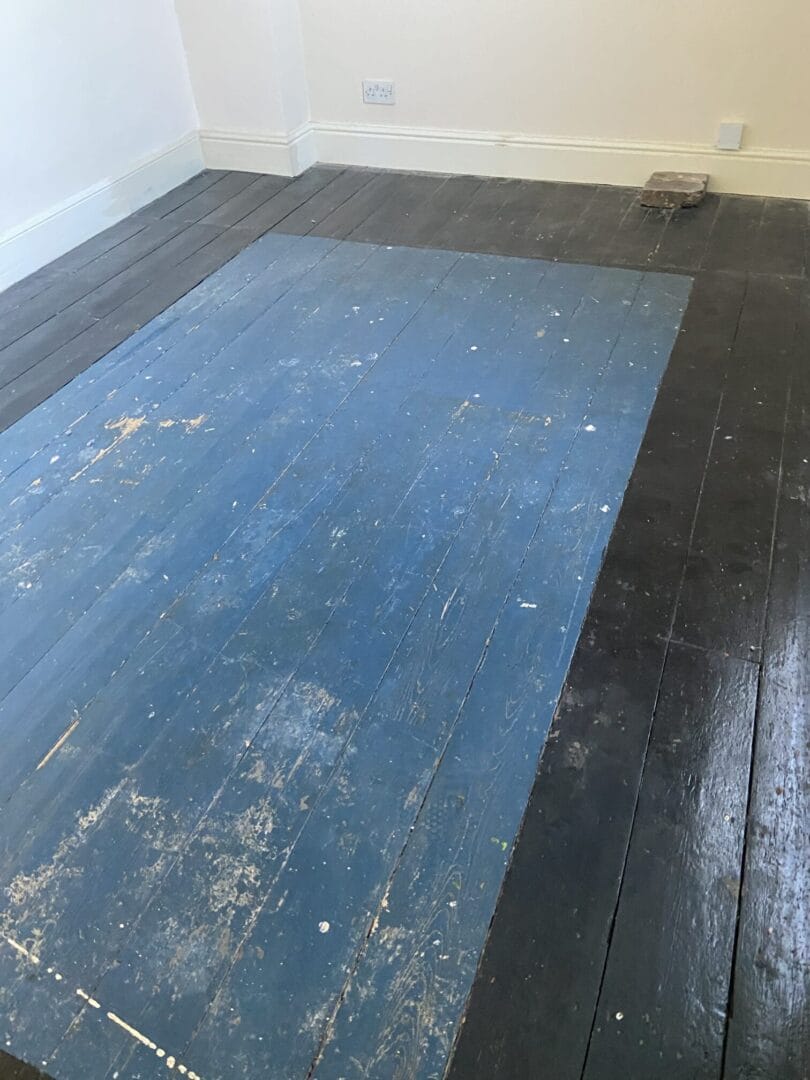
What goes into restoring a pine floor
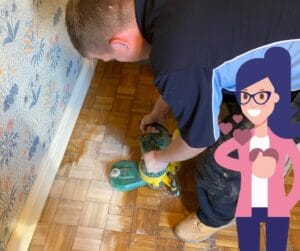
Professional wood floor restoration is not just sanding until the floor looks clean.
The process usually starts with assessment and preparation. Furniture needs to be planned, loose items removed, and awkward heavy pieces discussed early. If there are raised nails, loose boards or damaged sections, these may need attention before sanding.
The sanding itself is normally carried out in stages. The starting point depends on the floor. A lightly worn pine floor does not need the same approach as painted boards or a floor with heavy old varnish.
Edges and corners also matter. A room can look uneven if the main area is sanded well but the edges are not blended properly.
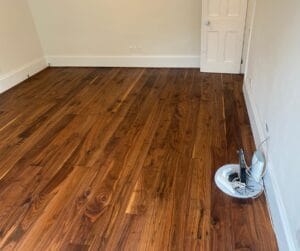
After sanding, the floor needs a suitable finish. Some clients prefer the warmer, natural feel of wood sanding and oiling. Others may prefer the sealed surface of wood sanding and lacquer, especially in a busier space.
The right choice depends on the floor, the look you want and how the room is used.
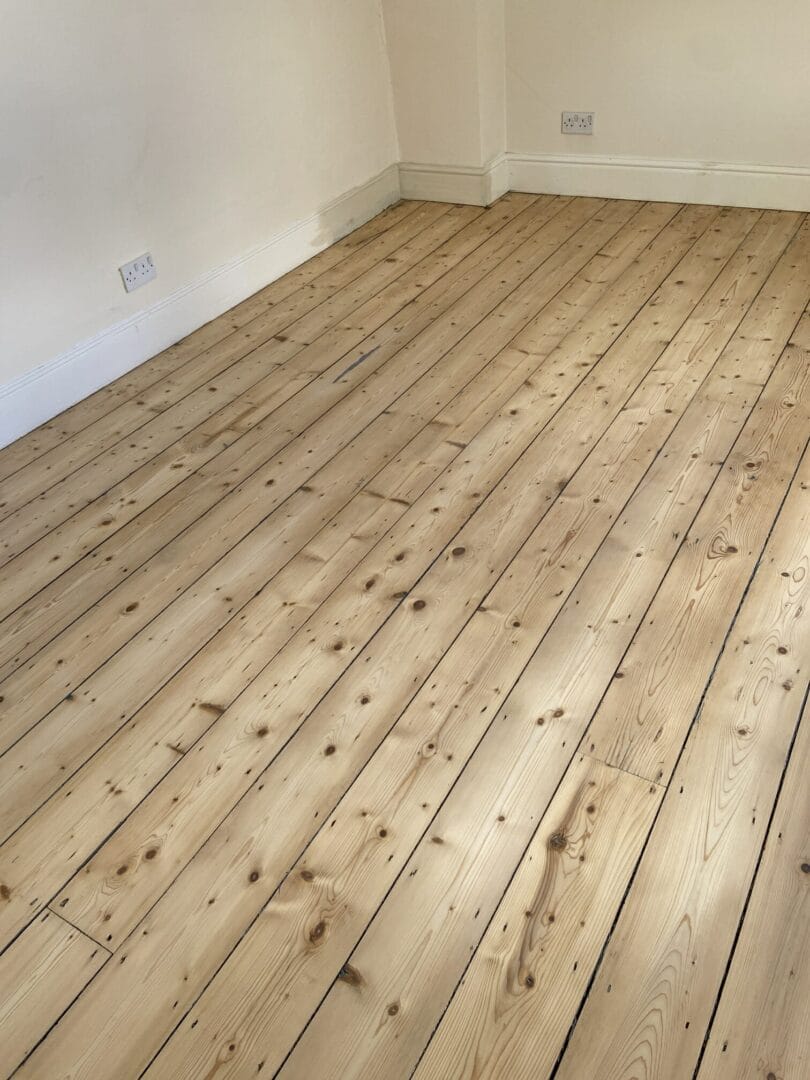
What pine floors may look like after sanding
This is where honest expectation setting matters.
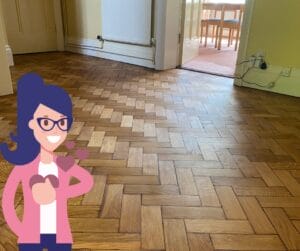
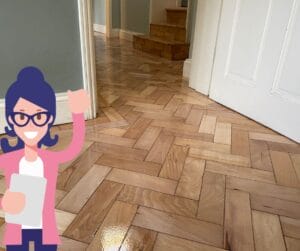
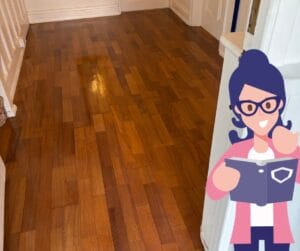
Freshly sanded pine can look very different from what a client imagined. It may become lighter, warmer, more golden or more varied. Some old boards may take the finish differently from newer boards. Areas that have had sunlight, rugs, furniture or old coatings may not all match perfectly.
That does not mean the work has failed. It is part of restoring real timber.
If you want a perfectly even modern look, replacement flooring may sometimes suit you better. If you like character, age and natural variation, restoration may be worth exploring.
A restored pine floor may still show small dark marks, old nail holes, previous repairs, colour variation and signs of age. For many homes, that is part of the charm. For others, it may not be the look the client wants.
That is why the conversation before the work matters as much as the sanding itself.
What we would not recommend trying first
It is understandable to want to test a few DIY ideas before calling anyone. The problem is that some products and methods can make a wooden floor harder to restore later.
We would be cautious with aggressive sanding by hand-held machines, steam cleaners, strong stain removers, bleach, vinegar mixes, heavy mopping, harsh chemicals or random products found online.
Pine can absorb moisture and products quickly. Once a chemical mark or water mark has gone deeper into the timber, it may be harder to improve.
A safer first step is to stop adding products, take a few clear photos in natural light, and ask for advice before doing anything that changes the floor further.
Local note for Huntingdon, St Ives and Hemingford Grey homes
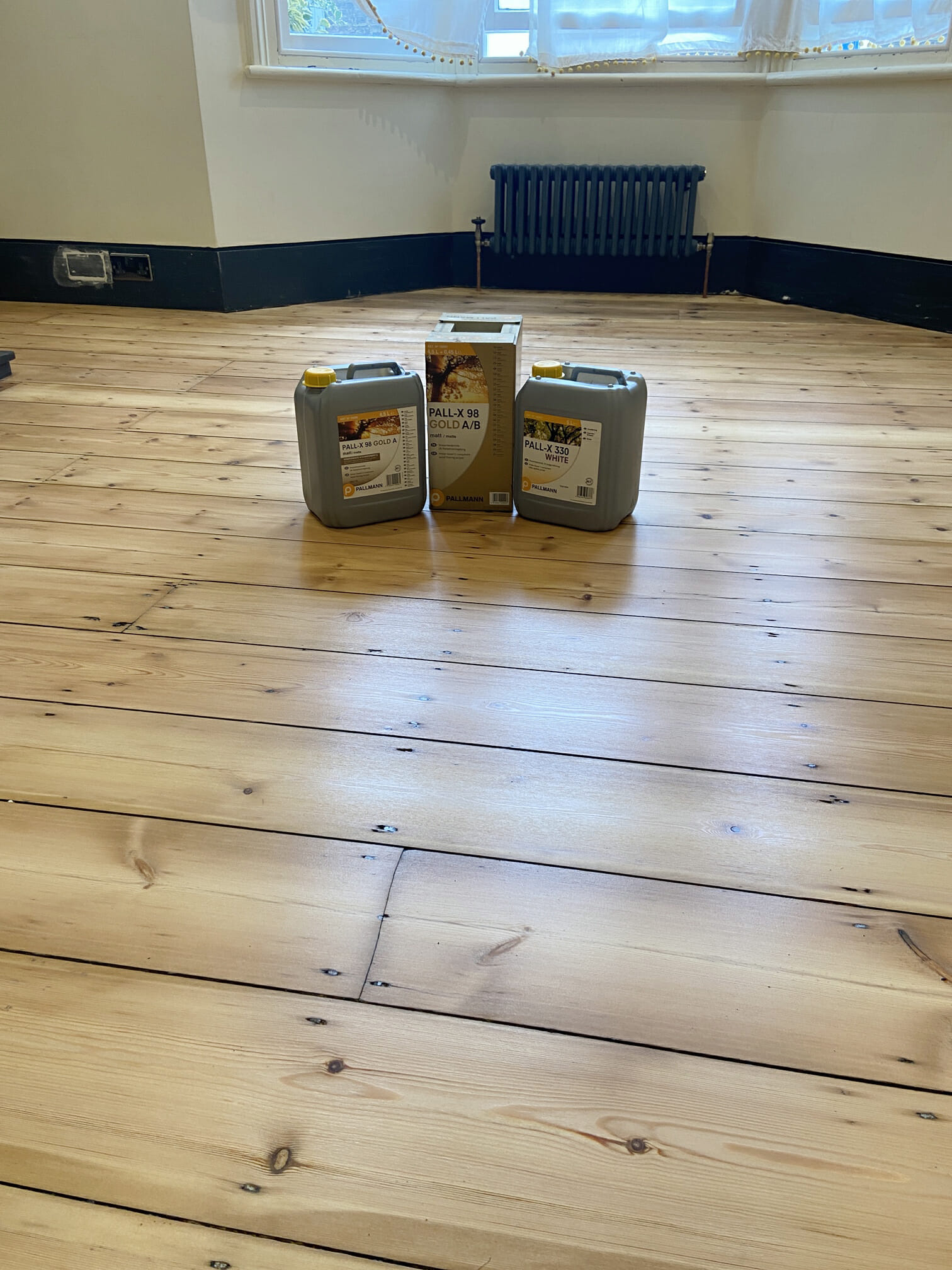
Many homes around Huntingdon, St Ives and Hemingford Grey have floors that tell part of the story of the property. Some are simple pine boards under carpet. Some have been painted. Some have been repaired over time. Some have taken the wear of children, dogs, chairs, visitors and everyday life.
Local content should not pretend that every house has the same kind of floor. They do not.
What matters is a careful assessment of your actual room. Is it a bedroom with old boards? A hallway that takes grit from the front door? A sitting room where furniture has marked the floor? A period property where the boards may be part of the feel of the house?
The answer changes the advice.
For older buildings, it is also worth being cautious. The Society for the Protection of Ancient Buildings gives helpful guidance on old timber floorboards, including the idea that minor imperfections do not always mean a floor needs replacing. You can read their timber floorboard guidance here: SPAB timber floorboards advice.
Questions to ask before deciding
Before you choose restoration or replacement, ask these questions:
- Is the floor structurally sound?
- Are the boards thick enough to sand safely?
- Are there signs of damp, rot or movement?
- Is the staining surface level or deep?
- Has the floor been painted or heavily coated?
- Are there replacement boards already present?
- Would you be happy with some colour variation?
- Do you want character, or do you want a very even new floor look?
- How will the room be used after the work?
- Would a test patch help you decide?
These questions are not there to put you off. They help you make a better decision.
So, should you restore your pine floor?
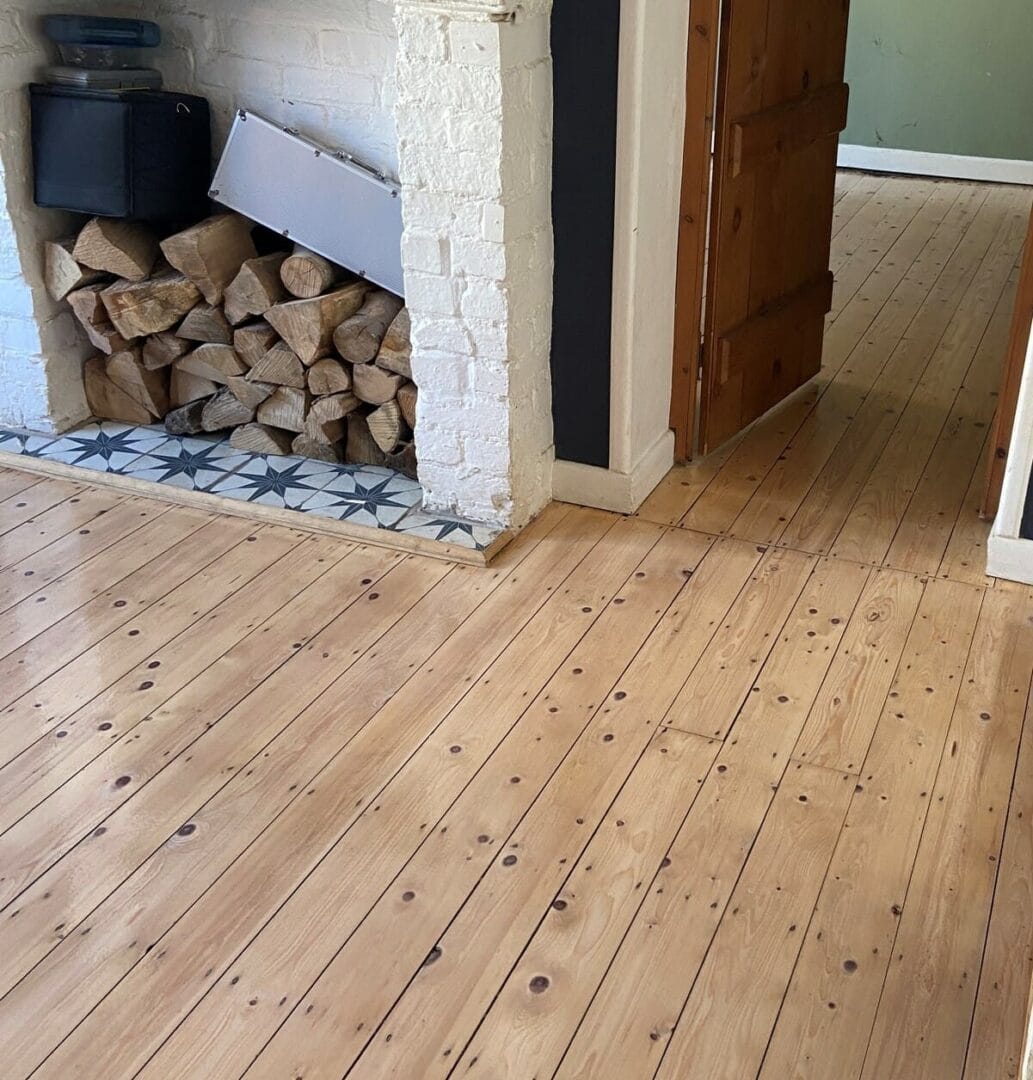
If the boards are sound and you like the idea of keeping the home’s character, restoration may be a great option. It can reduce waste, keep original material in place and bring a tired room back into use without replacing the whole floor.
If the floor is badly damaged, too thin, unstable, deeply stained, damp or not the look you want, replacement may be the better route.
The most useful answer is usually not “always restore” or “always replace”. It is this:
Find out what you have before you decide what to do with it.
If you are in Huntingdon, St Ives, Hemingford Grey or the surrounding area and you are unsure whether your pine floor can be restored, you can start with photos or arrange an assessment. Art of Clean can look at the floor, discuss the likely limits, and where useful, carry out a test patch so you can see what may be realistic before making a final decision.
You can also explore more examples and guidance through the Floor Sanding Cambridge home page, the Knowledge Centre and the floor sanding case studies.