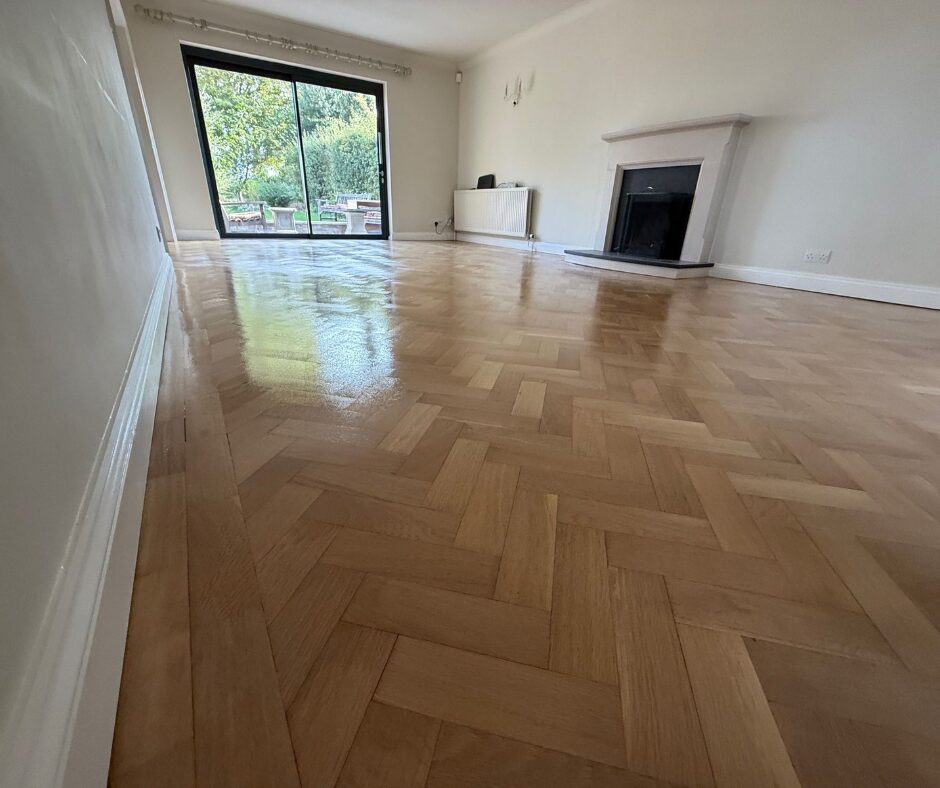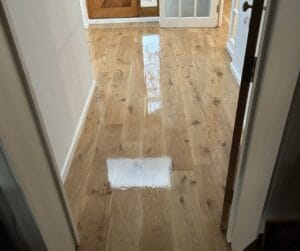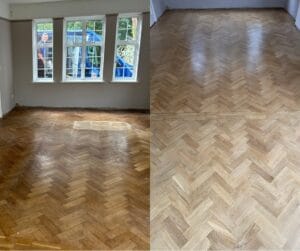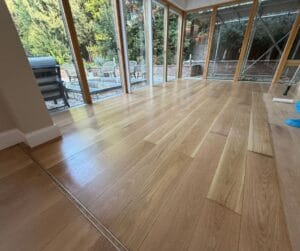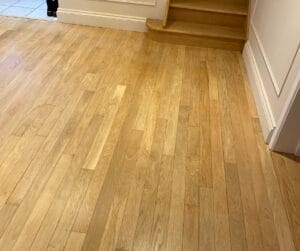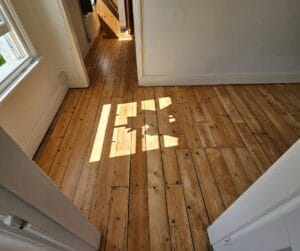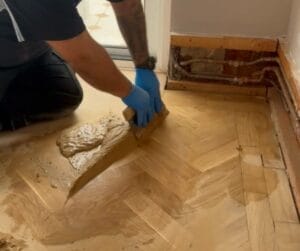
Your wooden floor has hosted Christmas dinners, muddy paws and approximately 400 trips to the kettle this week.
Now it looks a little tired…
Fair enough…
So would we!!
If you are comparing wood floor restoration vs wood floor refreshing in Cambridge, you probably want to know one thing:
“Can it have a little spruce-up, or does it need the full works?”
Especially if you have already tried moving the rug six inches to the left.
Lovely effort.
The scratches are still there, though, right?!
Refreshing looks after a suitable existing finish.
Sanding removes the old finish and a thin layer of wood.
Restoration can include repairs as well as sanding and refinishing.
Before we get carried away planning your floor’s comeback, there is one important detail.
At Floor Sanding Cambridge, we only consider refreshing floors we have previously restored, where we know the finish we applied.
We still check their condition and what has been used on them since.
No mystery coatings invited.
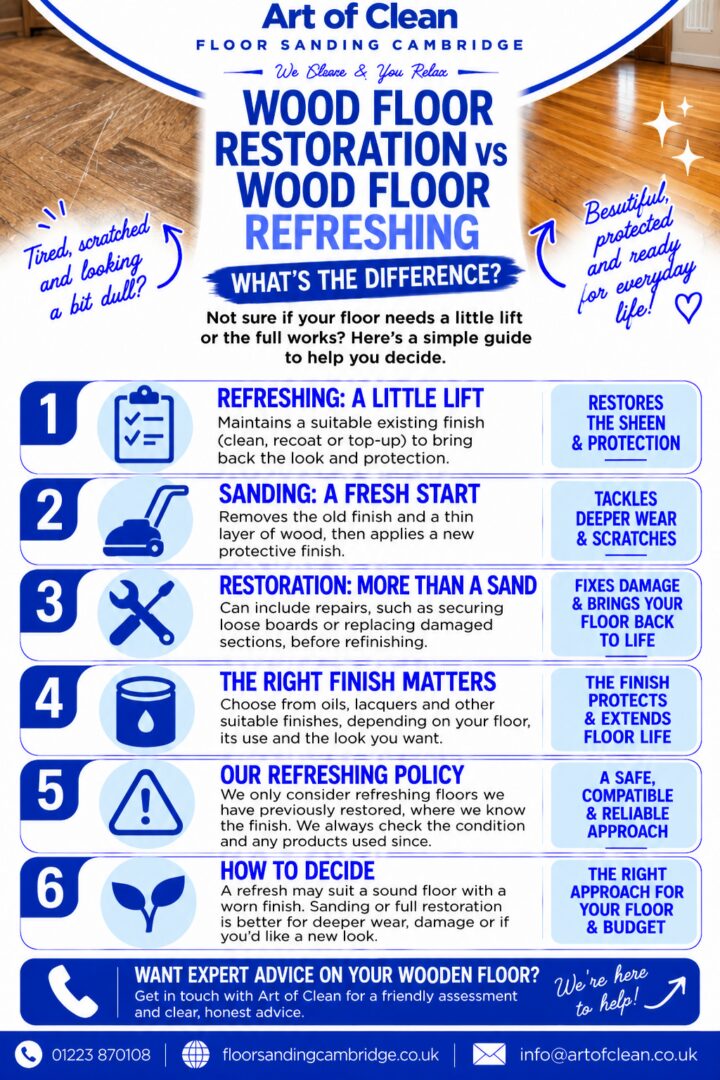
A little lift or the full works?
| Option | What it involves | When it may suit your floor |
| Refreshing | Maintaining a suitable existing finish, potentially through specialist cleaning, compatible maintenance products or a professional recoat | For our service, a floor we have previously restored, with a known finish and a condition suitable for refreshing |
| Sanding and refinishing | Removing the old coating and sanding the wood before applying a new finish | Wear has reached the timber, scratches are deeper, or you want a different appearance |
| Restoration with repairs | Repairing or replacing damaged sections, securing suitable loose boards or blocks, then refinishing where appropriate | Boards are broken, sections are missing, or the floor needs more than surface work |
These terms overlap, which is where things can get a bit muddy.
A company might call a simple sand and refinish “restoration”, while another uses it for a project involving repairs too.
Ask what is included in the quote.
Your floor needs a clear plan, even if its owner is still deciding on the curtains.
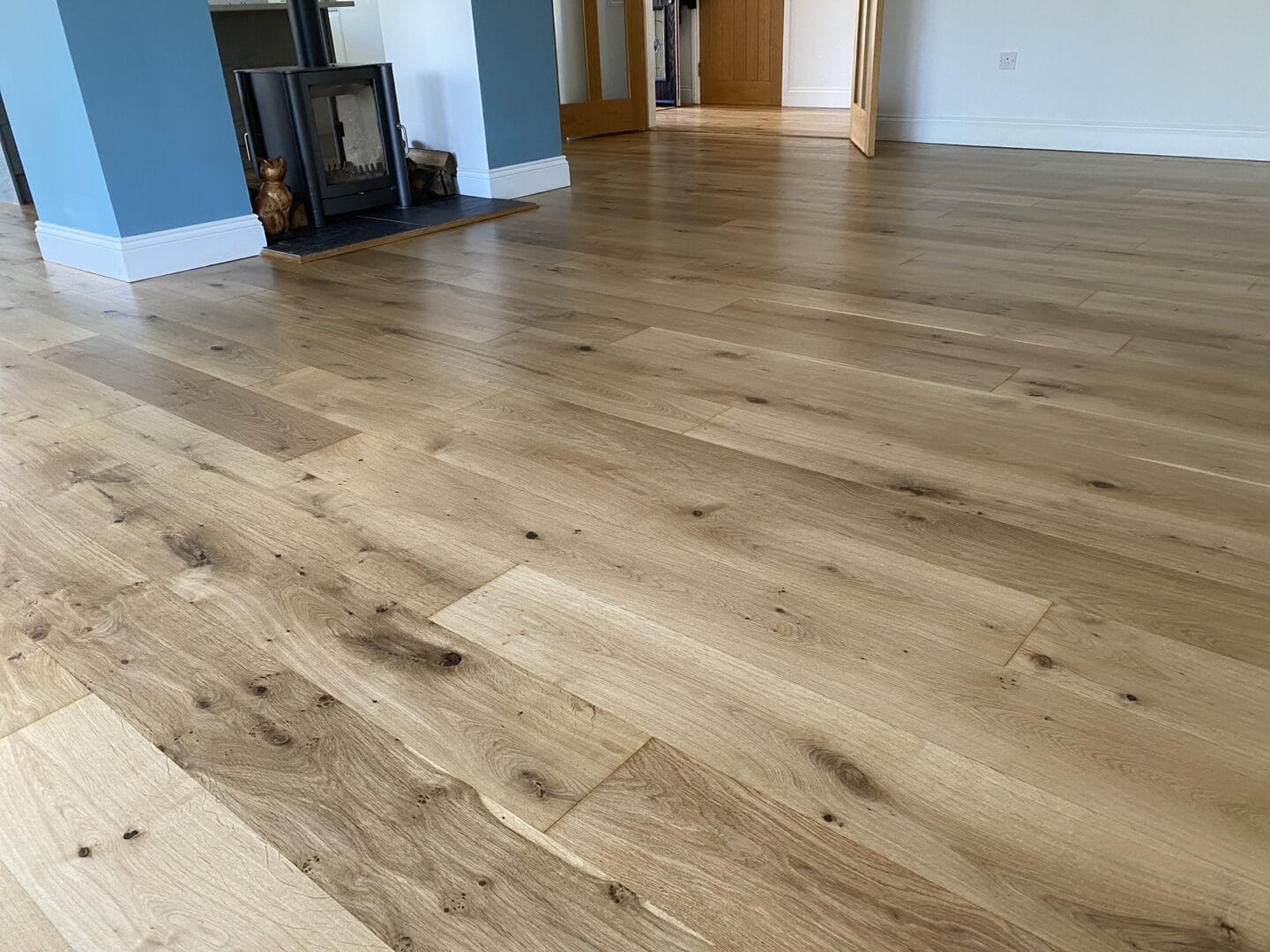
Wood floor refreshing: when your floor needs a little lift
Sometimes a floor has simply lost a bit of its sparkle… The timber is sound, the protective finish is largely intact, but the whole thing looks as though it could do with a good night’s sleep.
Think light scuffs or a tired, uneven sheen.
If we previously restored your floor, a refresh may be an option after assessment.
We will check whether the existing finish can be maintained, rather than assuming it is ready for another coat just because we recognise the address.
Refreshing can mean different things depending on the finish.
A suitable oiled floor may benefit from maintenance oil, while a suitable lacquered floor may be a candidate for a professional recoat.
Cleaning away residue can improve the appearance too, but it can’t restore missing protection. Unfortunately, enthusiasm and a mop have their limits.
For us, knowing the existing finish is essential.
We don’t offer a standalone refresh for a floor we haven’t previously restored.
If we haven’t restored it ourselves, we don’t know exactly what finish is on it or what has been applied afterwards.
That means we cannot guarantee a refresh will be compatible or give a reliable result.
An unknown finish does not automatically mean sanding is needed, but we will not offer a standalone refresh and hope for the best.
Your floor deserves better than a fingers-crossed approach.
Bona’s guide to recoating wooden floors explains the distinction between maintaining the existing finish and removing it through full refinishing.
Refreshing cannot fix broken boards, remove deep gouges or reliably hide stains within the wood.
Think of it as maintaining suitable protection, rather than asking a new coat to perform a small miracle.
It also won’t completely change the timber’s colour.
If the protection has worn away in busy areas, a surface refresh may no longer be enough.
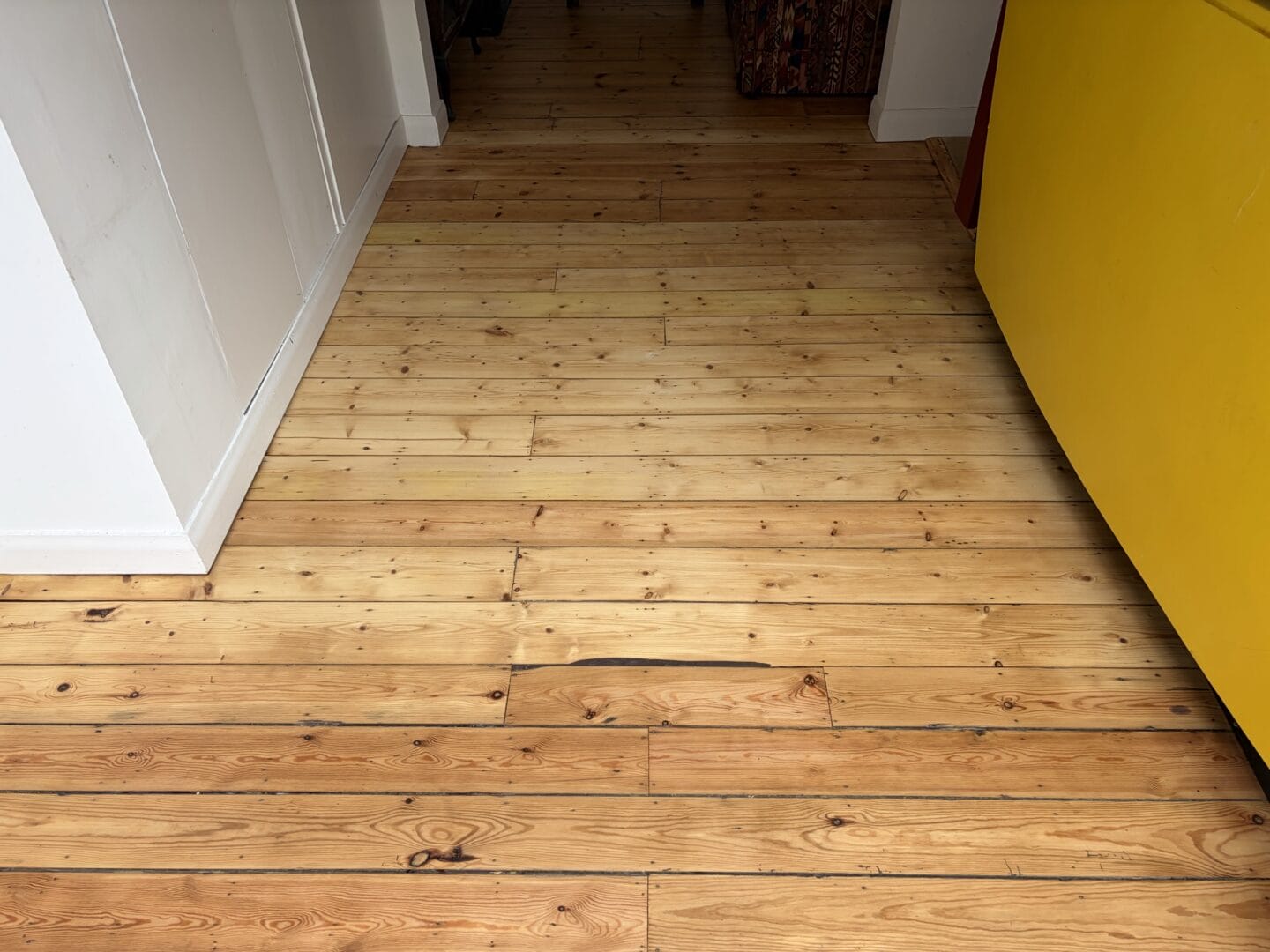
When does your wood floor need sanding?
If wear has reached the wood itself, a surface refresh may be asking rather a lot.
That is where sanding comes in!
Perhaps the dining chairs have been practising their ice-dancing routine.
Perhaps the dog takes every corner like the final lap at Silverstone.
Or perhaps your hallway simply shows exactly where everyone walks.
A well-loved home leaves clues.
Sanding removes the old finish and a controlled amount of timber, creating a fresh surface for a new protective finish.
For a suitable floor, sanding can tackle deeper scratches, worn patches and some discolouration.
It can also open up options for a different appearance.
If the old colour has been quietly annoying you for years, this is the moment to mention it.
There are limits, though.
Sanding cannot guarantee that every stain or dent will disappear.
Some damage reaches too far into the timber to remove safely.
We would rather explain that before the work than leave you staring at one stubborn mark afterwards.
There must be enough usable wood left to sand safely.
Engineered flooring actually has a real wood top layer, and its thickness varies.
Older solid boards may already have had several rounds of sanding.
Removing more timber is a decision to make carefully, because we cannot pop it back on afterwards.
A wooden appearance alone is not proof that a floor can be sanded.
Laminate cannot be sanded and refinished like real wood.
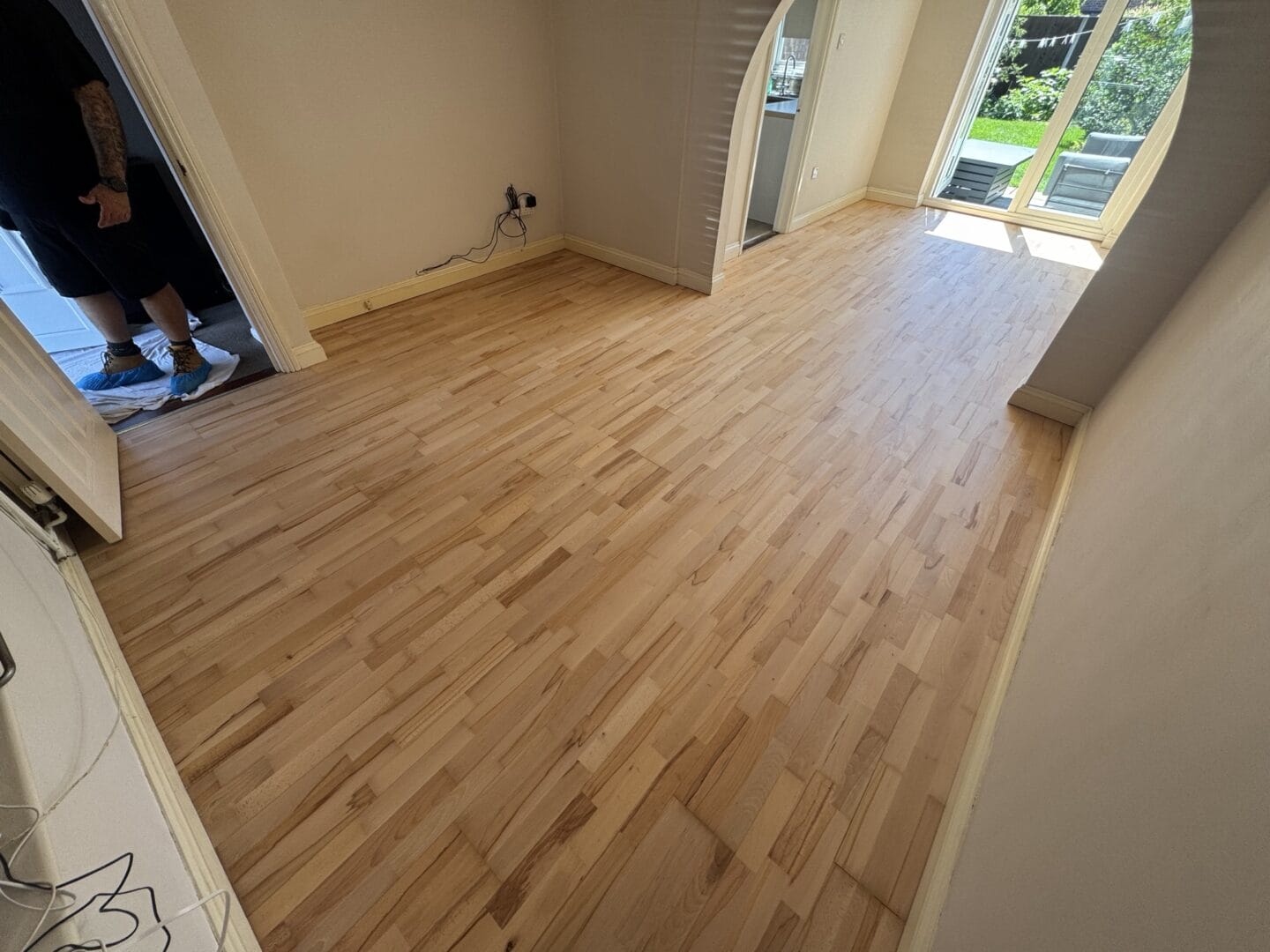
What goes on the floor afterwards?
Once the sanding is complete, the wood needs suitable protection.
This is where you get to talk about the look you love, alongside the slightly less glamorous question of who will look after it.
Yes, that bit matters too.
If you like an oiled appearance, our wood sanding and oiling service is one option to explore.
Choose with the maintenance routine in mind, and pick the sample that makes you say, “Ooh, that one!”
Our wood sanding and lacquer service is another option that creates a protective surface coating.
The finished look depends on the system chosen, so discuss the appearance you want rather than assuming lacquer has to mean a shiny ballroom floor.
The correct preparation, primer requirements, number of coats and curing times depend on the products and the floor.
No single recipe suits every wooden surface.
Ask about samples, aftercare and when you can use the room again.
Your floor needs to work with your household, including the chair-shufflers and the family member who is apparently incapable of removing their shoes.
Wood floor restoration: when repairs join the party
Some floors need a little more help before they are ready for their close-up. For this comparison, we are using restoration to mean repairs alongside sanding and refinishing.
That could mean a split pine board, loose parquet blocks, a missing section or an old repair that has been bothering you every time you walk past it.
You know the one.
You can spot it from the sofa with the lights dimmed.
With our wood floor restoration service, we assess what needs attention before planning the surface work. A beautiful finish cannot secure a loose board.
The practical work has to come first, even if choosing the final look is considerably more fun.
Repairs need assessing before sanding begins.
Movement, moisture problems or damage underneath the surface may need investigating first.
Replacement boards need a little expectation-setting too.
You can carefully choose timber and still find that age, grain, species and years of exposure affect the colour.
Wood has its own ideas. It rarely consults the mood board.
Newer pine can look lighter beside older boards once everything is sanded and finished.
Staining may soften the difference, but a completely invisible match should never be promised.
Knowing that beforehand makes it much easier to decide what you will be happy living with.
A few signs of age can be part of an old floor’s charm.
The useful distinction is between character you enjoy and damage that needs attention.
A lovely grain pattern? Gorgeous.
A broken board catching your sock? Less charming.
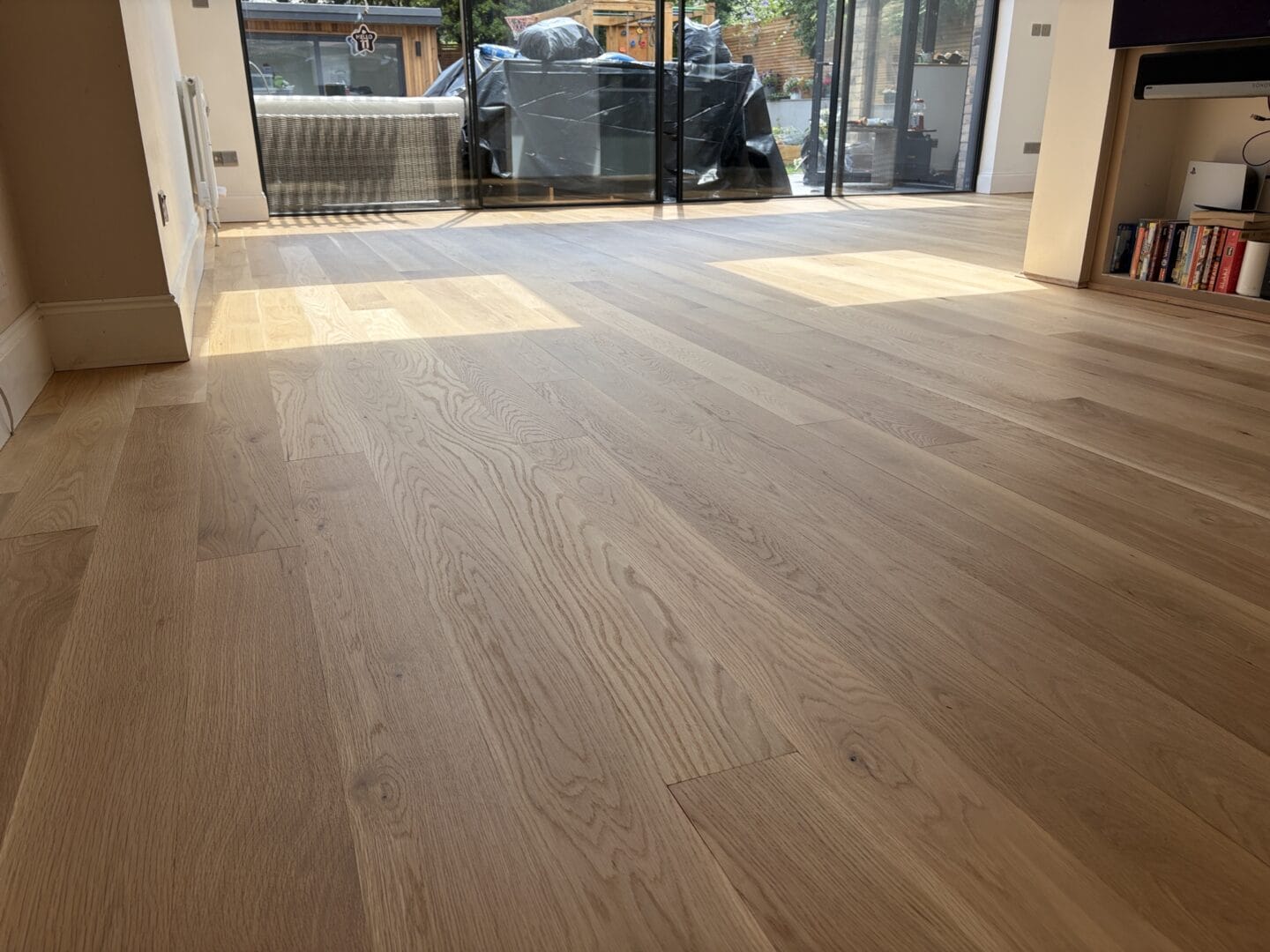
Which option is worth spending your money on?
A suitable refresh generally involves less work than sanding and refinishing, while repairs can add labour and materials.
For our customers, we consider refreshing only for floors we have already restored and assessed as suitable.
It is not a cheaper alternative we can offer every floor.
But the lowest initial price is only good value if the work addresses the problem.
A cheap refresh that cannot deal with the damage is an expensive way to remain annoyed with your floor.
Equally, sanding away sound timber unnecessarily uses up some of its remaining sanding life.
The best value comes from choosing work that suits the floor’s actual condition.
Before saying, “Lovely, when can you start?”, ask:
- What is causing the tired appearance? Surface residue, worn protection and timber damage need different responses.
- Is the floor suitable for the proposed work? Ask about its construction, stability and remaining sanding thickness.
- What improvement is realistic? Discuss stains, deep marks and replacement-board colour differences.
- What does the price include? Check repairs, preparation, finishing, room access and aftercare.
If damage is extensive or there is very little usable timber left, compare restoration with replacement.
Sometimes saving the old floor makes sense.
Sometimes the repair bill deserves a second look before your heart has fully committed.
Ready to stop hiding that patch with a rug?
If we have restored your floor before, let us know how it is looking now.
We can assess whether maintenance is suitable. If your floor is new to us, we can discuss its suitability for sanding and restoration.
We will not offer a standalone refresh over an unfamiliar finish.
You do not need to diagnose it yourself or turn up knowing the difference between every oil and lacquer.
Tell us what bothers you, how you use the room and what you would love to change.
We can take the floor conversation from there.
If your wooden floor in Cambridge is looking tired, get in touch with Floor Sanding Cambridge to discuss its condition and the options.
That rug can go back to being a design choice.
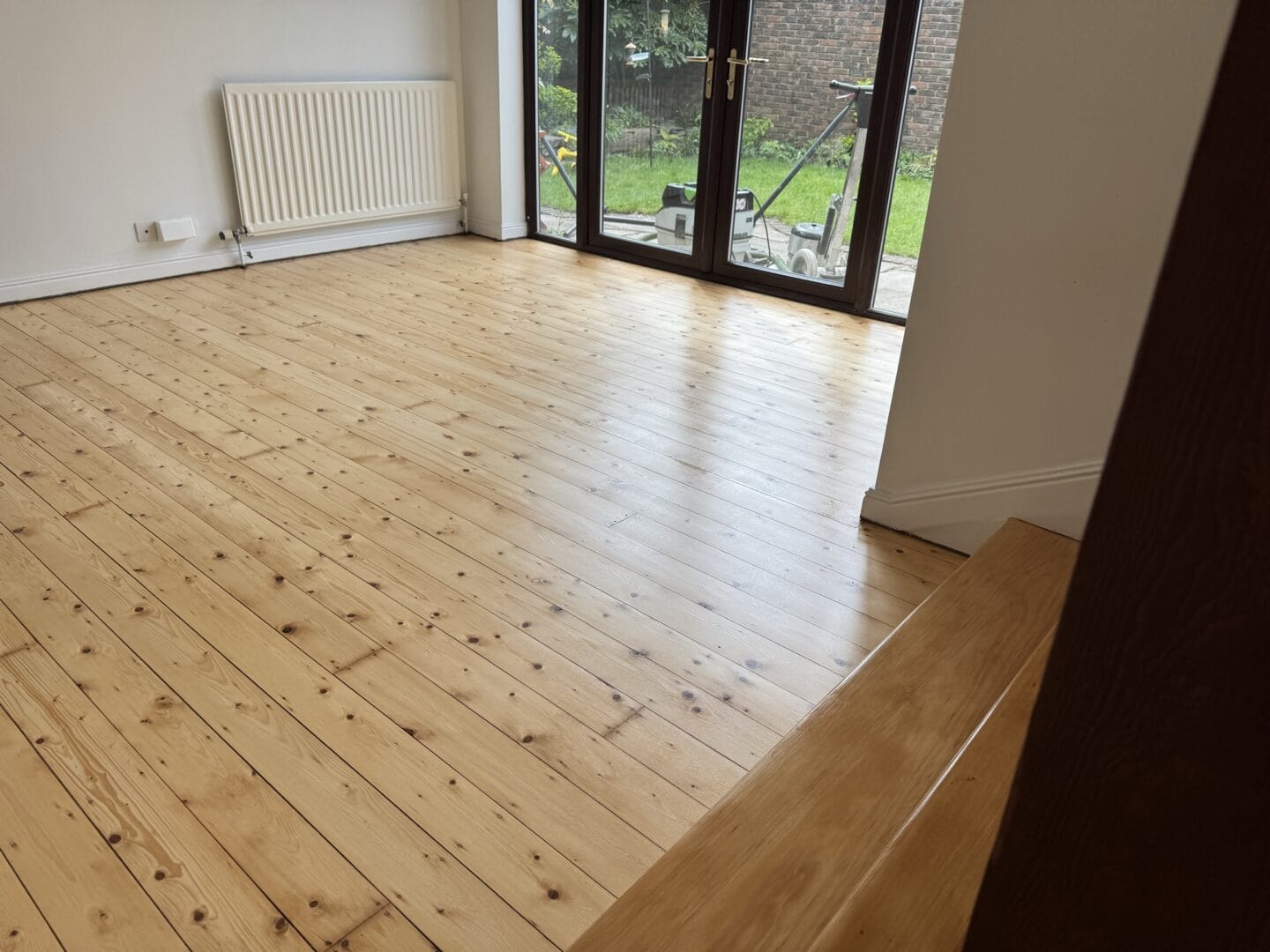
FAQs about wood floor restoration and refreshing
-
Can a wooden floor be refreshed without sanding?
Sometimes, yes, but we only consider refreshing floors we have previously restored, where we know the finish used. We still assess the condition and ask about subsequent maintenance products. We do not offer a standalone refresh on a floor we have not restored, because we cannot guarantee compatibility with its existing finish.
-
Will refreshing remove scratches?
It may improve the appearance of light surface wear, but it will not remove deep scratches in the wood. Those may need sanding or repairs, and some marks may remain even after restoration.
-
Is wood floor restoration the same as sanding?
The terms are often used interchangeably. Sanding describes a specific part of the work. Restoration can include sanding, repairs and refinishing, so compare the actual work listed in each quote.
-
Can engineered wood flooring be restored?
Some engineered floors you can sand and refinish, as long as enough of the real wood top layer remains. Previous sanding, the floor’s construction and its condition all matter. It needs assessing before any sanding is agreed.