A Little Less “Oh Dear”. A Lot More “Ooh, Lovely!”
You move the sofa. Stand back to admire your hard work. Then the daylight catches the floor.
Oh. There it is.
The dull patch. The scratches. The bit you have been strategically hiding beneath a rug while telling yourself you will sort it “at some point”.
If your parquet floor in Great Wilbraham is looking a little weary, that does not automatically mean you need a new one.
Suitable parquet can often be sanded and refinished, bringing the pattern and character back into focus. First, though, someone needs to check its condition and how much usable wood remains.
Craig and Joao’s sanding and oiling work on this five-finger parquet floor shows why that conversation is worth having.
Because beneath a tired surface, there may still be a floor worth getting excited about.
First, Have a Look at This Great Wilbraham Transformation…
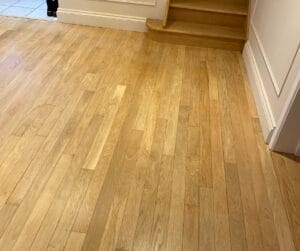
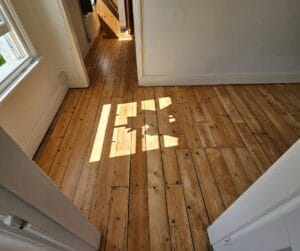
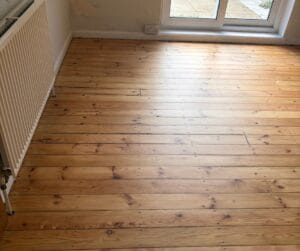
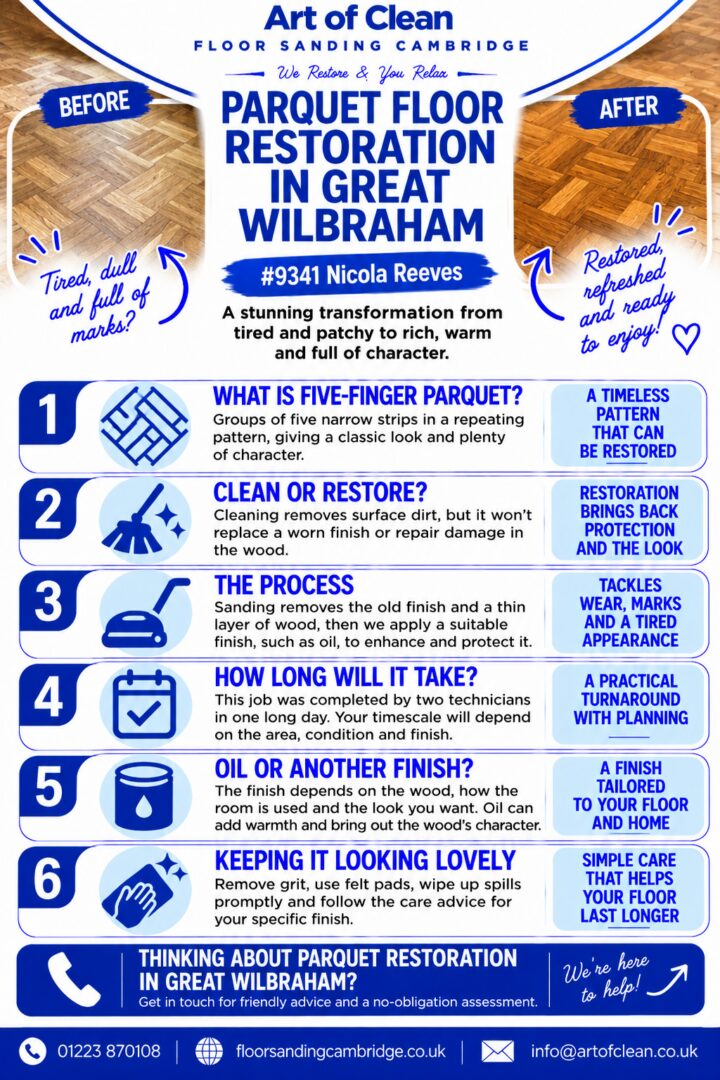
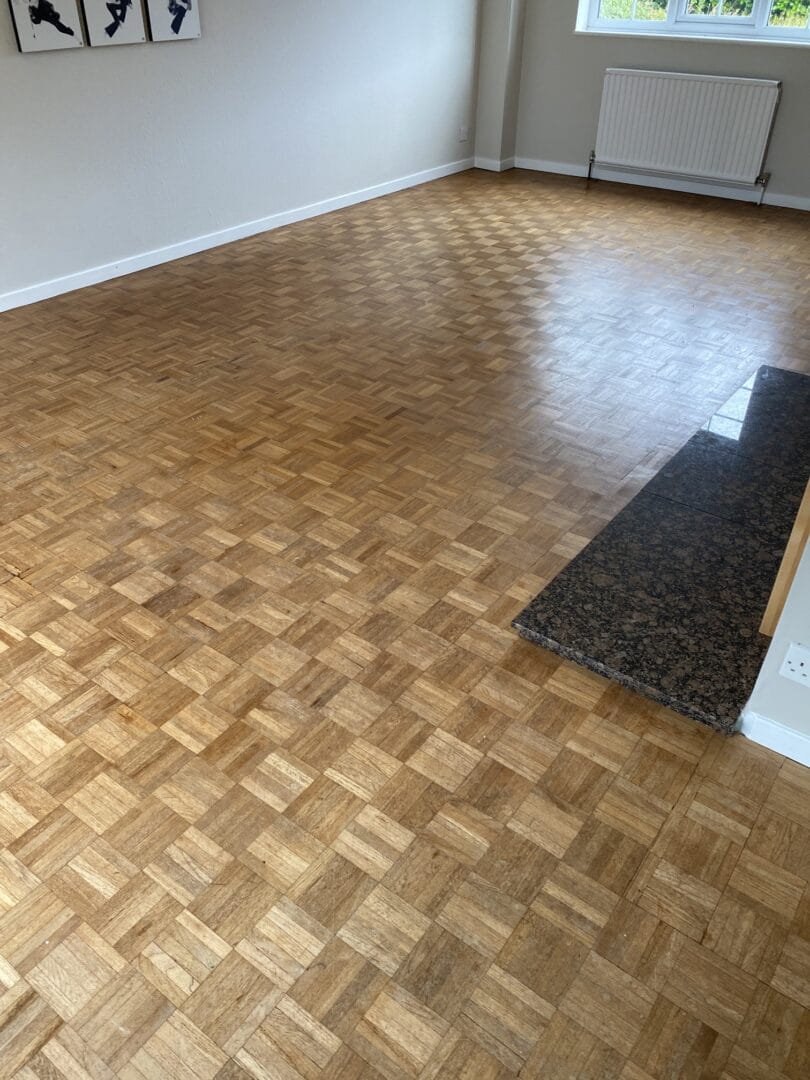
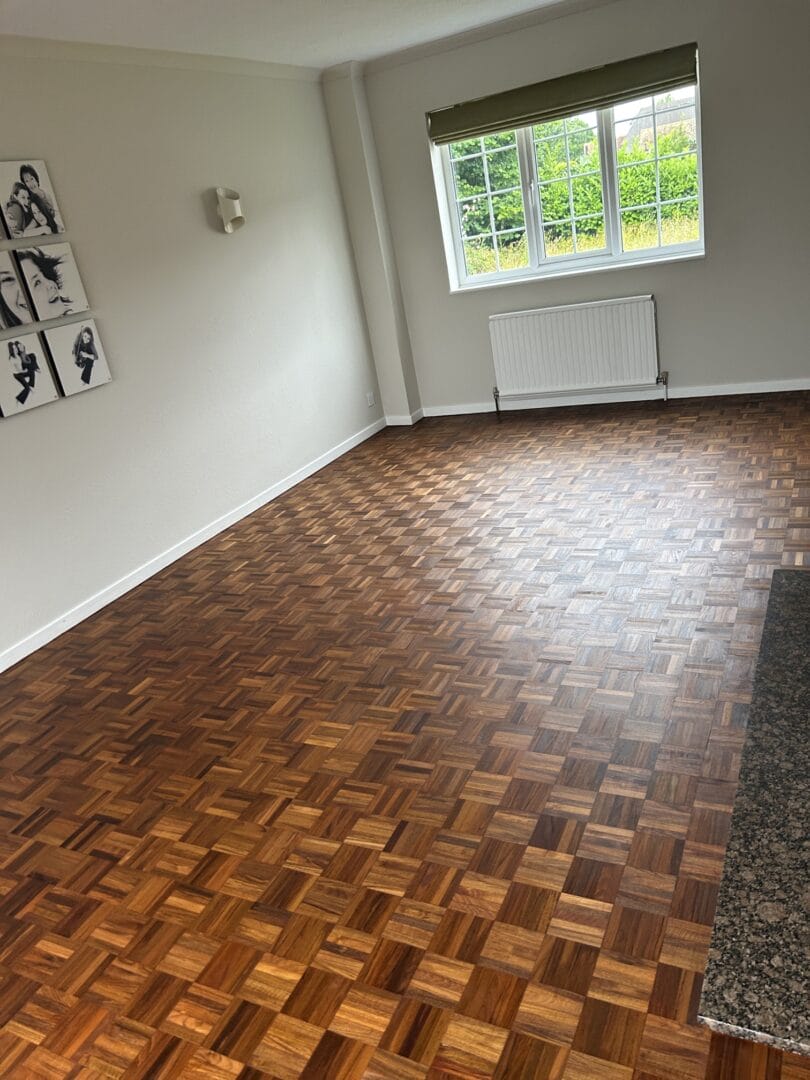
In the before photograph, the parquet looks pale and uneven in places, with visible surface marks. You can see the pattern, but it is not exactly demanding your attention.
A bit like a lovely outfit under a very tired cardigan.
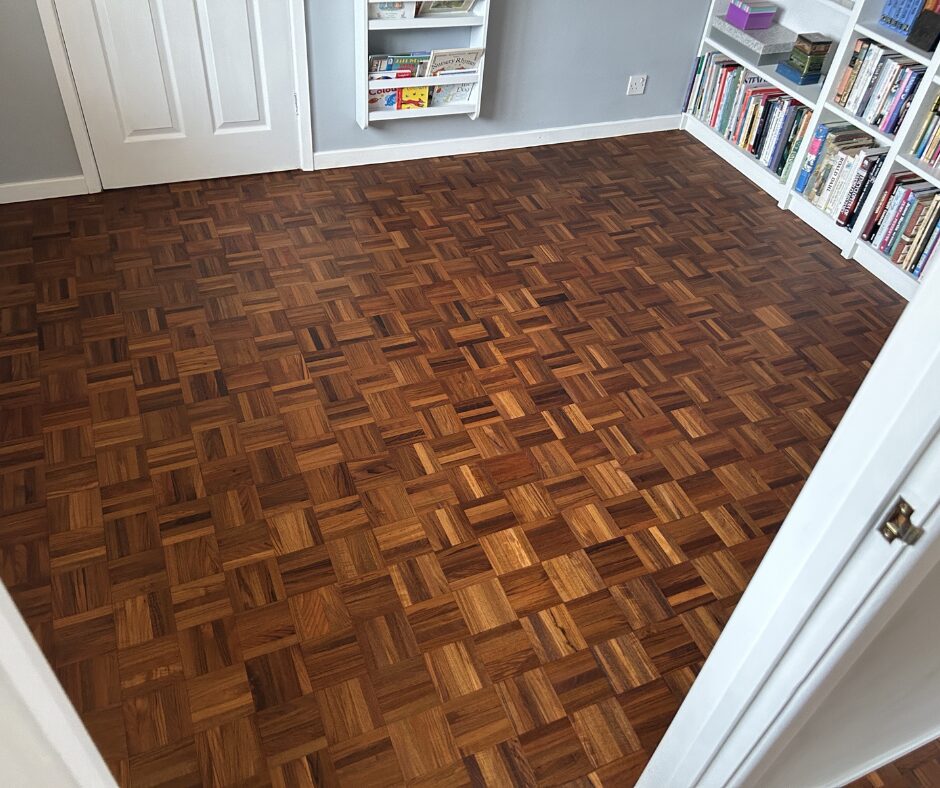
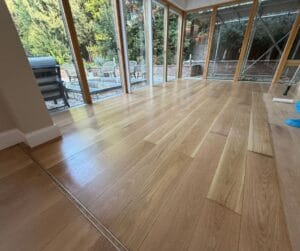
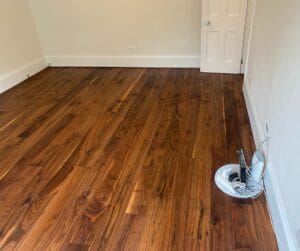
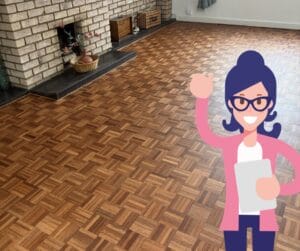
After sanding and oiling, the photograph shows richer brown tones and much stronger contrast between the individual strips. Suddenly, that repeating pattern has real presence across the room.
Well, hello there, parquet.
The photographs show a clear change in appearance. Lighting does affect colour, though, so use them as an example of this floor’s transformation rather than a colour chart for yours.
What Exactly Is Five-Finger Parquet?
Five-finger parquet has groups of five narrow wooden strips arranged together. Neighbouring groups face different directions, creating that repeating square pattern.
Once you spot it, you will probably start counting them.
Go on. We will wait.
That changing grain direction gives the floor its character. It also means restoration needs care across the whole pattern, including checking the condition of the individual pieces and how securely they are fixed.
The pattern does not tell us the timber species, thickness or previous sanding history. Those need checking separately before deciding what work is suitable.
Does It Need Cleaning, or Has the Finish Had Enough?
You have mopped it. You have tried again. You have tilted your head and looked at it from the doorway in case a different angle helps.
Still patchy.
Sometimes a floor looks dirty because its protective finish has worn away. Cleaning can remove soil, but it cannot replace missing protection or remove damage within the timber.
Our team regularly encounters this distinction. Once the finish deteriorates, grit and moisture can affect the wood more easily. More enthusiastic mopping will not rebuild that protection.
Your arms can stand down.
A proper assessment should consider the existing finish, usable timber thickness, previous sanding, loose pieces and any signs of moisture. We also need to understand what you want the floor to look like and how you use the room.
At Art of Clean, we only offer a maintenance refresh on floors we originally restored. If we do not know the existing finish, we cannot confidently establish compatibility or guarantee that a refresh will be suitable.
That is why an unfamiliar floor needs an assessment before we recommend the next step. Our wood floor restoration service explains more about what is involved.
What Did Craig and Joao Do Here?
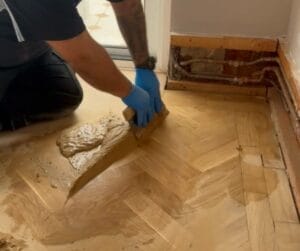
The work on this Great Wilbraham floor was sanding followed by an oil finish.
Sanding removes the old surface finish and a controlled amount of timber to prepare a suitable floor for refinishing. Many surface scratches and worn areas can improve, although serious damage or staining may remain.
The aim is to improve the floor while preserving enough sound wood. Chasing one stubborn mark too far is not a sensible trade.
Then comes the finish.
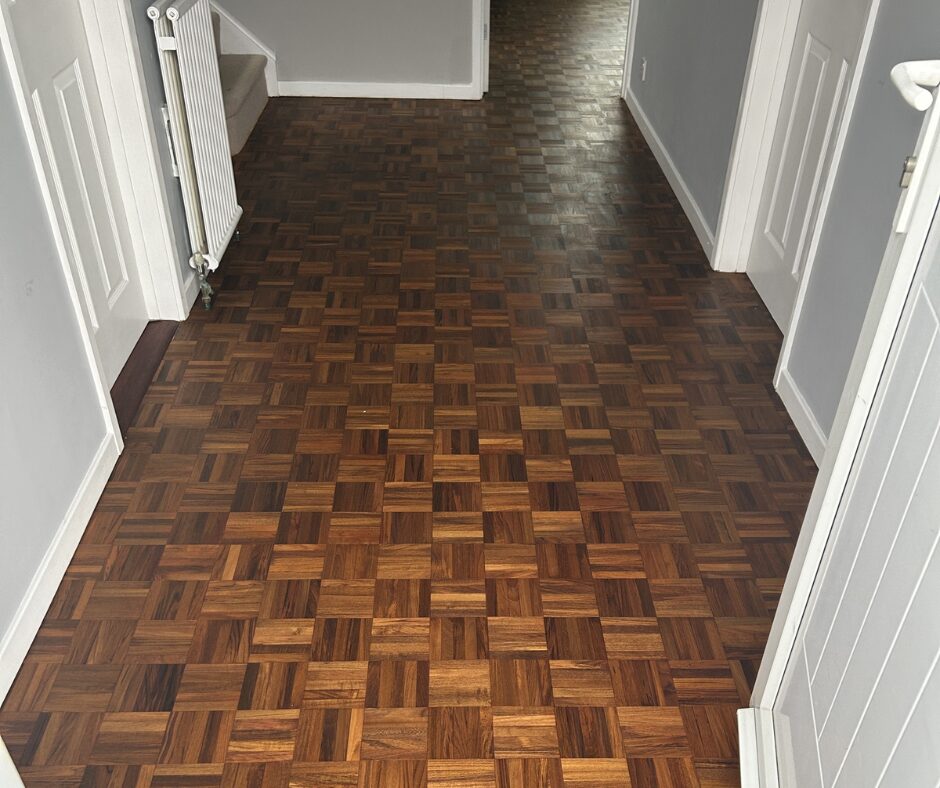
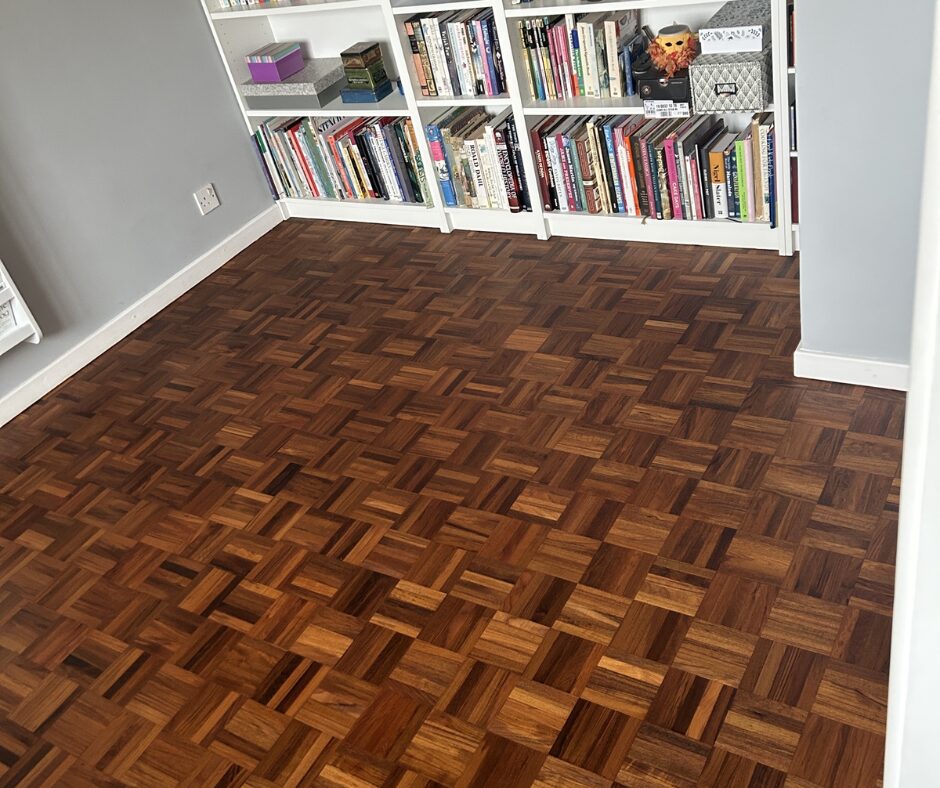
On this floor, the oil brings out the variation between the strips. The after photograph shows the lighter and darker pieces much more clearly, giving the pattern a richer appearance.
Would your parquet turn out exactly this colour? Not necessarily. Timber species, age, previous treatments and finish choice all play a part.
Save the inspiration photo, absolutely. Just discuss your own floor before mentally matching the curtains. A sample, where practical, can help you judge the likely appearance.
Will My Living Room Be Out of Action for Ages?
A fair question. Particularly when the sofa has temporarily moved somewhere deeply inconvenient.
This job was scheduled for two technicians over one long day. Your own timescale will depend on the room size, floor condition, any repairs and the finish system.
There is also an important difference between the team finishing work and the floor being ready for everything to go back.
Ask separately about walking on it, returning furniture, putting rugs down and cleaning. Follow the instructions for the actual finish applied.
The floor may look ready for its grand reveal before it is ready for a sofa shuffle.
Preparation helps, too. Craig’s experience highlights how an uncleared room can delay work or change the plan. Agree what needs moving, who is moving it and where it will go before the appointment.
Discovering that the bookcase has nowhere to live is best done before sanding day.
Is Parquet Restoration Worth the Money?
If you like the pattern and there is enough sound timber to work with, restoration may let you keep a feature you already enjoy while improving its appearance.
But the sensible choice depends on the floor, not just how lovely the after photograph looks.
Extensive loose sections, moisture problems or insufficient usable timber can change the recommendation. Repairs or replacement may sometimes make more sense.
When comparing quotations, check what is included: preparation, any repairs, sanding, the finish system and aftercare guidance. A headline price tells you very little if the scope is different.
Our floor sanding cost guide explains factors that affect pricing. Your quotation should reflect your own floor’s measured area and condition.
How Do You Keep It Looking Lovely Afterwards?
You do not need to hover nervously whenever someone enters the room.
A few sensible habits help once the finish is ready for normal use:
Keep grit under control: Remove it regularly with equipment suitable for wooden floors.
Give furniture some manners: Fit felt pads and lift items rather than dragging them.
Deal with spills promptly: Do not leave liquids or damp items sitting on the wood.
Use the right cleaner: Follow the advice for your finish and keep cleaning moisture to a minimum.
An oiled floor is not waterproof. Avoid steam cleaning and check before applying a maintenance oil or refresher. The product needs to suit the finish already there.
Think a carefully dampened cleaning pad. Not an indoor paddling pool.
Bona’s guide to caring for oiled wood floors explains why regular grit removal, prompt spill management and minimal water matter. For your own restored floor, follow the specific aftercare advice your technician supplies.
Four Quick Questions About Parquet Restoration
-
Can old five-finger parquet be sanded?
Often, yes, if it is securely fixed and has enough usable timber remaining. Previous sanding, thickness, moisture and damage all affect suitability. An old floor does not automatically need replacing, but its condition needs checking.
-
Will sanding remove every scratch and dark mark?
No. Many surface marks can improve, but deep scratches or staining may remain. Removing a mark completely must not come at the expense of leaving too little sound timber.
-
Will oil make your parquet as dark as this floor?
Not necessarily. The wood and chosen finish will always influence the result, and lighting affects photographs. Discuss the appearance you want and ask whether a sample is practical.
-
Can I put furniture back straight after restoration?
Follow the guidance for your specific finish. Light foot traffic, furniture, rugs and damp cleaning may each have different waiting periods. Looking lovely is not the same as being ready for everything.
Before You Give Up on That Parquet…
Take a photograph of the whole floor in daylight, plus close-ups of the areas that bother you. Tell us about loose pieces, previous sanding or known moisture problems.
We can discuss what looks realistic and whether an assessment is the next step. You can also browse our Knowledge Centre for more homeowner advice.
You do not have to decide between living with a tired floor and replacing it before you know what can be restored.
And that rug you have been using to hide the awkward patch?
It might finally get to live somewhere because you like it there.